A friend of mine is a retired English teacher. He told his students that every piece of writing, no matter how elevated or simplistic, has one great line. It was the job of the reader to remain alert and active so the great line can find a home. Of course, it is not simply a job. It’s a mindset. A challenge to be open to art and life so we can experience the best of what we encounter.
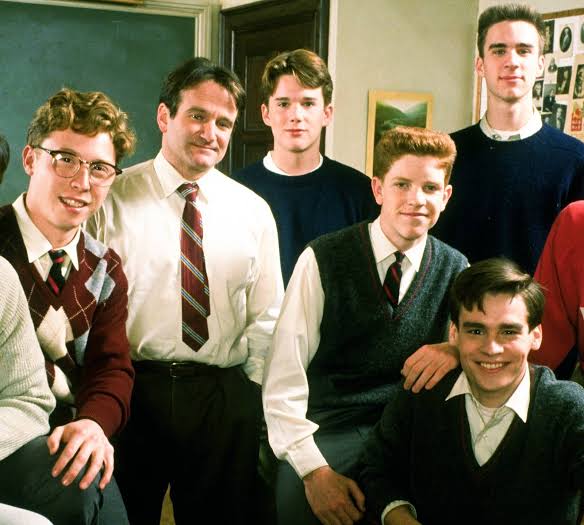
I believe Psychology professor Barry Farber would support these thoughts, as he comes to a similar conclusion in his book Rock ‘n’ Roll Wisdom: What Psychologically Astute Lyrics Teach about Life and Love (2007), pointing out that even mediocre songs can transmit profound psychological truths and insight.
The same is true of movies. It’s one of the primary reasons I created the course P3: Philosophy, Psychology, and Pop Culture. So, in true P3 spirit, I will share some of my favorite great scenes in unspectacular films.
To be clear, I am not saying any of these films “suck” or are unwatchable. I simply mean if one were to compile a top ten list of movies with themes of addiction and substance abuse, well, 28 Days starring Sandra Bullock would likely not make the list (1).
28 Days, or “Goodbye, Jasper”

In this 2000 comedic drama Sandra Bullock plays Gwen Cummings, an alcoholic who chooses a 28 day stint in rehab over jail after crashing a car into a house. We follow Gwen through the process of resistance to acceptance of the depths of her addiction and the recovery process. As the film approaches its conclusion Gwen is out in the world again and meets up with her boyfriend, Jasper. He is not supportive of her sobriety. In fact, he is a threat to it. While trying to explain to him her new view of life, in a bar (good choice, Jasper), friends approach them and ask if they would like to join their table. Gwen, to Jasper’s dismay, declined the invitation stating she and Jasper have something to discuss.
The couple heads outside, Jasper oblivious to who Gwen has become and is becoming. Frustrated and losing her focus, Gwen spots a horse in the street. She approaches the horse and attempts to lift its hoof, which was centering exercise from rehab. An exercise she often failed. A pattern she continues in the street. Exasperated and flustered, she stands and looks to the heavens, saying, “I just need help. Right now.” She proceeds to lift the hoof, smiles and laughs at the private victory had on a public street, and tells Jasper goodbye.
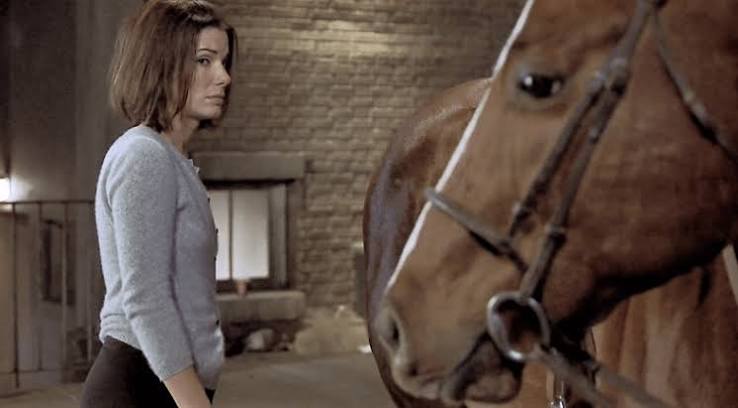
I just need help. My goodness, how many challenges or issues in our lives would be lightened, not solved, but lightened if we just occasionally said, “I just need help.” How many times have we struggled unnecessarily because we couldn’t muster the courage or humility to say that sentence. Hold on, say that sentence to the right person! Sadly, “Jaspers” lurk everywhere, dismissing the efforts and goals of others because their ego and pleasure always takes precedence.
The Power of Nature, and Godzilla

In 2014 my inner child was jumping for joy. Godzilla was hitting the big screen! Channel 56 creature double feature was meeting the 21st century. Buildings were smashed. The Golden Gate bridge was ripped asunder. Blue atomic breath lit the sky and vanquished his foes. Let’s go!
In the course of the chaos, as people struggled to find a solution to the threat posed by the MUTOs (Massive Unidentified Terrestrial Organisms). Enter Ken Watanabe, playing the role of Dr. Ishiro Serizawa, to deliver his “Let them fight” proclamation. That, however, is not the line I am looking at, just the moment.
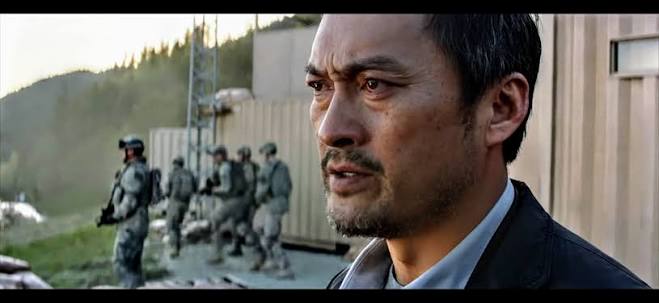
As a lead up to “let them fight,” Dr. Serizawa says, “The arrogance of man is thinking nature is in our control, and not the other way around.” Stick with me, dear reader, as we leave Godzilla behind and leap to an example of the power of nature.
Our planet is precious and only we can save it. Without saving a mother, you cannot save her children…save Earth to save life on Earth. These well meaning slogans do overlook a crucial element. The Earth is, metaphorically speaking, a living organism. It may just have more resilience and creativity than you think. Maybe it is more than a helpless victim waiting for humanity to swoop in and save the day.

Over the past thirty-five years, according to NASA, the Earth is getting greener. One reason is a rise of CO2 in the atmosphere. This increase is called the fertilization effect and the excess CO2 increases the efficiency of photosynthesis. Therefore, the burning of fossil fuels is helping plant life thrive. Now, I am not saying there is no negative impact of this increase. Those most affected, however, are human and animal life. The Earth, well the Earth seems to be adjusting. It is almost as if nature finds a way. Wait, didn’t someone else say that (2)?
Hiding in the Music
The movie The Greatest Showman (2017) was, let’s call it a musical, period piece. It definitely isn’t a bio-pic of P.T. Barnum or an historical drama. The metaphors and symbolism can be a bit obvious, but the spectacle and songs go a long way. So did one moment, the slap.
Young P.T. is accompanying his father, a tailor, on an important job at the mansion of Benjamin Hallett. Hallett is a wealthy man, and his patronage is essential to Mr. Barnum, who struggles to keep his small family above outright poverty.
While in the parlor P.T. causes Charity, Benjamin’s daughter, to laugh. This breaking of decorum angers Benjamin and he calls Charity to his side. P.T. admits he made her laugh and, for his honesty, Benjamin slaps P.T. sharply across the face, telling him to stay away from Charity. P.T.’s father does nothing. Being of lower social standing and needing the money this job provides, he continues working. He even returns to the mansion, with P.T. to continue his work.
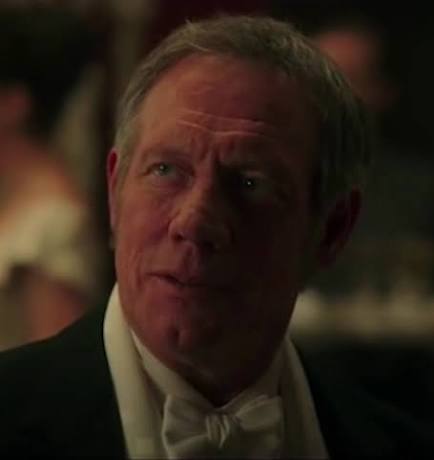

In many scenes and moments going forward, the weight and impact of poverty (P.T. is homeless for a time after his father’s death) is a theme throughout the movie. At one point, as tensions rise in their marriage, P.T. tells Charity that she couldn’t understand how P.T. felt about the world, having lived in wealth, not squalor. His pain comes forth as he states, “My father was treated like dirt. I was treated like dirt.” While he has a valid point about his upbringing he fails to see that the proverbial “hole in his soul” can not be filled by fame and prestige. Well, fails to see until he sings From now On. It’s a musical after all, and music heals.
Of Hobbits and Dwarves
To know me is to know my love of The Lord of the Rings trilogy. I also think The Hobbit movie trilogy was a bit…drawn…out. Making a singular book, one written as a wonderful children’s tale, into a trilogy was a bit much. This does not mean I disliked the movies, I just endured the moments of CGI elves jumping from one orc’s head to the next, stone giants playing rock ‘em, sock’em robots, and unnecessary romantic sub plots. The expansion of the books, however, did allow for the deepening of Thorin Oakenshield for which I am grateful.

Early in the company’s quest during The Hobbit: An Unexpected Journey the group has made camp for the night at a rocky cleft. In the quiet of night, with fires crackling, Balin enlightened Bilbo regarding Thorin’s tragic ascension to the throne. His grandfather slain in battle and his father driven mad by grief, Thorin rallied the dwarves to repel an orc army that threatened to destroy the very existence of the dwarves.
While Bilbo sat awestruck and the other dwarves listened in reverent silence, I thought about educational philosopher Thomas J. Sergiovanni. This renowned resident of Middle Earth discussed the concept of followership in his book Moral Leadership: Getting to the Heart of School Improvement (1996). Followership is far from sheepish loyalty or slavish buy-in with the hopes of gaining the favor of an individual in a position of authority. Followership is the idea that people, after careful consideration, can choose to follow a leader. It is a choice, a decision to follow a leader who has earned trust.

Leadership receives enormous attention. When typing “leadership books” into Amazon I was informed there were over 70,000 hits. Followership had an exact 418 hits, or .005% of leadership books. This imbalance is not reflected in our lives. We all play dual roles in life. As a parent I lead. As a teacher I lead the class but am simultaneously an employee. We likely could all use a pleasant mix of Thorin and Balin in our lives and, after all, many wondrous and enduring traditions rise from Middle Earth.
A Guardian in a Cave
Quick! Guess this movie. A young person, stubborn and hotheaded meets a grizzled and burdened adult mentor. Through the mentor’s patience, determination, and understanding the young person learns valuable lessons and grows. Simultaneously the adult mentor, invigorated by the mentoring relationship, heals old wounds and develops the wisdom to free themselves of fetters binding them to past pain. Yes, it is a time honored formula to be sure.

The formula is utilized in The Guardian (2006). Veteran Coast Guard rescue swimmer Ben Randall (played by Kevin Costner) encounters hot shot cadet Jake Fischer (Ashton Kutcher) and the process begins. The two men are bonded, though they do not know it, by similar experiences that leave them with survivor’s guilt and PTSD. Ben’s struggles are exacerbated by a mindset that only allows him to remember the 22 people he could not save over his illustrious career, not the 200+ he has saved. Ben’s mental disorder derails him while on a rescue mission as two kayakers are trapped in a cave.

While in the cave Ben, and the viewer, are bombarded by images of the helicopter crash that killed his entire crew, a sinking boat survivor, and his best friend, Carl. While the scene can be interpreted as memories, I have always seen it as a powerful cinematic representation of emotional flashbacks.
Emotional flashbacks involve intense feelings of distress, fear, and confusion. In essence the feelings from the past come forward to a present moment where they do not belong. The individual is, quite literally, ripped back to the emotional state of the past and disconnected from the present moment. It can be terrifying for both the individual and a source of great confusion, to say the least, for those witnessing the sudden disconnect from present activities. So it was for Jake as he watched his respected mentor become ineffective and shaken.

I do not know if the writers and director of The Guardian were attempting to convey an emotional flashback or a visual/memory flashback. It does not truly matter, as either interpretation is valid. This is the beauty of the scene, it is significant in the plot but also can be used to help students understand the complex phenomenon of emotional flashbacks and PTSD. Not bad for a “formulaic” film!
How the…? In This Movie?
The Expendables (2010) is an unapologetic and bombastic tip of the cap to the over-the-top action movies of the 1980s. Blow ‘em up, beat ‘em up, boom, boom, BOOM! Turn off your brain to watch the personification of an action popcorn movie. “Stone Cold” Steve Austin is in it, for goodness sakes. Then, as the first act is coming to a close Mickey Rourke delivers a gut wrenching monologue.

The set up is heavy as Rourke (his character name really doesn’t matter – it’s The Expendables) explains to Stallone that something in him is dried up, the “…belief in the soul, human parts, just…I don’t know…the human parts.” He goes on to explain the exact moment it happened, sharing a moment when a woman stood on a bridge and was clearly contemplating suicide. The grizzled mercenary saw the opportunity to save a life after taking so many and decided to walk away. As the splash faded into the night he realized that saving the woman may have saved what was left of his soul, but it was now gone as well.
I didn’t see it coming and I can never forget it happened. I can picture my retired friend nodding his head as if to say, “Told ya so.”
Beyond One Great Line
This post started with the idea that every piece of writing, no matter how elevated or simplistic, has one great line. We journeyed through some cinematic examples to reinforce his message. Maybe you recognized some of my choices. Perhaps your own contributions leapt to mine. If so, please share them. As a teacher, however, I can’t help but want to finish with a little Uncle Iroh approved extra credit homework assignment.
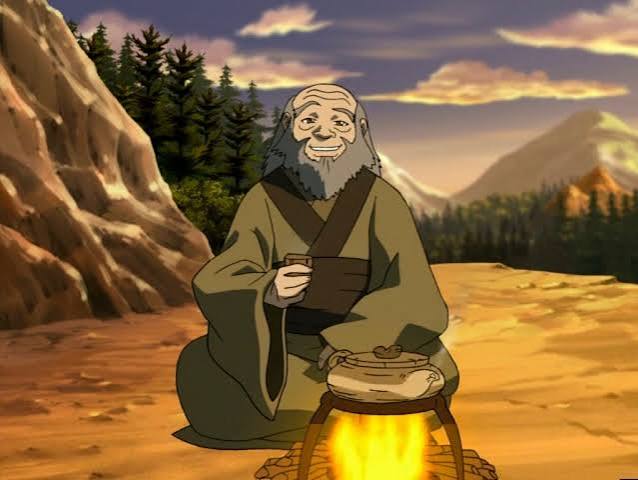
The skill of seeking one great line allows for seeking one unforgettable scene in a wonderfully imperfect popcorn movie. Can it not also help me find one redeeming quality in a challenging student, enabling me to strive to reach them for one more day. Maybe a piece of overlooked insight from a mentor, parent, or colleague unexpectedly surfaces to have a powerful, positive impact. A banal interaction with a stranger becomes the possible ground for a meaningful conversation on an ordinary day.All these “ones” can bring so much to our day.
Think about it and, if so inclined, walk through the coming days with a commitment to noticing your time and interactions.
One last thing. Thanks, Jay. I appreciate the lesson.
Endnotes
(1) I looked up five top 10-20 lists of movies with addiction themes. 28 Days appeared in one of them.
(2) Name that movie and character!

