
Deliver Me From Nowhere: A Study of Mental Health Through Music

The Bruce Springsteen biopic Deliver Me From Nowhere was released in the United States on October 24, 2025. To no one’s surprise I took it in on the opening weekend. The film does not attempt to recreate Springsteen’s high energy concerts or present him as a mythic rock and roll icon known around the world as The Boss. 

No, this is a story of a man in crisis. A man battling to stabilize his trembling psyche with the best weapon at his disposal, his art. It’s about the power and necessity of male friendship. It’s about how obsessive the artistic drive can become and, conversely, how slow and disjointed healing can be. That man just happens to be Bruce Springsteen.

Spoiler Alert!! Proceede with caution!

My Father’s House

My father’s house shines hard and bright

It stands like a beacon calling me in the night

Calling and calling so cold and alone

Shining ‘cross this dark highway

Where our sins lie unatoned (1)

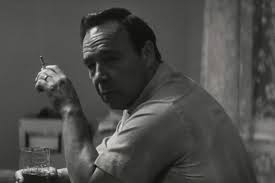
The film wastes no time putting us in the middle of Springsteen’s complicated and abusive relationship with his father, Douglas. A young Bruce is sitting with his mother, Adele, in a parked car. She instructs him to get out and retrieve his father from the bar (2). This is but one of the flashback scenes that highlight the impact this brooding, alcoholic, and distant man had on Bruce. The boy trembles before his father and his mother struggles to hold the family together, her frustration boiling over in explosive arguments and bitter tears.

These flashbacks are dispersed throughout the movie, reminding us that these emotional memories are woven into Bruce’s soul. Each step he takes and each chord he strums has the potential to be haunted by these visions rising from their internal resting places like ghosts from a tomb. Some viewers may find the narrative of the film being interrupted in random intervals by black and white scenes distracting or discombobulating. On the other hand, my depressive episodes – which included intrusive thoughts – never seemed very concerned about intruding at inconvenient and unexpected times. Depression isn’t polite.

Darkness is Everywhere

The film focuses on a very specific time in Bruce’s life, the creation of Nebraska. This stripped down, introspective and somber album explores themes of loss, desperation, and alienation. The characters in these songs range from criminals to shattered members of the working class. Three songs are directly pulled from Bruce’s childhood experiences. Images of dead dogs, abandoned grooms, and the desperation caused by debt are among the uplifting pictures painted in the lyrics of Nebraska’s offerings.

Kevin Slane, a movie critic who covers entertainment and culture for Boston.com states that “Deliver Me From Nowhere feels like being stuck in a low-grade depressive episode…” While I understand such a cinematic experience isn’t for anyone I thought it was perfect. Perfect because the tone of the film created the mood Bruce was experiencing the entire time! As someone who struggles with depression I found director Scott Cooper’s ability to make depression a constant presence in the film powerful and oddly refreshing. 

Like anyone struggling with a psychological disorder and mental health issues, Bruce had some moments that were worse than others. While some scenes are lighter, the tone rarely feels relaxed or casual. Depression is often unrelenting and heavy. It can consume or, at the least, taint even good moments. That this film was able to imprint that fact within the narrative was a victory. A victory, mind you, for director Scott Cooper. At various times it decidedly does not feel like victory for Jeremy Allen White’s Bruce Springsteen!  So, what’s an anguished song-writer to do? How does he get through? 

The Creative Drive

Bruce’s creative intensity, and the purpose it provides, keeps Bruce functioning. Bruce’s capacity to write lyrics, compose the musical compositions, rewrite, reimagine, and do it all over again actually presents another challenge in the film. Bruce’s isn’t falling apart wholesale. He is slogging, slugging, struggling, and living. Again, the tone of Deliver Me From Nowhere allows viewers to be reminded of this even as he frenetically pushes himself to complete Nebraska and for the studio executives to accept an album that lacks clear commercial appeal. 

Bruce’s restlessness is communicated through late night visits to the legendary Stone Pony. His conviction finds voice in his unrelenting commitment to the unvarnished sound and structure to the songs that make up Nebraska. His decision to shelve more marketable material (Born in the U.S.A. and I’m on Fire) leaves music executives in their offices and the audio and recording engineers in the studio frustrated and confused. 

This brings us to another important aspect of the film as the creative process does not heal Bruce. Purpose keeps him going. Sometimes creativity is a form of coping, at other it is an escape. The thin line between healthy and unhealthy investment gets blurred but embracing his art does allow for progress. He does not, however, complete the album and, by staying true to his artistic vision, defeat his depression. This is not a fairy tale and that is not how the mind works. 

A Reason to Believe

The relationship that exists between Bruce Springsteen and Jon Landau is central to the unfolding drama. It is a fine example of not only friendship, but the importance of belief. Jon does not initially understand the direction Bruce’s creativity has taken him. As his manager he presents Bruce a variety of professional opportunities, all of which are dismissed in favor of completing Nebraska. 

A beautiful moment in the film is when Jon Landau declares, “In this office, we believe in Bruce Springsteen.” Again, Jon doesn’t understand what is driving Bruce and, more importantly, he doesn’t pretend to possess this insight. Jon talks with Bruce and articulates some ruminating conclusions during conversations with his wife but he never is presented as someone who completely grasps what Bruce is experiencing. Instead he follows his belief in his client and friend, lending his full support to something he doesn’t completely see. He even supports Bruce’s demand that the album lives on its own merits. No tour. No singles. No press appearances. Professionally, Jon was…let’s say…surprised and a touch concerned about this news. Personally, well, he believes in Bruce Springsteen. What a rare and wonderful gift. 

As the film approaches its conclusion Bruce’s mental state is again deteriorating.  He reaches out to Jon. After a brief conversation Jon admits that, while he has helped Bruce through hard times he is not equipped to guide him through this. He is not being  dismissive. He is humble. Humble enough to be honest with himself regarding his limitations and, by extension, honest with Bruce as he guides him to find a therapist. Humility as a source of power. How many films have you watched that effectively portray that?      

See Ya Next Time

See ya next time. I’ve heard Bruce declare that at the end of a concert or two. I’ll be writing another post at some point so I will “see” all of you next time as well. Until then follow your vision, even if the road gets rocky. You might be surprised where you end up. Seek help when needed, it pays off in the long run. Lastly, consider the power of humility. Not only does it make it easier to accept help, it makes you more capable of offering aid and authenticity. Maybe our hearts would be bigger if our egos didn’t take up so much space. 

Endnotes

 (1) “My Father’s House.” Springsteen, B. Nebraska (1982).

(2) Bruce tells this story during his acclaimed special “Springsteen on Broadway.”

Superman: What Makes Him Super?

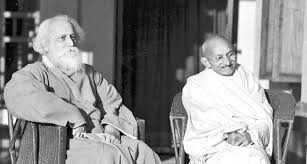
Perhaps he will not succeed. Perhaps he will fail as the Buddha failed and as Christ failed to wean men from their iniquities, but he will always be remembered as one who made his life a lesson for all ages to come.

-Rabindranauth Tagore, writing about Gandhi (1)

The recent release of James Gunn’s Superman has led to a burst of Superman inspired videos, memes, articles, and reflections. This post will add to this onslaught of opinions while, hopefully, offering something of value to that massive conversation. While I will be referencing the recent James Gunn’s Superman it is important to remind ourselves that Superman has been with us since 1938! In many ways his mission has not changed in 87 years as he strives to fight for, pursue, and reveal the good in the world and in people. So look to the sky, dear reader, as we examine (with mild spoilers) what makes Superman super!

Of Indian Poets and Magic Rings

In our introductory quote we read that Tagore laments that Gandhi could fail to “wean men from their iniquities” while being remembered “as one who made his life a lesson for all ages to come.” This stream of thinking can also be applied to Superman. While he often saves the day in dramatic fashion (stopping an invasion from Darkseid or preventing a missile from striking Hackensack, New Jersey) he also seeks to “wean men from their iniquities” (2).

Tagore reaches back 2,000 years to the lives of Buddha and Jesus for examples of men who can be seen as examples “for all ages to come” despite failing in their lifetimes to successfully “wean men from their iniquities.” This begs the question, why is it so hard to accomplish this goal? To examine that question we will look to ancient Greece and the Ring of Gyges.

The Ring of Gyges

The Ring of Gyges is a thought exercise introduced in book 2 of Plato’s Republic. Simply put, the ring offers the power of invisibility and, therefore, the capacity to engage in a variety of immoral and unjust acts without the fear of being caught and punished. This applies to Superman not because he is invisible but because he is nearly invincible! He could act with impunity with minimal risk of punishment. Yet, he chooses not to. Why is that?

Before we delve into this question, however, I want to present you with a sidenote. The idea of a mythic, magic ring allowing us to act with a sense of freedom from punishment might sound so detached from our lives that it lacks relevance. I understand why you may think that. Consider this, the reason the ring allows such freedom is because it makes the performer of wretched deeds anonymous.

How much online bullying and cruelty takes place specifically because people don’t share their true identity? Anonymous behind online handles and hashtags people diminish and demean others on a daily basis. Improper corporate schemes and political corruption thrive in anonymity. Criminals from the entitled elite (Bill Cosby and Harvey Weinstein) to organizations with a vast geographic reach (human trafficking) to local crimes all count on anonymity and lack of detection for on-going success. The Ring of Gyges isn’t that far away.

Glaucon’s Challenge

In the Ring of Gyges discussion, Glaucon – Plato’s older brother and a friend of Socrates – seeks a stronger defense from Socrates regarding why someone would behave in a just manner when possessing the magic ring. 

“… for wherever any one thinks that he can safely be unjust, there he is unjust….For all men believe in their hearts that injustice is far more profitable to the individual than justice,…If you could imagine any one obtaining this power of becoming invisible, and never doing any wrong or touching what was another’s, he would be thought by the lookers-on to be a most wretched idiot,…(3)” 

Glaucon represents a combination of what we can call the “power corrupts” argument.and a Hobbesian view of human nature (people naturally bend toward the wicked). Free from the societal restraints of punishment and  judgment people will give in to the power of the Gyges’ ring. Moreover, if someone didn’t give in, they would be seen as a “wretched idiot.” What’s a Kryptonian to do?

An Alien Finds a Magic Ring…in Ancient China

Socrates’ answer to Glaucon plays out as an extended argument in which he presents his vision of the harmonious, tripartite soul. We examined this vision in an early post. A key insight into Superman’s behavior, however, can be found in the words of the great sage Confucius. 

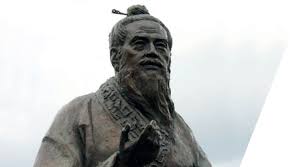
Confucius noted,  “To understand something is nothing like loving it. And to love something is nothing like delighting in it” (4). In this maxim we see a progression towards joy. The progression ends with the highest level being one who “delights” in something. As a teacher this simple maxim is reflected in students on a regular basis. In a classroom discussion all the students “know” that gossip and rumors hurt people and are often inaccurate. As a general rule this knowledge has limited to no impact on their behaviors. With apologies to G.I. Joe, knowing is not half the battle (5).

Let’s say the “something” in this maxim is the idea of “the good.” Simply put, Superman “delights” in doing good (6). Looking at Superman (1978) we see a wonderful example of this character trait. In this origin movie Superman is the only super powered person on earth. There are no super villains to fight or multi-dimensional invasions to thwart.

During his first night patrolling the skies we see him stop a jewel thief, save a plane and passengers that lost an engine, stops armed robbers on a boat, and saves a cat in a tree. Correction, he saves a cat in a tree and flashes that warm Christopher Reeves smile when returning the cat to a little girl. The joy he feels when performing even small acts of kindness fuels him much like the rays of our yellow sun. 

A Rare Bird

Confucius could be a demanding individual. Consider this passage; “I’ve never seen a person who really loves humanity, and despised inhumanity. Those who love humanity know of nothing more essential. And those who despise inhumanity act with such humanity that inhumanity never touches them” he would not allow anything that is not virtuous to approach his person” (7). With such a high standard – esteeming nothing above humanity and not allowing inhumanity to approach us – it is little wonder that Confucius lamented that he never met an individual who maintained virtue throughout their life. Superman may well pass Confucius’ test.

In James Gunn’s Superman we see our Kryptonian hero battling a fire breathing kaiju unleashed as a distraction by Lex Luther. During the battle Superman saves a squirrel from the carnage, a scene that communicates how deeply seeded his commitment to virtue, compassion, and life runs. For me, this simple act adds weight to a previous scene. 

Earlier in the film Superman grants his girlfriend, Lois Lane, an interview. A pivotal moment in their interview quickly became an argument. Lois accuses Superman of not considering the political and ethical ramifications of his intervention in preventing the nation of Boravia from invading Jarhanpur. Superman shouts, “People were going to die!” as the primary motivator. Superman has a profound sense of compassion, deeper than most people. This is a man who saved a squirrel during a battle with a raging monster. How could he not take action that guaranteed the loss of life? 

He, in fact, is disturbed by the Justice Gang’s (please don’t let this stick) use of lethal force to stop the kaiju. He was trying to save the city and save the creature’s life. In a world where lip service is paid to compassion, but concepts like brand, politics, and notoriety tend to drive a great many people. Lois can feel victorious for “proving” Superman is naive. She also proved herself to be part of the reason Tagore’s quotation applies to Superman. We often claim to“care” but are shocked by the perception of a truly humane individual.

A Musical Interlude

I found my mind drifting to Queen’s Under Pressure during Superman. This collaboration with David Bowie crafted a poignant anthem that is included in Rolling Stone magazine’s list of the 500 greatest songs of all time. The final stanza reminds us that:

love’s such an old-fashioned word

and love dares you to care for

The people on the edge of the night

and love dares you to change our way of

Caring about ourselves 

Love dares us to care. For Superman that means stopping an invasion. For Lois stopping an invasion needs to be questioned for…political reasons? Her ego? Proving to the caring individual that the “real world” is no place for such sentiment? Was she sabotaging her relationship because Superman is just too damn good? 

I believe Lois is playing a key role here. In The Dhammappada The Buddha notes that people will often criticize the “wise man”(8). Lois reminds us that even people on our side can be put on their heels by goodness and will strive, perhaps subconsciously, to break goodness down to a more palatable level.  Love, after all, “dares us to change our way of caring…” No one said we had to enjoy or accept the challenge.

While I found myself reminded of Quess we should emphasize that Superman draws his musical inspiration from another source. 

Punk Rock or Russian Existentialism?

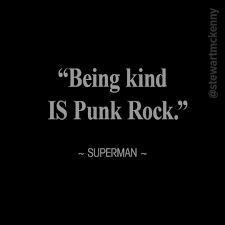
In James Gunn’s Superman our kryptonian hero asserts that kindness is the new punk rock. In a world spiraling into dead end cynicism and superficiality, being kind is a rebellious action. It is a fine sentiment, but not a new one. 

Let’s return to Superman (1978). Consider this list; Watergate Scandal (1972), the end of the Vietnam War (1975), the Boston busing crisis (1974), the Olympic murders (1972 Olympic Games), the Cambodian Genocide (1975-1979), and Jonestown (1977). The 1970’s wasn’t, to quote my favorite, fictional boxer, “all sunshine and rainbows.” Into this socio-cultural cauldron people went to the movies to see a man fly…and so much more. The same apathy and cynicism we lament in our present age has been seen before, and Superman has been there as a counter balance (9).

Leaving Superman behind for a moment (don’t worry, I’m sure he can catch up) let’s take a brief walk into Fydor Dostoyevsky’s The Brothers Karamazov (1880). For the crime of reading and discussing anti-Tsarist books Dostoyevsky served four years in a Siberian labor camp and 6 years of forced military service. In that time he saw a variety of reactions to suffering including growing spiteful, hatefilled, fearful, and angry. He also saw people choose kindness, dignity, and faith. These years field his passion to explore themes of resilience, faith, doubt,  the crushing weight of suffering, freedom, and meaning. 

In  The Brothers Karamazov the character of Alyosha is a symbol of courage. Moral courage as opposed to physical courage. Alyosha dares the reader to realize we can choose love and compassion even in a cruel world full of suffering. It is important to note that Alyosha chooses compassion not because he is certain that it will transform anything but from the courage to be humane. He refuses to “return his ticket” (drop out of the grind of life) like his brother Ivan posits as a path in the face of suffering. 

The world has always been in need of compassion…and the courage to choose it.

Humility: A Misunderstood Super Power

In the climatic scene of James Gunn’s Superman, Superman delivers a monologue about his fears and shortcomings to Luther…who doesn’t give a crap. The scene felt forced to me, but I did appreciate the effort to highlight  of humility.

Psychology professor Dr. Daryl Van Tongeren (2022) informs us that humility is a trait that has been “misunderstood and exploited” for quite some time. Far from being ann invitation to be meek or guilty, “humility is a secure openness to the world, where we can be honest with ourselves and others about our strengths and limitations…Humility is a way of approaching ourselves, other people, and the world around us with a sense of enoughness…” (10). He continues to identify some “super villains” (I’m looking at you Lex) that humility battles. The list includes arrogance, conceit, and a tendency to view oneself as superior and others as inferior. 

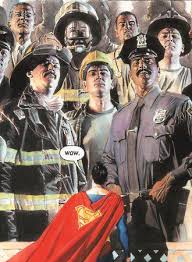
Whether thanking policemen for their assistance, making members of the Justice League feel welcome, or being utilized to honor first responders after 9/11, Superman is a beacon of humility, tirelessly working to remind everyone that we have enough to face the world…and to assist others as they do so. 

It’s a tough world filled with suffering and pain. Doubt and confusion. It is also filled with opportunity. The temptation to “return your ticket” is omnipresent, so when you feel the weight is too heavy just look up in the sky.

Thanks, Superman!


Endnotes

(1) http://www.guyanaundersiege.com/Leaders/Gandhi%20by%20Tagore.htm

(2) There is no shortage of Darkseid insurgencies in Superman lore but, as far as I know, only in the 1978 movie Superman do we see Hackensack take a prominent role!

(3) https://www.gutenberg.org/files/55201/55201-h/55201-h.htm

(4) The Analects, Chapter 6, Verse 19. This numeration is from the David Hinton translation (1998), Counterpoint, Berkeley, California.

(5) Anyone else remember that tag line from our Saturday morning cartoons?

(6) This approach can also be applied to Zac Snyder’s version of Superman. This interpretation saw a Superman who understood the good but did not delight in it.

(7) The Analects, Chapter 4, Verse 6. This numeration is from the David Hinton translation (1998), Counterpoint, Berkeley, California.

(8) Chapter 6 of The Dhammapada. Ekanth Easwaran translation.

(9) This list also highlights what a rough time in U.S. history Jimmy Carter became President.

(10) Humble: Free Yourself from the Traps of a Narcissistic World. Daryl Van Tongeren, Ph.D. The Experiment, LLC. New York (2022) Pages 2-4.


Matt Murdock: Catholicism and Redemption in Daredevil

Daredevil: Born Again released the final episode of season 1 on Tuesday, April 15. Such perfect timing for one of the few overtly religious characters in the Marvel vault (1). Matt Murdock (Daredevil) is a devout Catholic and a lawyer, meaning his vigilante activities puts him at odds with both his religious convictions and professional ethics. It is no accident that Matt chooses to dress as a “devil” when adopting his heroic alter ego. He is well aware of the darkness within that he taps into in order to battle the dark forces of the world. This paradox causes him great personal turmoil, and what could be more Catholic than that (2)?

Religious Literacy and the Psychology of Faith

Matt’s religion presents a challenge when analyzing him, his actions, his motives, as well as his reaction to the motives and actions of other characters. This challenge is best explained as religious literacy. Problems that arise from religious literacy (or illiteracy as the case may be) include stereotyping of religious people, failure to appreciate (or even consider) the metaphor, symbolism, and nuance in religious texts, the failure to understand the interval diversity within religions, and the inability to grasp that religion and science are compatible. To be clear, both religious and non-religious individuals can struggle with religious literacy. While I do not wish to spend an inordinate amount of time on this topic I do believe in setting a clear vision for our evaluation of Daredevil. 

Speaking of belief, let’s make it known far and wide that (A) Belief  ≠  Faith and (B) Belief in a religious context ought to focus on concepts far grandeur than whether or not Jesus walked on water, the Buddha could levitate, or Lao-Tzu rode on the back of a bull into his secluded retirement in the mountains. In an earlier post regarding faith I utilized Hershel from The Walking Dead to introduce James Fowler’s theory regarding the psychological development of faith (https://james-rourke-author.com/2017/11/27/seeking-faith-among-the-walking-dead/). Fowler’s theory includes six stages and five transitional corridors which a person may go through. 

Religion and Ontology

Ontology is the philosophic study of, and inquiry into, the nature of existence. Religions, at their core, introduce an ontological map of reality. IF someone’s faith develops into the fifth stage, enduring the crucible of stage four and the four-to-five corridor, this ontological map becomes something the individual “suspects” is the underlying foundation of reality and they try to “stay attuned to those patterns” (4).

So, what does any of this mean in the real world? It’s quite simple, actually. To a Buddhist, karma would be an ontological reality. Now a stage three Buddhist likely could quote some important passages regarding karma but may, in ways large and small, not live as if it really mattered. A stage five Buddhist, who suspects the ontological reality of karma, would likely live differently as they attempt to “stay attuned to those patterns.” 

Now, even a rudimentary knowledge of karma allows one to see how karma is the moral law woven into reality itself. The idea that karma exists as a moral law brings us to the concept of meta-ethics. Within moral philosophy there are two camps under the umbrella of meta-ethics. You can not be in both and there is no Venn diagram allowing for overlap. Every person eventually comes to believe that morality either exists as a part of nature (karma, god’s law, etc.) or is projected into the world by people (laws, ethics, customs). 

These two camps are called moral realists (morality, like gravity, is part of the universe) or moral non-realists (morality, like love and courage, exists as something people bring to the world). If the human race ceased to exist morality would still exist according to moral realists and cease to exist according to moral non-realists. Let’s assume that karma exists. If karma exists that means we live in a moral universe. Does the phrase “moral universe” ring a bell for you? I’ll give you a second to dust off your educational cobwebs. Time’s up.

What’s Up, Doc?

Dr. Martin Luther King jr. once stated, “The arc of the moral universe is long but it bends toward justice” (5). King, a Southern Baptist minister, is presenting a message of hope and patience to his listeners. He is also presenting a glimpse of the theological concept of a providential universe, with morality woven into reality and free will allowing for people to work at finding that arc and working to hasten the arrival of justice (attend to the arc) or deny and work against universal justice. 

Matt Murdock, like King, is a Christian. He is written as a Catholic while King was a Southern Baptist, but both exist under the umbrella of Christianity. King is a historic figure who strove to live by the demands of the moral universe, which adds context to his embracing of non-violence as a way of life whereas other civil rights activists, like Stokely Charmichael, view non-violent action as a tactic. Matt Murdock would, undoubtedly, admire King’s non-violent stance but he does not live it. His Catholicism does, however, shape his activity on the roof tops and in the court room. 

As noted, the providential universe with its “arc towards justice” is one aspect of the Christian ontological map. A second ontological aspect of Christianity is also posited by other religions.It is the idea that deep within each person is a soul or conduit to the divine that grants value to each individual. The fact of your existence means you have value. Socio-economic level, race, sex, gender, intelligence, physical strength, political affiliation, etc. has no bearing on your true value. The blooming idiot and the wise sage both carry this “soul” and it is incumbent upon Matt (as a Catholic) and Dr. King (the Southern Baptist) to treat them as such.  Of course, not everyone shares this conception of human nature.  

Matt and Frank

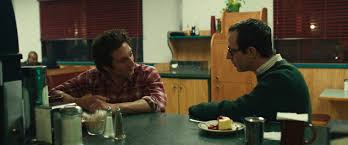
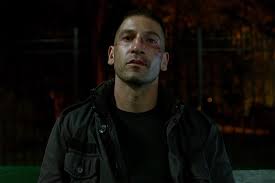
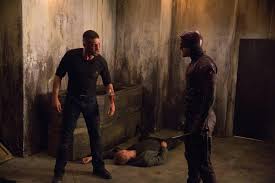
Frank Castle (The Punisher) exists as an intense foil to Daredevil. In a classic episode of Daredevil (season 2, episode 3) engage in a philosophic and ideological debate on a rooftop. To be sure it is an unusual debate for a couple of reasons. One, Matt is chained to a chimney. Two,  Frank hits his debate opponent in the head with  a gun, rendering him unconscious, because he gets frustrated with his answers. Not exactly high school debate club procedures.

It is in this episode that we are privy to our fullest glimpse of how Matt reconciles his Catholicism with his actions as Daredevil. Frank has zero compunction when it comes to killing, defiantly stating, “I think that the people I kill need killing, that’s what I think.” When Matt protests by pointing out Frank left men hanging on meat hooks Frank doubles down by responding, “They got off easy in my opinion.” 

Their conversation continues as Matt eventually asks Frank if he ever doubts himself. Frank, naturally, does not. This brings Matt to express his doubts about Frank, “Really? Really? You never think for one second, “shit, I just killed a human being.” Frank’s retort – “That’s being pretty generous” – gets to the core of their ontological convictions. Frank views the value imbued in the title “human being” as something you earn (8). 

Matt’s Catholicism pours from him as he answers, “A human being who did a lot of stupid shit, maybe even evil, but had one small piece of goodness in him. Maybe just a scrap, Frank, but something. And then you come along, and that one tiny flicker of light gets snuffed out forever.” Everyone, for Matt, has “one small piece of goodness” in them (the soul). This does not prevent them from doing “stupid shit, maybe even evil…” but it does mean that they deserve an opportunity, in Matt’s words, “to try again.” Here Matt digs deeply into the Catholic conception of redemption. We will return to that idea in due time, but first we need to break Matt’s spirit a bit more.

Stupid Shit, Maybe Even Evil…

As the first episode of Daredevil: Born Again comes to a close we witness Daredevil toss the psychopathic assassin Benjamin Poindexter (Bullseye) off a building. This was not done to render Bullseye incapable of fighting. It was an attempt to kill the man who had already murdered “Foggy” Nelson (Matt’s best friend) and Father Paul Lantom (a Catholic Priest and mentor). Poindexter also suited up as Daredevil for a time in an effort to ruin his reputation. 

Despite an ever growing list of victims (including the two people dear to him) Matt is wracked with guilt over his attempted murder. The fact it didn’t succeed does not matter, the intention is real and Matt does not deny this reality. Nor can he deny that he had once told Frank it is not a vigilante’s call to end a life. Having broken his deepest held code Matt abandons his vigilante persona, not only as penance for his act but fear of his inability to control his violent impulses. He, undoubtedly, believes he has moved from doing “stupid shit” to “evil.” 

Matt, as we have already stated, is an ardent Catholic so the fact he acted on a murderous intention cuts him to the core. As we have already noted, aspects of Catholicism are the moral realism of the universe and the existence of an internal aspect of the divine. There is a third aspect of Catholicism (and all religious traditions) the utilization of stories to teach moral lessons and offer a framework for approaching life (9). 

The Old Wooden Cross

Christian and Biblical scholar Marcus Borg teaches that, in ancient times, Christians were referred to as “Followers of the Way.” Christianity at its roots, therefore, isn’t about beliefs, miracles, adhering to dogma. It is about living a particular way, the way exemplified by Jesus of Nazareth. If Father Lantom was alive in Daredevil: Born Again I wonder if he would have counseled Matthew by reminding him of another way that he was already walking, The Way of the Cross.


The Way of the Cross is central to the Catholic Easter celebration and also acts as a framework for approaching life. It is a familiar Way for Matthew, though a reminder may have helped him navigate his shame and guilt (10). There are fourteen stations on this Way (fifteen if the resurrection is included) all of which are relevant to Matthew’s life. 

Challenging Powerful Forces

Station 1: Jesus is condemned to death. Two powerful and connected forces, the Sanhedrin and the Roman government in Judea, condemn Jesus to death, It is important to note that the Jewish community during the Roman Empire were divided into four groups – the Sadducee, the Pharisees, the Zealots, and the Essences – each with different visions of their faith and how to endure Roman rule. The Sadducee were the most political and thought working with Rome was the best bet. They also had the most influence in the Sanhedrin, a Jewish legislative and judicial council with tremendous authority regarding internal legal matters. 

While Matt isn’t formally sentenced to death he does stand up to and before powerful people (Wilson Fisk and Alexandra) and organizations (Fisk’s criminal organizations and The Hand). These groups, without a doubt, want him dead and detest his interference in their business. 

Life is Pain!

Station 2: Jesus takes up his cross. In this station the cross is a symbol of suffering…and rightfully so! The Romans used crucifixion to publicly torture and execute criminals, disloyal soldiers, foreigners, and Christians. Poles and even trees as well as crosses were utilized in this brutal form of capital punishment. In the stations it is a reminder that life can be challenging and filled with pain. No one is escaping life without wounds. The stations’ wording, Jesus takes up his cross, can be viewed as misleading because he didn’t take up the cross so much as it was forced upon him. However, a small step into metaphor reminds us that while the cross was assigned to Jesus he quite willingly, in his early 30’s, took on the role of social agitator and religious trailblazer, offering a different path (way) to follow. This brought him into conflict, hardship, and suffering.

In the aforementioned rooftop conversation between Matt and Frank, Matt makes the claim that it is not his “call” or Frank’s to kill people. Frank’s response, “Did somebody ask you to put on that costume or did you take it upon yourself?”, brings us directly to Matt taking up his “cross.” He chose to be Daredevil. The suffering that came his way wasn’t desired but he is responsible for the choice to live a way that challenged powerful and malevolent people. 

Struggling and Falling

Stations 3, 7, and 9: Jesus Falls. During the stations of the cross Jesus is depicted as falling three times. He rises each time. Matt falls and fails on a regular basis. Physical injuries, while serious, are not the only consequences of his falls. Relationships suffer, friendships are strained to the point of ending, trust is lost, and innocent people are caught and even killed in the crossfire. Still, Matt rises every time, continuing to struggle for the improvement of the citizens of Hell’s Kitchen and New York.

Sharing the Suffering

Station 4: Jesus meets his mother and Station 6: Veronica wipes Jesus’ face. Jesus takes a backseat in his own story in these two stations as Mary, his mother, and Veronica step forward. Station 4 is a sad scene that reminds us that multiple emotions can and often do compete for primacy during our lives. Mary greeting her son is a moment of deep love, shared pain (both physical and emotional), unyielding support, and helplessness we sometimes feel when a loved one is suffering. 

Station 6 depicts Veronica coming from the crowd to wipe Jesus’ face. The scene reflects the human desire to do SOMETHING to alleviate another’s suffering. If we are honest, Veronica’s action doesn’t make much difference. Jesus is still carrying the cross, still sweating and bleeding, and will still be crucified. If our cynical times could speak they would likely say, “Why bother.” Because compassion can be fuel and acts of humanity, large and small, are my business…not your concern. Give $5 to the charity. Hand a homeless person a sandwich. Strive to help a student understand a concept just a little better. Don’t let what you wish you could diminish what you can do.

In Hell’s kitchen various characters, primarily women, take on the role of Mary and Veronica. Karen Page, Claire Temple, or his own estranged mother Maggie Murdock, who happens to be a nun…Matt’s life is complicated. All three women have moments of both support and helplessness (Mary) and compassionate engagement (Veronica). In Matt’s world they are able to offer more assistance than wiping his brow as Claire, a nurse, sutures and tends to Matt’s wounds and Karen’s investigative skills and courageous determination helps Matt, even when he doesn’t like it.

Unexpected Assistance

Station 5: Simon helps Jesus carry his cross. In Station 5 Simon emerges from the crowd and helps carry Jesus’ cross. We all need help carrying our crosses, after all Frodo had Sam and even that obsessive loner Batman had Alfred. Simon adds an extra dimension to this idea as he is ordered by Roman guards to assist Jesus. Perhaps they were worried he would die before reaching Golgotha. I doubt it was aid sent from a place of humanity. Simon was an unexpected, but welcome, ally. 

Frank Castle and Jessica Jones are but two unexpected allies that arise in Hell’s Kitchen to help Matt accomplish his goals. Jessica, a surly private investigator you met in a previous post, became a trusted ally in The Defenders. Frank, as we have already noted, was a former adversary. As a Catholic Matt must occasionally muse how the Lord does indeed work in mysterious ways. 

Of course, in your own life, you likely have a memory or two of aid appearing unexpectedly. The source and timing of these moments are as infinitely varied as our imaginations. Good friends, my kids, valued colleagues, casual acquaintances, students, strangers, former coaches or teachers, and siblings are but some of the people who have filled this role for me. And the timing? Well, that runs from dinner to bars to hallway conversations to shared time in a car. The most important characteristic of it all…openness to the experience. 

The Final Fall?

Station 10 through Station 14 depict Jesus’ crucifixion, death, and burial. There is no need to sort out the details here. Sometimes we fall and it feels like/seems like a final defeat. In the Way of the Cross this “final fall” is death itself, but there is also the rising.  

Born Again

Station 15: Jesus’ Resurrection. There is an important distinction between the words resurrection and resuscitation. The Way of the Cross leads to Jesus’ resurrection. If the Way ended in resuscitation Jesus would have arisen in the same body, restored to his same state of life and being. Resurrection requires a transformation to a new state of being. In the Gospels this transferred state included the capacity to appear, disappear, and pass through walls. The people he encountered achieved various victories upon seeing him, overcoming doubt, fear, confusion, and earthly power and temptations. 


Throughout his fictional life Matt Murdock has been beaten to his knees, nearly killed, assumed dead, and emotionally numbed. Yet in all of these “deaths” he is transformed. Striving to overcome internal and external obstacles slowly, sometimes quite painfully, creates a better version of himself. He is born again (11). 

A Final Thought

A well structured world view should embolden adherents to face the inevitable hardships of the world (their crosses), offer them comfort when fatigued, and lead to substantive transformation. What if we could stop worrying about what others believed and spend more time considering two questions. How does my world view aid me? How can I help ease your suffering? Could such questions lead to transformations many seek but few find? I suppose the only way to find out is by contemplating your answers.


C’mon MCU!!! (encouragement from a fan)

I have enjoyed Marvel characters for over forty-five years (1). As a child they helped me learn to read and fueled my imagination. My curiosity was spurred as I read Norse myths because of my interest in Thor. The Avengers, Fantastic Four, and Silver Surfer hit the sci-fi chords that I increasingly enjoyed in my young film choices, which included Star Wars, Star Trek, Alien and Aliens, and Flash Gordon (He’s a miracle!). In High School books like 1984 made more sense when I pictured Dr. Doom pulling the strings from behind the curtain.

In 2010 my book The Comic Book Curriculum was published, a combination of homage to the medium of comics and guidance to teachers looking to use them in the classroom to engage readers. The book is dedicated to my grandmother, who bought me my first comic books.

The writing of The Comic Book Curriculum coincided with the release of Iron Man (2008) and the launch of the Marvel Cinematic Universe (MCU). During these years Daredevil (2015) and his extended “universe” premiered on Netflix. My enjoyment and engagement with these films and shows is highlighted by the fact eight posts on this site are directly linked the MCU. The decade long journey culminated with Endgame (2019).

Like many fans I was curious to see what came next…and disheartened by what was revealed. I do, however, know there are many gripping storylines that can be pulled from the comics and brought to life on the big screen. On February 14 Captain America: Brave New World will be released. Will it be a sign that the MCU is in a course correction or will it continue to see a studio staggering down an undesirable path? Time will tell, as will my own eyes and sensibilities as I plan on seeing the film that weekend with hope and trepidation (2).

Getting Focused

The following statement summarizes the previous thoughts; I am disheartened by the MCU’s recent phases but still hopeful that they can reclaim their storytelling acumen which has been displayed in the past. Neither hope nor disenchantment exists without reason. The reasons for their dual existence will be explored by highlighting four storytelling elements. The elements, therefore, are our focal point, not any particular film. So, let’s remember where Marvel has blasted some titanic homeruns and like Mighty Casey, also struck out.

Flawed Protagonists

We start with the granddaddy of them all! In Iron Man (2008) Tony Stark is presented to as a self-aggrandizing, self-centered, arrogant billionaire. He possessed a ferocious independent streak and dismissed accountability. I would call him misogynistic but that would ignore the fact he looks down on pretty much everybody. His superiority complex is almost limitless. More interested in fans and admirers than friendship he stomps through life utilizing his superficial charm to win plenty of both (3). Without this uninspiring baseline we would not have watched Tony struggle with the concept of responsibility, strive to become more “we centered” than “me centered”, and stumble as he developed relationships with other heroes and characters.


Thor’s hubris and entitlement (Thor 2011), Wanda’s anger and thirst for revenge
(Avengers: Age of Ultron 2015), and Jessica’s PTSD and functioning alcoholism (Jessica Jones 2015 – Netflix) are further examples of heroes with room to grow. Flawed protagonists also allow for wonderful payoffs. I didn’t know I could care so much about the emotional journey of a genetically altered, highly intelligent but deeply embittered raccoon until I met Rocket (Guardians of the Galaxy 2014).

As the MCU moved beyond the Infinity Saga their protagonists became more sterilized and less interesting. I enjoyed the film Shang-Chi and the Legend of the Ten Rings (2021) but can’t tell you much about the character strengths and weakness of Shang- Chi. I know what he can fight and he cares about people, but didn’t have a strong sense of what he can’t and what hinders him. I rooted for him to win but wasn’t rooting for him to grow in any particular because he was already a good guy (4). It’s ok for a protagonist to be off-putting – it allows for plenty of development.

Setting

The MCU takes the viewer to a variety of vistas, both on earth and well beyond our
galaxy. Building these venues so they resonate as if they actually exist is essential if viewers are to surrender to these fictional realities. Some settings, like Wakanda’s introduction in Black Panther (2018), were constructed with care that included attention to long standing traditions, cultural norms, and rivalries. Wakanda had an unspoken lore flowing from the screen. This is not a knock on any actors, but Wakanda itself was more interesting than some of the characters in the film. Honestly, Wakanda WAS a character in the film (5)!

Not all venues receive care and attention in the MCU. Asgard, for example, was a
woefully underdeveloped aspect of the Thor movies – especially in the hands of Taiki Waititi (6). The mediocre usages of Asgard are still superior to the Hall of the Illuminati and the temple atop Mount Wundagore in Dr. Strange in the Multiverse of Madness (2022). I wish I could forget the quantum realm in Ant-Man and the Wasp: Quantumania (2023). It is difficult to immerse yourself in a movie when you are painfully aware you are watching a movie. When Clint Barton’s home (revealed in Avengers: Age of Ultron 2015) is far more interesting than the quantum realm, your movie has a problem.

Great Scenes

Director Howard Hawks noted a good movie must have three great scenes and no bad ones. The MCU is littered with great scenes and their share of bad and bland ones. I am going to give you a quick list of five scenes that live rent free in my head. Feel free to tell me some of your favorites in the comments!

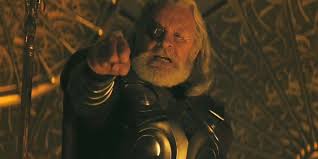
  1. The banishment of Thor (Thor 2011) is seared into my MCU memory banks. Odin’s disappointment and heartbreak Odin are communicated verbally (“I was a fool to think you were ready”) and in the snarl unleashed to silence Loki.
  2. Chris Hemsworth also delivers primal pain in Thor when he attempts to lift Mjolnir at the S.H.I.E.L.D. camp. He is an animal trapped in a cage as he bellows his rage and confusion to the heavens.
  3. The post-party lifting of Mjolnir scene in Avengers: Age of Ultron (2015) is not only a wonderful way to display the personalities and comraderie of the Avengers, but sets up the payoff when Captain America lifts the legendary weapon in Avengers: Endgame (2019)

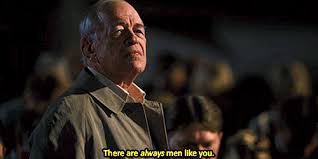
4. “There are always men like you.” Thus spoke the old man to Loki in Avengers
(2012). ‘Nuff said.

5. “I am the Punisher! You want it you got it!” If you’re a fan of Netflix’s Daredevil

(2016 Season 2) then you likely loved this memorable courtroom scene.

Please note I was thinking of great scenes here, not great fights. Granted, throw
downs and smack downs part of the MCU and if I were to make that list it would
include Steve Rogers vs. Bucky in Captain America: The Winter Soldier (2016), Tony in his Hulk Buster Armor vs Hulk (Avengers: Age of Ultron 2015), and Frank Castle’s bathroom battle (Punisher 2019 season 2).

Villains and Antagonists

Here me out! I know Marvel has a chronic villain problem. Many of our heroes square off with underdeveloped and forgettable rivals who last in my memory about as long as morning dew survives the rising sun. Worse, some were so underwhelming – I give you Justin Hammer in Iron Man 2 (2010) – that I remember them despite my desire to forget!

We must always give credit when it is earned. Thank you Ryan Cooglar and
Michael B. Jordan for bringing us Killmonger in Black Panther (2018). Tom Hiddleston’s Loki clearly belongs in this category as he chews up scenes and leaves us wanting more. Spider-Man: Homecoming (2017) would be a mediocre movie if not for Michael Keating’s Vulture elevating the film. Spider-Man: No Way Home allows us to enjoy the maniacal Green Goblin, brought to life once again by Willem Dafoe. The threat of Thanos (Avengers: Infinity War 2018 and Avengers: Endgame 2019) was perfectly presented as the Infinity Saga came to its conclusion.

I must confess, Thor taught me to temper my expectations for characters as their appearance on the screen does not always align with their comic book iterations.In the comics, The Destroyer is an engine of destruction that routinely pushes Thor to the very brink of exhaustion and death. In the MCU before I could finish the thought, “Oh shit! How will Thor defeat…” the fight was over.

This is why I was able to accept the rendering of Ultron in Avengers: Age of Ultron (2015) and enjoy the movie (7). This leniency is not without limit which is why characters like Justin Hammer, Taskmaster (Black Widow 2021), Ronan the Accuser (Guardians of the Galaxy 2014) left me cold (8).

So Much More we Could Explore

I am putting on the breaks for the sake of keeping this post under ten pages! If I were to continue the elements next up would be character development (Captain America and Black Widow in Captain America: The Winter Soldier is a prime example), great lines (“I could snap your neck and not change a shade.” Bruce Banner to Wanda in Avengers: Age of Ultron), and tone (I prefer a grittier tone, hence Jessica Jones, Daredevil, and Captain America: The Winter Soldier hit a chord for me). If you have any interest in these topics do feel free to let me know!

Marvel has displayed the capacity to make entertaining, compelling, and thought provoking films. They have also produced some hollow clunkers. Sadly, those clunkers are now piled upon each other post Avengers: Endgame. My Marvel goodwill, which began to be cultivated around the age of eight, is waning. It has not expired. I’ll be watching Captain America: Brave New World not simply to be entertained but in the hopes that the franchise can show signs of rededication to solid storytelling. Fingers crossed until next time!

End Notes
(1) I am a fan of D.C. as well, but this is a Marvel-centric post. Stay tuned for a post
regarding James Gunn’s upcoming Superman movie.


(2) I am even MORE nervous about the pending release of Daredevil: Born Again in
March. The complete fiasco that was the introduction of Wilson Fisk and Matthew
Murdock to the MCU strained my patience to the limit. Thankfully I am a teacher
and parent of four so I always seem to find more patience!


(3) Tony Stark actually exhibits many of the traits of a sociopath.

(4) Yes, he had the issue with his father but the evaluation of it felt shallow and clichéd.


(5) We have witnessed this in other settings within the superhero genre. Gotham City in
most Batman films and Hell’s Kitchen in Daredevil are two examples.


(6) The directors and writers of these films matter. James Gunn and the Russo Brothers
are prime examples of superior talent for the interlocked universe.


(7) I am well aware of the fact that I am in the minority on this one but I have always
enjoyed Avengers: Age of Ultron. It is true that Ultron on the screen was not the menacing, nigh unconquerable menace he was in the comics. He was particularly ominous in the hands of the late, brilliant George Perez.


(8) Even when attempting a positive slant the reality remains that the MCU misses more
than they hit with their villains. I know Robert Downey jr. is a fine actor but I found his announcement as Dr. Doom to be more desperation than fulfilling…after about 12 hours.

Finding Balance in a Thirty Year Teaching Journey

I am in the thirtieth year of my high school teaching career. Thirty. Years. The most common response is “How did you do that?” quickly followed by some semblance of, “Good for you.”  My reply, depending on my mood, ranges from “Thank you” to “Yup, it has been quite the journey” to “Is it? Is it actually good for me?” That last one tends to put people on their heels until I tell them it is, in fact, good for me. Teacher’s retirement is pretty solid! That alone, however, does not suffice. Dragging myself through the grueling days of teaching with only a retirement plan as my primary motivator would leave me a psychological, spiritual, physical, and emotional husk. Depleted and defeated. That would never suffice. 

Let me tell you a secret, when the door closes and it is just me and the students in The Room…there are many days when I love teaching. When ideas are being examined, knowledge is being expanded, understanding is fortified, the proverbial “light bulb” is lighting up in the students’ eyes, laughter is mixing with learning, and a sense of community is growing organically, well, there’s a certain magic to that. It is a magic still available in year thirty. And that is very good for me. Honesty, however, demands it’s due. Such a disposition is not easy to maintain. Like the Uruk-hai storming Helm’s Deep or the Big, Bad Wolf trying to blow my house down there are always forces aligned against teachers. These antagonistic forces drain energy and weaken resolve. Still, I do love The Room. How is that possible?

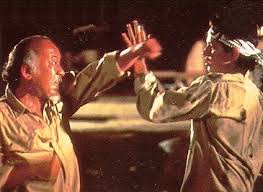
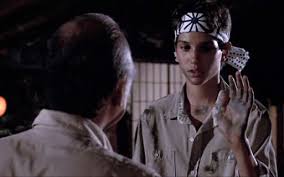
Find the Balance!

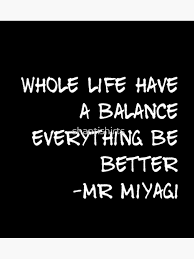
“Lesson not just karate only. Lesson whole life. Whole life have a balance. Everything be better.” Thus spoke Mr. Miyagi in the original Karate Kid. This idea that a balanced approach to life is a necessity to helping “Everything be better” has a long and venerable history. While Miyagi is not an Epicurean he would endorse Epicurus’ teachings on the balance of short term pain (sanding the floor and painting the fence) to enjoy a greater pleasure (building muscle memory for defense). 

Educational Philosopher Parker J. Palmer grants balance a central place in his Pedagogy of Paradox. Palmer contends that there are six paradoxes that exist in the classroom, which also create twelve distinctive poles at the opposite end of each paradox. The six paradoxes he identifies would be familiar to most teachers, even if you never read Palmer’s work.The capacity of any teacher to balance the necessity of each pole and traverse from one end to the other can generate greater energy and enjoyment in The Room for teacher and student alike.

The purpose of this post is not an evaluation of Palmer’s pedagogy. I will highlight one paradox to illuminate the importance of balancing contradictory forces within The Room. If the examination leaves you wanting to know more I encourage you to pick up a copy of Palmer’s The Courage to Teach.

Hospitality and Challenge

Palmer writes, “The space (The Room) should be hospitable and charged.”  By being hospitable we create an environment that is welcoming and intellectually encouraging, where being incorrect is just part of the process of stumbling towards clarity. How an environment becomes hospitable is dictated by the personality of the teacher. One size does not fit all. Early in my career there was a math teacher who was everyone’s cranky uncle. He snarled and growled at the students. He also, however, knew they would see the kindness beneath his gruff exterior. And they always did. His fellow math teacher was the nutty professor! Kids were never sure what bizarre antic or incisive quip he would make…but they couldn’t wait! They even learned some math while going on the wild ride. Building rapport with your students is about authenticity, not best practices.

Charged is Palmer’s phrase for challenge, an essential aspect of teaching. Nothing improves without some form of resistance. Unfortunately, not every student seeks to rise to challenges. Some shrink before the specter of expectations, helplessness being the primary lesson conferred by school and life. For some simple and honest critique feels like a threat to the sensitive teenage ego (1). The hospitable environment, therefore, acts as an ever present safety net for students who envision putting pen to paper is as precarious as walking the high wire.  

The Dangers of Losing Balance

Looking at the hospitable and charged poles certain dangers should be quite clear. When too hospitable a teacher runs the risk of creating an environment where students claim any advantage they can as the teacher errs on the side of friendliness. Let’s be clear, kindness is wonderful but woe to the teacher who becomes a victim to the prison of nice and kind where the students hold the keys. Taking control of a classroom where the students have been granted too much free reign is taxing and difficult. 

On the charged side of the paradox is the unrelenting teacher who runs his or her young charges into the ground. I am not talking about a challenging teacher who the students respect. Students often, sometimes begrudgingly, recognize and respond to a teacher who is tough but fair. That teacher exists on this spectrum. My personal favorite “tough but fair” teacher was Dr. Wright at S.C.S.U. That gentleman told me that I “…might not be stupid” and Istill consider it one of the greatest compliments of my life. The runner up in that category is Mr. Williams from St. Bernard High School, who cajoled a math challenged writer through pre-calculus, even when I scored more points in a basketball game than on a test. 

No, the far pole is not for Dr. Wright or Mr. Williams. It is the stomping ground of the classroom tyrant who rules with an unrelenting iron fist. Most people can name a teacher they “hated” as a student. I wonder how often such a teacher is because they existed on the far end of this paradox. Sometimes teachers think they are teaching “life lessons” when they are only encouraging students to hate their subject.  As the great philosopher Roger Waters wrote in his treatise The Wall, “Hey! Teachers! Leave them kids alone! 

A Few Words About Them Kids

Most teachers will confess that they enjoy teaching…what a novel idea! They will often also say it’s not the kids but other “stuff” that weighs them down and wears them out. I’ve heard such proclamations for years and, to be honest, almost believe it is true. Almost. 

But let’s be serious. You (fellow teachers) spend a vast majority of your time with your students and I’m supposed to believe they somehow don’t add to your sense of fatigue? C’mon! I am a high school teacher who currently has 120 students enrolled in five classes. That’s 120 separate realities entering my room on a regular basis. A partial list of what is carried in their metaphoric backpacks includes; maturity levels, parental expectations, psychological disorders, capacity for emotional regulation, moral and ethical convictions, interest in my topic (ugh, history), fierce though unexamined convictions, curiosity levels, commitment to school, and widely variant home environments. The list can be expanded to include fatigue brought on by practices or rehearsals, familial duties like caring for siblings, jobs, struggling with social demands, video game and social media addiction, family illness, the willingness to…well, you get the point. The students carry so much into The Room. Navigating all of these factors can be exhausting on a good day! Do feel free to double the exhaustion if you are an introvert. 

Let’s plant ourselves squarely in real world experience for a moment. I am writing this paragraph on a Wednesday night. It so happens that I teach all five of my classes on Wednesday. I had no reportable discipline issues today and everything went well (I did say “Put away your phone” 72 times but, hey, that didn’t disrupt my rhythm at all). Anyway, I’m tired. Not because of my afternoon meeting, but because I spent the day trying to match, guide, and even raise the energy level of 120 teenagers. I’m tired because I woke up at 5:30. I’m tired because my son is sick and I woke up the night before to check on him. Most things in life have a pie-chart of causes, including my fatigue. It behooves us to examine our pie-charts so we approach our lives in a productive manner.

 Here’s my final point on this; I am convinced that energy is wasted maintaining unnecessary attachments, propping up untenable convictions, or dedicating too much thought and time to a sliver of the pie-chart and failing to confront the biggest piece. Maintaining the idea that “it’s not the kids” who add to our fatigue wastes energy. The kids can wear me out! Not because they’re “bad kids”…simply because there are so many of them! Moreover, I have to constantly be tuned in and mentally engaged so I can keep making, lord only knows how many decisions during the day. So yeah, the kids wear me out. I don’t waste what energy I have pretending they don’t. The kicker of course is this, they wear me out because I care. If you’re still reading I bet you do too.

A Little P.D.

There are a plethora of factors that can drain a teacher’s energy and resolve. The list includes but is not limited to, teachers’ time not being respected, student cruelty being normalized, lack of administrative support on issues of discipline, the art of teaching being marginalized in favor of techno-rationality, becoming a cell phone monitor, wandering students disrupting your class, school obligations infringing on time with family, mountains of paperwork and grading, the waves of email you receive, conflicts with parents,a lack of resources, and toxic positivity (2).  


Delving into teacher burnout would make this post interminable. These are all issues that teachers face in the United States and, if you look at the endnotes, across the Atlantic Ocean. There is no doubt that the environment of your specific school and the antiquated structure of the educational system burdens teachers. I’ve been irritated, annoyed, and angered by these realities. I’ve tilted at windmills. In the end, however, I can either endure these pressures or succumb to them. I’m still here and still enjoying The Room so I guess I have some level of endurance. While it would be an act of negligence to ignore the legion of educational issues that dissolve teacher resiliency I am going to stay true to the purpose of this post which remains focused on The Room. 

I believe the primary reason I still love The Room and why I can navigate most days (definitely not all. Definitely. Not. All.) without undue psychic or spiritual disturbance. It all comes down to a little P.D. Not professional development. That hasn’t done much for me over the years. I mean, you pick up a tid-bit here and a pebble there but, in the end, that p.d. is what it is; an almost barren buffet with too many beets and not enough sweets. No, I’m talking about something I call Passionate Detachment. Simply put I try to identify what I can detach myself from so I can remain passionate about what is essential. 

In The Room and in the Batter’s Box (What the…)

Here’s an example of this passionate detachment ideal: my students’ grades don’t mean much to me. Now don’t be hasty, I would like to see them grow and succeed. Grades, however, are an outcome. Stick with me now. Hitting a baseball requires a constellation of events coalescing at a  precise moment to assure success. Moreover a batter can not control what pitch is coming. The batter controls what they can throughout their time at bat. The same approach applies to the classroom.

I am passionate about being ready for class and preparing my lessons. I am passionate about being receptive to questions and offering assistance. I am passionate about  bringing a particular energy to my classes and working to build group and individual rapport. Please note, these are all aspects of teaching completely under my control. Go back to the section “Accepting What Ails You.” Reread the list of “realities” that the students carry into The Room. There are far more kids with problems than there are problem kids. So many obstacles prevent or, at the least, hinder, student engagement in class. Worse, the sad fact remains that I can’t remove many (if any) hardships from the students’ lives. 

That can be a bitter pill.  Focusing on or attaching myself to those hardships will have a deleterious impact. Losing sleep worrying about your students diminishes your energy and, therefore, will make you less capable of being helpful. Everything has a shadow and untethered compassion can be ruinous. Jungian analyst Carol Pearson teaches that the shadow of a caregiver includes martyrdom, co-dependence, and guilt-tripping. You would be hard pressed to prove such traits help you in The Room or in your life. Those traits combined with exhaustion definitely won’t help the students.

Awareness of challenges and striving to help the student navigate them, now that’s something to be passionate about.  By detaching from the outcome – their grades –  and wishful thinking – changing their circumstances – we are free to engage passionately in what we can control, our own efforts. In the long run this often leads to some positive results. We don’t often change lives, but we may just change someone’s trajectory or the lenses they utilize when looking at a problem. 

Hey! Teacher! Leave Yourself Alone!

Even with that in mind we sometimes make little to no difference for some students. This does not make one a “bad teacher.” Take a look at the previous sentence. If one attaches themselves to the idea they are a “bad teacher” then what are they truly attaching themselves to? Is it some desired outcome or an impossible image that can never be truly attained. Does this “failure”  feed a cruel inner voice that punishes you for your sins? I do wonder if teachers need to be reminded that teaching and learning are two distinct activities. You have a duty to perform one. The students are responsible for the other.

Teachers can be notoriously hard on themselves.  Take it from someone who spent far too long battling a vicious inner critic, cut yourself some slack. You’re likely doing far greater work than you or others give you credit for. Also consider the patience you utilize when working with students. Imagine spending a day granting yourself that much grace.

The Rooms Outside The Room

I work at a school that has “Top Cat” awards, a program which allows students to show appreciation to teachers. These certificates hang proudly on the walls of many classrooms. I can guarantee that some of my co-workers have received Top Cats from students who would never even consider bestowing one upon me. I’m not for everyone. The reverse is also true, for you’re not everyone either. I believe one of the great fallacies of teachers are told  (especially when you have 120 students) is that you can effectively inspire or reach every kid. You can’t. 

Again, I am coming at this from the High School perspective.  “Not reaching” a student can occur simply because of what I teach. I’ve had conversations with proverbial math/science kids who just aren’t that interested in history. They are polite and complete assignments but their futures are paved elsewhere. Some kids are introverts and not prone to expanding their circles. Some kids have great relationships with a number of adults and aren’t looking for/craving new ones.   Consider this, how many people do you know who artfully forge and sustain 120 new and functional relationships every year? Thought so. 

Speaking of Relationships

Thankfully,  I am not the only teacher at my school. It is a safe bet that someone – be it a teacher, coach, counselor, social worker, or school psychologist –  will reach that kid. It doesn’t have to be me. It can be one of the we. You see, we are all part of the same environment.  I would like to say all schools function as teams but I don’t believe that is true. In fact I would argue that the facade or fabrication of a cohesive and supportive school community of professionals is a drain on many teachers. Therefore, our profession has a tendency to isolate. 

I hope no one reading this feels that isolation, but I suspect someone does. Believe me when I say you are not alone. Others have been through what you’re facing. Others might be walking the path unseen beside you. The outdated structure of schools can prevent us from experiencing this reality yet I do believe in mysterious, synchronistic chords. Every school has people with a team mentality. You have teammates who will support you. Light a beacon and aid will come. Teachers are helpful folks, and not just to the students. There are unknown co-workers willing to lend a hand. I hope that is a reassuring thought. There is, of course, one more group we need to acknowledge. 

Remember, passionate detachment requires  detaching from what is superfluous so I can remain passionate about what is essential. Any belief that you can make it through teaching alone is false. Don’t attach yourself to that anchor.  There may be nothing more essential than finding your supportive work circle that can keep you going when the educational world is wearing you out. Lord knows I am blessed by mine…and you all know who you are. How did I get to thirty years? Look at the people walking with me. They are the best answer I can offer. Thanks for walking with me.

Endnotes

  1. Erik Erikson’s developmental theory drives this point home.
  1. Two articles as well as personal experience were utilized in compiling this list. The articles are:

https://www.psychologytoday.com/us/blog/psymon-says/202406/why-are-teachers-at-greater-risk-of-burnout#:~:text=The%20causes%20of%20teacher%20burnout%20are%20many%20and,culture%20and%20inadequate%20resources%20to%20support%20student%20learning.

https://journals.sagepub.com/doi/full/10.3233/WOR-220234


The Trauma Behind Joker Folie a Deux: Gary’s Testimony

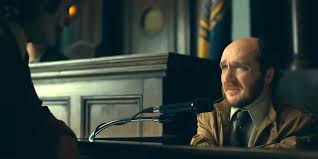
Before we get started SPOILER ALERT! That’s out of the way. Also – I enjoyed the movie! This plants me in a clear miniority according to even the briefest of Google searches. Also, this is not a movie review. I am going to focus on a single aspect of the film, the courtroom testimony of Gary Puddles and the impact it had on Arthur Fleck.

“I didn’t hurt you, Gary.”

During the trial Arthur Fleck reclaims his Joker persona as he makes the decision to represent himself. When cross examining Gary he makes the claim that he never hurt Gary. Gary’s response is gut-wrenching and grounded. Gary articulates how terrified he was when witnessing Arthur murder Randall in Joker (2019). Terror became trauma as Gary couldn’t hold a job in the aftermath of what he witness. Panic attacks, depression, insomnia, and hopelessness became the core of Gary’s life. Gary, who already struggled with daily discrimination and degradation, now feels helpless. He lets Arthur know that he, above all else, is a cause of this feeling. Yes, Arthur, you hurt Gary in so many ways that you didn’t see.

What Arthur Knows

During his testimony Gary posits that no one can know how helpless he feels. Of course, Arthur knows damn well how helpless Gary feels.

During the courtroom proceedings we hear of the physical abuse Arthur suffered at the hands of his mother’s boyfriend. We also hear confirmation that Arthur’s mother sexually abused him. Arthur knows helpless. He knows isolation and worthlessness. He knows what it is to be abandoned and betrayed by the one who should protect you. Arthur knows pain. It is perhaps why he and Gary are friends – or at least friendly – through most of Joker (2019).

Arthur also knows rage. A rage he does not know what to do with. Perhaps he is afraid of it, so it remained suppressed for years. Unleashed, ultimately, in his grandiose vision of Joker. Once unleashed, like the spirits of Pandora’s Box, the vision moves unfettered through the world, interpreted by all around him. It is important, however, to note the recipients of this violent anger.

The Victims

Joker kills three men in the subway tunnels. They initially are harassing a woman before turning their attention to Author. He kills his mother. Randall, a man who mistreats and ridicules Arthur. Randall can be seen as representative of anyone who has mistreated Arthur over the years. Lastly, he kills Murray on his television show. This is the a killing of a fantasy father figure. All these murders are rage and/or revenge driven. Arthur is a deeply disturbed and destructive individual. He is also, however, something else.

Back to Court and Gary

Arthur kills bullies. He kills abusers. He kills those who represent oppression. It’s ultimately why he kills his connection with his Joker persona. Gary reveals that Joker is what Arthur disdains. This revelation brings Arthur to the understanding – and confession – that there is no Joker. Only Arthur, a man who handled his rage in the most destructive of ways.

The Things Beyond our Control

So much is beyond our control. I write these words but have no control of your reaction to them. Pandora opened the box, releasing forces beyond her control. Arthur Fleck claimed there was no Joker, but he doesn’t get to make that call. HE’S not Joker. The Joker persona, however, had already become an inspiration to others in Gotham. Included among the inspired is a true psychopath held within the wall of Arkham. A man disappointed by Arthur’s inability to embrace his grandiosity. This man ends Arthur’s story, but not Joker’s. I found this conclusion fascinating. As hope was the last thing to escape Pandora’s box I too hope to see more of this story.

Godzilla Minus One: A Tale of Trauma and Redemption

Godzilla Minus One was an unexpected critical and commercial hit when it was released in late 2023. Minus One  is a unique Godzilla film as the massive, radioactive dinosaur is decidedly not the star of the movie (1). Set between 1945 – 1947, Godzilla rises from the ocean as an unexpected and destructive threat to Japan, a nation striving to recover from World War II. His appearance forces Kōichi Shikishima to face his survivor’s guilt and his fear that he is beyond redemption. This fear is reinforced by his times and surroundings.

Kōichi’s Struggle

 Kōichi, despite being a kamikaze pilot, survived the war. He survived by claiming his plane had a mechanical problem and landed on the small island of Odo for repairs. A smaller, pre-radiated Godzilla attacks the island outpost. Kōichi  races to his plane and has the opportunity to fire his guns. Overwhelmed by fear and anxiety, he freezes. He fails to shoot and  is subsequently knocked unconscious as Godzilla kills almost everyone present. Mechanic Sōsaku Tachibana is the only other survivor. Sōsaku, who has already concluded there were no mechanical issues with the plane, calls Kōichi a coward for his failure to act. With the weight of his double dereliction of duty planted in his soul Kōichi returns to Tokyo, his war ravaged home.

Here we can pause to examine an unexpected overlap between ancient, Eastern wisdom and a piece of colloquial parental advice often shared in the United States. In chapter one, verse one of The Dhammapada (a Buddhist text) we read, “Our life is shaped by our mind; we become what we think. Suffering follows an evil thought as the wheels of a cart follow the oxen that draw it” (2).  Kōichi’s mind is already plagued by “evil thoughts” because of the events on Odo. This burden is only intensified upon returning home.

His neighbor, Sumiko, calls him a coward when she sees him. She goes on to blame the destruction of Tokyo and the disgrace of Japan on men like Kōichi. On a personal level, she blames him for the death of her children. He also learns that his parents, the very people who told him to “come back alive”, were killed in the air raids. Isolated, Kōichi wanders the rumble with his failure and shame.

Sticks, Stones, and Minds

At this point of the story Kōichi is physically fine. His inner world, however, is in complete turmoil. The American phrase, “sticks and stones may break my bones but names will never hurt me” comes to mind here as a piece of well-meaning, but misused advice. Sadly this nugget is often used with children to help them move beyond the insults of life while failing to teach them to traverse their inner landscape. How many Americans adopted the proverbial “stiff upper lip” to the detriment of their minds? Leaving children behind, it is obvious that Kōichi is indeed hurt by the words of others. The remedy is not the building of a fortress that maintains the delusion of being emotionally impervious. Evaluating why these words hurt him is where healing can begin. 

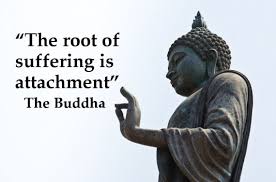
“Our life is shaped by our mind.” Thus spoke Buddha. There are a number of reasons words can hurt us. When insults from others find agreement in our minds we are sure to suffer. Neither Sumiko nor Sōsaku planted the thought of cowardice or failure in Kōichi’s mind. He owned such thoughts without their assistance. Their words reinforced what he already believed. If anything it validated his shame. 

Sadly, the words of his parents – “Come back alive” – have little meaning or comforting power for Kōichi. He is living the words of chapter one, verse four of The Dhammapada, “…those who dwell on {negative} thoughts will never be free from hatred” (3). For Kōichi the form of hatred he faces is self-hatred, a beast as destructive to our minds and lives as Godzilla is to our cities. 

Moving Forward?

Kōichi is truly a disturbed individual as we get to know him. He does, however, grant us glimpses of how one might process and transcend their psychological/emotional pain. The first step is to find compassion. Not long after being disparaged by Sumiko, Kōichi meets a young woman, Noriko, who is caring for an orphaned baby (Akiko).  Kōichi takes the duo in even as Sumiko reminds him that it is a “Bit late to play the hero.” Thanks, neighbor.

At this point we start to see the impact of Kōichi’s compassionate decision. He, Noriko, and Akiko become a family. While Kōichi struggles to feel the hope and even joy that Noriko embraces, his compassionate decision to assist them does pay dividends

Kōichi seeks to provide for the family unit he helped create. He finds work as a minesweeper after the war, heading into the waters surrounding Japan to perform the dangerous task of clearing old naval mines. 

Noriko is under no delusions regarding the inherent dangers of this work. Much like Kōichi’s parents, she is worried about his well-being, telling him, “I forbid you to die” as she accepts his employment. Kōichi is confronted by the fact his compassion has looped back to him as he hears, for the second time, that his life has value to another. This idea, however, is not one that brings comfort to Kōichi.

Shadows and Ghosts

In a revealing scene we glimpse the depths of Kōichi’s discontent. His friends and co-workers – Kenji Noda (nicknamed “Doc”), Shirō Mizushima (“Kid”), and Seiji Akitsu (the Captain of the mine sweeping vessel) – are over for dinner. The trio assumes  Noriko is his wife and Akiko his child. When the story of how the “family” came to be is shared Doc declares it a “beautiful story.” Kōichi rejects that idea, going so far as reminding Akiko that he is not her father. His friends are taken aback by his icy demeanor and encourage him to embrace what fate has brought him. These words also find deaf ears. 

In a subsequent scene Noriko demands, “What is it that torments you so badly?” The use of torments here is wonderful. She does not see  Kōichi as bothered, upset, or sad. Rather he is tormented by something. She credits him with “saving” her but laments his inability to share “any part of his life” with her. She assures him that, if he is burdened, she would like him to share it with her…to allow her to be of some assistance

As he shares his pain (which included showing pictures he scavenged of the deceased on Odo Island and articulating a death wish) he rages and cries on the floor. He believes he does not deserve the blessing of Noriko and Akiko. Noriko holds him, stating he is haunted by ghosts of his own creation. Through her tears, she encourages him to feel alive.

The Problem of Salvation

In his book A Brief History of Thought Professor Luc Ferry, PhD  posits, “…anguish prevents us from leading good lives: it stops us not only from being happy, but also from being free….we can neither think or act freely when we are paralysed by the anxiety provoked – even unconsciously – by fear of the irreversible” (4). One of the most important components of philosophy is developing the skills and capacity to address this fear.

Kōichi faces two irreversible situations that cause him great anxiety. The first is the profound self-loathing he feels for his decisions as a  kamikaze pilot. The second, his actions on the Island of Odo. These decisions are an immutable part of his biography – they are irreversible. The meaning – that he is a coward unworthy of happiness and, perhaps, life – is not a permanent truth. Kōichi feeling that way does not make it true.  

The scene where  Kōichi finally shares his pain with Noriko is a scenario found in many stories and songs. The great philosopher Bruce Springsteen shares these lines in his song Living Proof:


You shot through my anger and rage

To show me my prison was just an open, open cage

There were no keys, no guards

Oh, just one frightened man and some old shadows for bars (5)

Much like the protagonist in Living Proof, Kōichi is in an open caged prison of his own making. The fact that Springsteen describes “one frightened man” echoes both the anxiety and fear described by Professor Ferry and Kōichi, who (logically) admits to being terrified of Godzilla. An important element of the healing process is also present in the words presented by the Jersey Shore Sage.

The Power of Getting Personal

In Living Proof Springsteen credits the protagonist’s wife with working through his “anger and rage” and showing him the way out of his prison. Therapist Jonathan Decker teaches that a key ingredient in any enduring relationship is the capacity to be open to guidance (6). Springsteen’s character is able to free himself from his “shadow” prison because his wife “showed” him that his prison was self-made. By being “open to guidance” the relationship became a source of healing.

People, sometimes to our detriment,  are complex creatures. We don’t live by simple math equations. It would be wonderful if we could just say having people who (A) support your efforts + (B) are concerned about your well being = (C) instant improvement in your disposition and a fuller life (7). Kōichi has both a supportive family unit and friends, but his inner world does not allow him to enjoy them. He definitely is not open to his friends’ guidance at the dinner scene! A wonderful, sometimes miraculous, aspect of friendship is the capacity to stick with you even when you are acting as your own worst enemy.  

Facing the Enemy

Kōichi, of course, has a physical enemy as well…Godzilla. His fear of the creature is surpassed by rage when Noriko is seemingly killed by the rampaging beast. Joining a resistance movement that has an audacious plan to stop Godzilla he prepares to fly into the face of his fears.

The decision to face Godzilla opens three windows through which we can see examples of how to face inner demons as well as giant, radioactive monsters.

Window 1: Non-Attachment “You have a right to perform your prescribed duties, but you are not entitled to the fruits of your actions. Never consider yourself to be the cause of the results of your activities, nor be attached to inaction” (8). The sacred Hindu text The Bhagavad Gita stresses the value of non-attachment. It might seem counter intuitive to “have a right to perform your prescribed duties” and not be “entitled to the fruits of your actions” but the embracing of such a mindset can increase humility, increase comfort with the unknown, and reduce anxiety. 

Kōichi is determined to protect his home from Godzilla, yearning to defeat the creature that has caused him so much pain. There are a massive number of moving parts and tactical facets that constitute the plan to defeat Godzilla. Kōichi, by the tenants of non-attachment, should do his duty to the utmost of his ability but not claim the victory (fruit of his labors) as his alone. He could well feel the catharsis of facing his fear but should not claim the victory as his alone. That might sound obvious and  Kōichi, in fact, gives us no inclination that he does not recognize the contributions of Doc, Kid, the Captain, and so many others involved in the plan. But, he has attached himself deeply to previous actions he took and has therefore claimed the mantle of coward and the title unworthy. However, how many factors were involved in the decisions that have led Kōichi to his self-loathing? 

I ask you, dear reader, do you have an easier time seeing yourself as the villain or weakling in certain situations as opposed to the hero? What if you could “perform your prescribed duties” without expecting a certain outcome? Even when you failed to “perform your prescribed duties” what if instead of diminishing your value you rededicated yourself to performing your “duties” better the next time around? I hope these questions prove pointless but I fear many people are better at insulting themselves than giving themselves the occasional compliment.

Non-attachment can also increase our comfort with the unknown. As the climactic confrontation draws near, Kōichi asks Doc, “Can you promise that will kill Godzilla?” The question is a cry for certainty, which in turn would be comforting. There is, of course, no certainty when facing Godzilla or many of our struggles for that matter. Doc does not answer with a rousing speech but the simple statement, “We must do what we can.” Focus on the “prescribed duties”, perform them thoughtfully and with vigor, and allow events to unfold. As Captain states later in the film, “Doing nothing won’t cause a miracle.”


Window 2: The World Beyond My Pain – Pain has a tendency to reduce our vision. Whether it is physical, emotional, psychological, or spiritual people in pain often find themselves becoming, I would surmise unintentionally at times, the center of their universe. Kōichi rejects the idea of family from a place of pain. He has friends but tends to reject their council, especially when it is a call to embrace anything beyond his pain. Kōichi articulates, during an intense conversation with Captain, that “My war isn’t over yet.” While confronting Godzilla is a dramatic moment for him I would posit that joining the effort to kill Godzilla and being surrounded by others who survived the war, who may be also fighting their own personal wars, is also helpful to Kōichi. It is why everything from support groups to VFW’s to your trusted fellowships are so important. Connection helps people raise their eyes above their pain. 

Window 3: Accepting Strengths – When struggling we often neglect to acknowledge our strengths and, incredibly, even our successes! Kōichi is a master of this unfortunate trait. He admits that he is “Terrified of the thing (Godzilla).” Well..you should be! It’s Godzilla! Yet, when Godzilla first reappears Kōichi is able to fire the machine gun on his minesweeper at him. He even detonates a mine in Godzilla’s mouth that gives the behemoth a moment of pause (You hurt ‘em, Rock!). He stood up! He fought. Does Kōichi ever give himself credit for this moment? Nah.

 On an emotional/relational level we see the same action. When Noriko credits Kōichi with having “saved me” while lamenting that he won’t let her into his life. This interaction does lead to Kōichi’s breakdown which, in turn, leads him to sharing one powerful thought, “I’d like to try to live again.”

“…Try to Live Again”

Throughout much of the film Kōichi endures his pain. Perhaps you have done this at times as well. Enduring is not living. To sit in a well of despair and uttering the thought “I’d like to try to live again” represents an important step all must take on the healing journey. Avoidance of pain. Reduction of pain. While understandable desires are poor substitutes for living, even living with pain. 

Kōichi survives the final battle with Godzilla and is poised to live again, even with Noriko’s death casting  a shadow upon him. Even this shadow was lifted as he and the audience learned Noriko survived Godzilla’s rampage. While I believe having Kōichi learn to live with Noriko’s death would have been a poignant ending, I also think he’s been through enough. This story ends with Kōichi now capable of embracing his “family.” It serves as an excellent reminder that our closest relationships are worth fighting for and, in so many quiet and meaningful moments, worth living for. 


Endnotes

(1) The long history of Godzilla movies have rarely invested much time in developing the human characters. The human drama in Minus One was unexpected and wonderful to witness.

(2) Chapter 1 of The Dhammapada

(3) Ibid.

(4) Ferry, L. A Brief History of Thought (2010). Harper Collins, New York, New York. Page 10.

(5) Living Proof can be found on the album Lucky Town (1992).

(6) Jonathan Decker shares his insight and humor on his youtube channel “Cinema Therapy.”

(7) I am currently in my 30th year of teaching. It sometimes feels to me that teachers are being gaslighted into embracing such simplistic thinking with students. This thought saddens me and contributes to feelings of burnout some teachers experience.

(8) The Bhagavad Gita, Chapter 2, Verse 47.


Moving Forward Together: Reflecting on Abraham Lincoln’s July 4th Ideals

The Fourth of July has come and gone. I hope people celebrated the high ideals of this nation joyfully and safely while keeping their eyes on the past, present, and the future. Here are two thoughts from Abraham Lincoln regarding the Fourth and the day’s meaning.

Frustrated Abe

In a personal letter dated August 15, 1855 Lincoln released some frustration: “When we were the political slaves of King George, and wanted to be free, we called the maxim that ‘all men are created equal” a self evident truth; but now when we have grown fat , and have lost all dread of being slaves ourselves, we have become so greedy to be masters that we call the same maxim “a self evident lie.” The fourth of July has not quite dwindled away; it is still a great day – for burning fire crackers!!!”

Ouch. Not exactly a quote for a banner celebrating the national holiday! I do, however, find it gratifying that Lincoln, like all of us, had these thoughts and moments. Generally speaking you don’t the dismissive unless you care. Apathy is not the furnace of frustartion, love and dedication is. The next quote reveals the idealism that flow beneath Lincoln’s frustration.

Idealistic Abe

In a speech presented in Springfield, Illinois on June 26, 1857 Lincoln succinctly summarized the power of the Declaration of Independence: “They (the signers of the Declaration) meant to set up a standard maxim for a free society, which should be familiar to all, and revered by all, constantly looked to, constantly labored for, and even though never perfectly attained, constantly approximated, and thereby constantly spreading and deepening its influence, and augmenting the happiness and value of life to all people of all colors everywhere…”

I do hope you enjoyed the Fourth…but can we also take a moment during the day to draw a deep breath and remember the ideals that lead to the creation of the holiday? Let us recommit to “laboring” as a nation to make sure all feel the power of those ideals. Let the ideals deepen – in both our own hearts and in our communities – so their influence can spread readily, allowing us to move forward together in our efforts to attain them…even if the work proves daunting and difficult.

Final Reflection

The direction of a nation often feels well beyond our sphere of influence. Therefore, I also hope we can learn a more personal lesson from Lincoln. How often do you feel guilty becuase you express frustration with a child, friend or partner? Perhaps that frustration came from a place of love and idealism. Remembering that may allow for a conversation that allows for increases happiness and reaffirms the importance of our deepest relatinships. It may also allow you to forgive yourself when frustration blinds us to the love we feel.

The same phenomenon can take place in our professional lives. As a teacher I’ve definitely heard multiple administrators admonish frustrated words from teachers as nothing more than “complaints” and “whining.” The number of times I’ve heard the story of a colleage being asked what educational ideals they feel have been forgotten or how the dismissing of those ideals tore at their hearts is far less.

There is so much noise in the world. The thunderous crack of “burning fire crackers.” Perhaps now is the time to slow down certain conversations so we can consciously and contientiouly strive for the “augmenting the happiness and value of life” for everyone.

Balance in Sports and Life: Overcoming Overinvestment

Recent events have set my thoughts to sports. My youngest daughter recently finished her senior lacrosse season and we attended Athletic Award Night at her school. My across-the-hall teaching neighbor is shaking off the bitter taste of coming up just short in the semi-finals of the state baseball tournament. The Boston Celtics are in the NBA Finals seeking the franchise’s 18th NBA Championship. Sports are in the air! Since it is true that my daughter, my friend, and the Celtics strive for success in their various sports, then it is also true they all face obstacles that can prevent success. Using the work of Dr. Jim Taylor let’s delve into one of the mental obstacles that hinder athletes (https://www.drjimtaylor.com/4.0/).

“I’m not an athlete. Does this apply to me?”

While Dr. Taylor focuses on sports his work is applicable to most any physical activity. Taylor defines mental obstacles as “any psychological or emotional issue that interferes with your ability to perform your best consistently…” (1). I will delve into the obstacles of overinvestment in this post. Overinvestment makes learning stressful instead of invigorating. It makes a singular activity – sport related or otherwise – the key component to your identity and psychological/emotional well-being. The pressure caused by this overinvestment can undermine the joy of an activity and ruin relationships. You see overinvestment in parents in the stands who rise and fall on every pitch, catch, and throw. In my profession we see teachers who have their days ruined by one student who refuses to engage. The teacher’s overinvestment in the one makes them blind to the good they do. It is for these and a thousand other reasons that sports mindsets are about more than sports and sports movies are rarely about boxing, baseball, or knitting (just making sure you are still paying attention).

Overinvestment


Make no mistake; commitment to a sport is an absolute necessity. You can only get so far as a seasonal athlete – someone who only plays their sport during the season. You might be able to make the team but more committed athletes, those who play and train in the off season, will surpass you. Commitment enables athletes to push through tough stretches of the season and move on from the inevitable disappointment that comes with sports.

We topple over the line of overinvestment when your sport becomes too much a part of your identity. Competition, as Dr. Taylor puts it, becomes a “life-or death” struggle. Granted your physical life isn’t threatened but your psychic life is because your self-identity is on the line (2). Such an overinvestment can cause doubt, fear, worry, and anxiety to permeate your performance leading to caution and hesitancy.

A strong cinematic example of overinvestment can be found in Rocy Balboa. This might sound odd as Rocky is, rightfully so, a model of commitement and effort. That, however, si the point. Anyone can topple into the realm of overinvestment. Consider the verbal knockout punch Adrian delivers to Rocky on the beach in Rocky III. Rocky is training for his rematch with Clubber Lang but it is clear his heart isn’t in it. His rival turned manager, Apollo Creed decries Rocky’s attitude in question — “What’s the matter with you, Rock?” — and declarative  —“There is no tomorrow!” — form. It is his Adrian, however, who is able to find the root cause of Rocky’s apathy. She then targets her husband’s mental obstacle with forceful compassion.

Adrian’s Assault

“But it doesn’t matter what I believe because you’re the one that’s got to carry that fear around inside you, afraid that everybody’s going to take things away and afraid that you’re going to be remembered as a coward, that you’re not a man anymore. Well, none of it’s true! But it doesn’t matter if I tell you. It doesn’t matter, because you’re the one that’s gotta settle it. Get rid of it! Because when all the smoke has cleared and everyone’s through chanting your name, it’s just going to be us. And you can’t live like this. We can’t live like this. Cause it’s going to bother you for the rest of your life. Look what it’s doing to you now. Apollo thinks you can do it, so do I. But you gotta want to do it for the right reasons. Not for the guilt over Mickey, not for the people, not for the title, not for money or me, but for you. Just you. Just you alone.” – Adrian Balboa, Rocky III

Looking at Adrian’s reprimand we can see where Rocky’s self-identity is, at this point, inextricably linked to his boxing career as she calls him to task for being “afraid that you’re going to be remembered as a coward, that you’re not a man anymore.” She also attempts to sever his false attachment to the “reasons” to fight that are fueling his anxiety and doubts;  “…you gotta want to do it for the right reasons. Not for the guilt over Mickey, not for the people, not for the title, not for money or me,….” It may seem odd that Adrian includes as fighting for “me” is unimportant but Rocky has slipped into one of the traps of overinvestment, the belief that the love of family and friends is intertwined with athletic performance. Adrian’s love for Rocky is not, and never has been, contingent upon boxing. Rocky’s self-mage unfortunately is and, as people are prone to do, he is projecting his perspective on the world around him. Thankfully Adrian isn’t having it.   

Adrian echoes Dr. Taylor’s advice that one antidote to overinvestment is balance. In sports that means understanding at a deep level that “sport is a part of our life, not life itself” (3). Meaning and satisfaction can be found in your non-sports life. Or, as Adrian put it, “Because when all the smoke has cleared and everyone’s through chanting your name, it’s just going to be us.” In one simple phrase ,”…when all the smoke has cleared and everyone’s through chanting your name, it’s just going to be us…,” Adrian emphasized the long and, what ought to be, a deeply meaningful life outside of sport. Her work, however, is not quite finished.

As Rocky takes in his wife’s words he asks a question that would not surprise Dr. Taylor, for he wrote that overinvested athletes are preoccupied with results, especially with failure. “And if I lose?’ Rocky mutters, seemingly still afraid of the answer. It is wonderful that Adrian doesn’t answer with a reaffirmation of her love, for that has not been in question. She replies with, “Then you lose. But at least you lose with no excuses, no fear. And I know you can live with that.” Give your all, Rocky. Go for it. Pour yourself into your sport while embodying Dr. Taylor’s conviction that, “…even if you don’t achieve your sports goals, you will be okay.”  

Consequences of Overinvestment

Dr. Taylor lists doubt, fear, worry, and anxiety as manifestations of overinvestment (4). Participating in a competition while filled with anxiety and fear would not only negatively impact your performance that day, but would also set you up for more set backs on the next day and the next. There is also the consequence of coping with the downward spiral of anxiety that the athlete would face. There are defensive ways of coping; these include substance abuse, aggression, and withdrawal. The 1993 comedy Cool Runnings offers viewers another dubious method of addressing the stress caused by overinvestment; cheating.

In Cool Runnings disgraced former bobsledder Irving “Irv” Blitzer is the coach of the Jamaican bobsledding team. Irv is a two-time gold medalist but cheated (weighed down is sled to gain additional speed) in his attempt to win a third. One of his athletes, Derice Bannock, eventually asks his coach why he cheated. The follow exchange ensued:

Irv: You wanna know why I cheated, right?

Derice Bannock: Yes, I do.

Irv: That’s a fair question. It’s quite simple, really. I had to win. You see, Derice, I’d made winning my whole life. And when you make winning your whole life, you have to keep on winning, no matter what. You understand that?

Derice Bannock: No, I don’t understand. You won two gold medals. You had it all.

Irv: Derice, a gold medal is a wonderful thing. But if you’re not enough without one, you’ll never be enough with one.

Derice Bannock: Hey, coach… how will I know if I’m enough?

Irv: When you cross that finish line tomorrow, you’ll know.

We have returned to Dr. Taylor’s advice that “sport is a part of our life, not life itself” (5). For Irv sport – and more importantly winning – was life itself. This mental obstacle strips him of his past glory and destroys his relationship with his former coach. The film does not give provide much of Irv’s back story but when we meet him he is an isolated character seemingly without family or friends. Derice, on the other hand, clearly has close friendships and the respect of his peers. His warm approach to people allows him to forge a strong relationship with Irv, which also allows for the honest conversation about the cheating incident. It also helps Irv forgive himself which is why he is perspective on the value of a gold medal has changed. Adrian would be proud of Irv as he has realized that life after sports can be meaningful and fulfilling, even if the crowd is no longer chanting your name.

Lessons of Sports

It is common to hear that sports teach life lessons. I know many coaches who strive to impart such lessons to their athletes. It is noble and I hope they are successful. When I coached I was definitely someone who attempted to pull off this magic trick. The overinvested athlete, however, is hard to see. Their level of commitment likely earns them praise even as they silently engage in a psychic struggle with anxiety and fear which, perhaps, they manage by doubling down of their aggression – which wins them more praise. Overinvestment is truly a demon disguised as a virtue, one that a young (or even adult) athlete, musician, artist, father, mother, friend, or writer might be struggling with right now. Derice Bannock and Adrian Balboa didn’t help by stating, “You know Rocky/Irv, you seem overinvested in outcomes.” They relied on the trust imbedded in the power of strong and authentic relationships and a sense of timing regarding when to engage in important conversations.

Well, I would say you have invested enough time with these words. I’ll “see” you next time!

Endnotes

  1. https://www.drjimtaylor.com/4.0/five-mental-obstacles-prevent-s
  2. Ibid
  3. Ibid
  4. Ibid
  5. Ibid


As Winter becomes Spring: A Spotlight on Mental Health

March is heading into April, building the anticipation for longer, warmer days. As we look forward, however, winter continues to reach out from behind. Here in New England the early morning chill is still below freezing and the afternoon breeze makes us reach for sweatshirts, not shorts. According to the calendar winter is in the past but it isn’t simply letting go.

Moving Forward

This reflection is perfectly attuned with the designations of April and May as
Child Abuse Prevention month and Mental Health Awareness month. Child abuse, and adverse childhood experiences (ACEs), can have a lingering and destructive impact on the millions who have endured such pain. Pop culture sources; be they songs, movies, books, of shows, that explore these tragedies are easily found. Psychological disorders and stressors of life can seem to be the freezing breeze that encourages people to wrap themselves in a blanket and become stagnant rather than step into the sun, imperfect but determined.

Posts in April and May will look not only at the pain caused by these twin demons but at the difficult journey of coping, navigating, and even healing. I will endeavor to offer incites beyond encouraging platitudes (helpful as they sometimes feel) and demanding exaltations.

A Heartfelt Message

Before parting ways before the next post I want to share a thought that, while applicable to all, may be aimed at younger folks (1). Regret, dear reader, is a poignant internal force. It robs us of energy, self-worth, and discernment. These thefts can happen without your knowledge.

I was first diagnosed with depression and an anxiety disorder in my early thirties. Over the course of two decades I have become increasingly adept at navigating those difficult waters. I started taking medication again this September, having taken a ten year hiatus from their usage. I am proud of my efforts and where I stand. I bet if we spoke my pride would extend to you.

Some of you are likely struggling with mental health issues – be it the stress of life, the lingering impact of your personal ACEs (which can include abuse), a diagnosed psychological disorder, or some combination of all of these. If you are struggling, that’s ok. You’re all right. Remember, no problem has ever been transcended without acknowledgement.

If your struggle began between the ages of 15 and 25…that sucks…but also, good for you. You see, you have a head start on me. Your healing journey has begun. I was merely coping at your age. The true healing process was delayed until my 30’s. As I stated earlier I can, at 53, declare I am quite happy with my mind and my inner world. I can also declare, with unshakable certainty, the most regrettable episodes of my life occurred when I was overwhelmed and ill-equipped to handle my tumultuous inner world. It can take a long time to forgive oneself for such failures.

Given your head start I can’t help wonder how you will surpass me in the future. I hope you do. I hope each and every young person struggling with some demon that pollutes their inner world surpasses me. You see, the more satisfied, mature, and well adjusted people there are in the world the better off the world will be. You keep working and I’ll keep rooting for you.

One last thing…Keep fighting the good fight, with all thy might!

Endnotes

(1) Of course, at age 53, I’ve noticed there is an increasing number of people walking around younger than me. I can not explain this phenomenon.