Perhaps he will not succeed. Perhaps he will fail as the Buddha failed and as Christ failed to wean men from their iniquities, but he will always be remembered as one who made his life a lesson for all ages to come.
-Rabindranauth Tagore, writing about Gandhi (1)
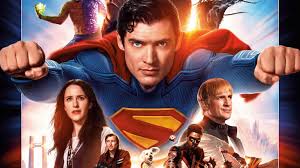
The recent release of James Gunn’s Superman has led to a burst of Superman inspired videos, memes, articles, and reflections. This post will add to this onslaught of opinions while, hopefully, offering something of value to that massive conversation. While I will be referencing the recent James Gunn’s Superman it is important to remind ourselves that Superman has been with us since 1938! In many ways his mission has not changed in 87 years as he strives to fight for, pursue, and reveal the good in the world and in people. So look to the sky, dear reader, as we examine (with mild spoilers) what makes Superman super!
Of Indian Poets and Magic Rings
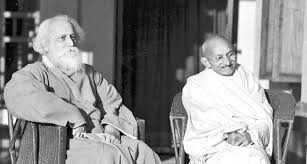
In our introductory quote we read that Tagore laments that Gandhi could fail to “wean men from their iniquities” while being remembered “as one who made his life a lesson for all ages to come.” This stream of thinking can also be applied to Superman. While he often saves the day in dramatic fashion (stopping an invasion from Darkseid or preventing a missile from striking Hackensack, New Jersey) he also seeks to “wean men from their iniquities” (2).
Tagore reaches back 2,000 years to the lives of Buddha and Jesus for examples of men who can be seen as examples “for all ages to come” despite failing in their lifetimes to successfully “wean men from their iniquities.” This begs the question, why is it so hard to accomplish this goal? To examine that question we will look to ancient Greece and the Ring of Gyges.
The Ring of Gyges
The Ring of Gyges is a thought exercise introduced in book 2 of Plato’s Republic. Simply put, the ring offers the power of invisibility and, therefore, the capacity to engage in a variety of immoral and unjust acts without the fear of being caught and punished. This applies to Superman not because he is invisible but because he is nearly invincible! He could act with impunity with minimal risk of punishment. Yet, he chooses not to. Why is that?

Before we delve into this question, however, I want to present you with a sidenote. The idea of a mythic, magic ring allowing us to act with a sense of freedom from punishment might sound so detached from our lives that it lacks relevance. I understand why you may think that. Consider this, the reason the ring allows such freedom is because it makes the performer of wretched deeds anonymous.

How much online bullying and cruelty takes place specifically because people don’t share their true identity? Anonymous behind online handles and hashtags people diminish and demean others on a daily basis. Improper corporate schemes and political corruption thrive in anonymity. Criminals from the entitled elite (Bill Cosby and Harvey Weinstein) to organizations with a vast geographic reach (human trafficking) to local crimes all count on anonymity and lack of detection for on-going success. The Ring of Gyges isn’t that far away.
Glaucon’s Challenge
In the Ring of Gyges discussion, Glaucon – Plato’s older brother and a friend of Socrates – seeks a stronger defense from Socrates regarding why someone would behave in a just manner when possessing the magic ring.
“… for wherever any one thinks that he can safely be unjust, there he is unjust….For all men believe in their hearts that injustice is far more profitable to the individual than justice,…If you could imagine any one obtaining this power of becoming invisible, and never doing any wrong or touching what was another’s, he would be thought by the lookers-on to be a most wretched idiot,…(3)”

Glaucon represents a combination of what we can call the “power corrupts” argument.and a Hobbesian view of human nature (people naturally bend toward the wicked). Free from the societal restraints of punishment and judgment people will give in to the power of the Gyges’ ring. Moreover, if someone didn’t give in, they would be seen as a “wretched idiot.” What’s a Kryptonian to do?
An Alien Finds a Magic Ring…in Ancient China
Socrates’ answer to Glaucon plays out as an extended argument in which he presents his vision of the harmonious, tripartite soul. We examined this vision in an early post. A key insight into Superman’s behavior, however, can be found in the words of the great sage Confucius.
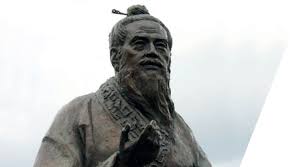
Confucius noted, “To understand something is nothing like loving it. And to love something is nothing like delighting in it” (4). In this maxim we see a progression towards joy. The progression ends with the highest level being one who “delights” in something. As a teacher this simple maxim is reflected in students on a regular basis. In a classroom discussion all the students “know” that gossip and rumors hurt people and are often inaccurate. As a general rule this knowledge has limited to no impact on their behaviors. With apologies to G.I. Joe, knowing is not half the battle (5).
Let’s say the “something” in this maxim is the idea of “the good.” Simply put, Superman “delights” in doing good (6). Looking at Superman (1978) we see a wonderful example of this character trait. In this origin movie Superman is the only super powered person on earth. There are no super villains to fight or multi-dimensional invasions to thwart.
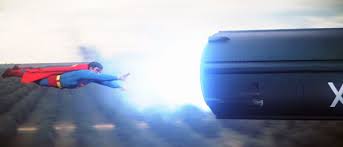
During his first night patrolling the skies we see him stop a jewel thief, save a plane and passengers that lost an engine, stops armed robbers on a boat, and saves a cat in a tree. Correction, he saves a cat in a tree and flashes that warm Christopher Reeves smile when returning the cat to a little girl. The joy he feels when performing even small acts of kindness fuels him much like the rays of our yellow sun.

A Rare Bird
Confucius could be a demanding individual. Consider this passage; “I’ve never seen a person who really loves humanity, and despised inhumanity. Those who love humanity know of nothing more essential. And those who despise inhumanity act with such humanity that inhumanity never touches them” he would not allow anything that is not virtuous to approach his person” (7). With such a high standard – esteeming nothing above humanity and not allowing inhumanity to approach us – it is little wonder that Confucius lamented that he never met an individual who maintained virtue throughout their life. Superman may well pass Confucius’ test.

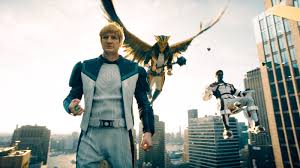
In James Gunn’s Superman we see our Kryptonian hero battling a fire breathing kaiju unleashed as a distraction by Lex Luther. During the battle Superman saves a squirrel from the carnage, a scene that communicates how deeply seeded his commitment to virtue, compassion, and life runs. For me, this simple act adds weight to a previous scene.

Earlier in the film Superman grants his girlfriend, Lois Lane, an interview. A pivotal moment in their interview quickly became an argument. Lois accuses Superman of not considering the political and ethical ramifications of his intervention in preventing the nation of Boravia from invading Jarhanpur. Superman shouts, “People were going to die!” as the primary motivator. Superman has a profound sense of compassion, deeper than most people. This is a man who saved a squirrel during a battle with a raging monster. How could he not take action that guaranteed the loss of life?

He, in fact, is disturbed by the Justice Gang’s (please don’t let this stick) use of lethal force to stop the kaiju. He was trying to save the city and save the creature’s life. In a world where lip service is paid to compassion, but concepts like brand, politics, and notoriety tend to drive a great many people. Lois can feel victorious for “proving” Superman is naive. She also proved herself to be part of the reason Tagore’s quotation applies to Superman. We often claim to“care” but are shocked by the perception of a truly humane individual.
A Musical Interlude
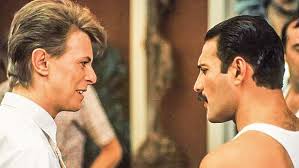
I found my mind drifting to Queen’s Under Pressure during Superman. This collaboration with David Bowie crafted a poignant anthem that is included in Rolling Stone magazine’s list of the 500 greatest songs of all time. The final stanza reminds us that:
love’s such an old-fashioned word
and love dares you to care for
The people on the edge of the night
and love dares you to change our way of
Caring about ourselves
Love dares us to care. For Superman that means stopping an invasion. For Lois stopping an invasion needs to be questioned for…political reasons? Her ego? Proving to the caring individual that the “real world” is no place for such sentiment? Was she sabotaging her relationship because Superman is just too damn good?

I believe Lois is playing a key role here. In The Dhammappada The Buddha notes that people will often criticize the “wise man”(8). Lois reminds us that even people on our side can be put on their heels by goodness and will strive, perhaps subconsciously, to break goodness down to a more palatable level. Love, after all, “dares us to change our way of caring…” No one said we had to enjoy or accept the challenge.
While I found myself reminded of Quess we should emphasize that Superman draws his musical inspiration from another source.
Punk Rock or Russian Existentialism?
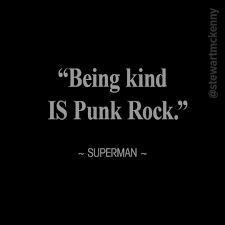
In James Gunn’s Superman our kryptonian hero asserts that kindness is the new punk rock. In a world spiraling into dead end cynicism and superficiality, being kind is a rebellious action. It is a fine sentiment, but not a new one.
Let’s return to Superman (1978). Consider this list; Watergate Scandal (1972), the end of the Vietnam War (1975), the Boston busing crisis (1974), the Olympic murders (1972 Olympic Games), the Cambodian Genocide (1975-1979), and Jonestown (1977). The 1970’s wasn’t, to quote my favorite, fictional boxer, “all sunshine and rainbows.” Into this socio-cultural cauldron people went to the movies to see a man fly…and so much more. The same apathy and cynicism we lament in our present age has been seen before, and Superman has been there as a counter balance (9).
Leaving Superman behind for a moment (don’t worry, I’m sure he can catch up) let’s take a brief walk into Fydor Dostoyevsky’s The Brothers Karamazov (1880). For the crime of reading and discussing anti-Tsarist books Dostoyevsky served four years in a Siberian labor camp and 6 years of forced military service. In that time he saw a variety of reactions to suffering including growing spiteful, hatefilled, fearful, and angry. He also saw people choose kindness, dignity, and faith. These years field his passion to explore themes of resilience, faith, doubt, the crushing weight of suffering, freedom, and meaning.

In The Brothers Karamazov the character of Alyosha is a symbol of courage. Moral courage as opposed to physical courage. Alyosha dares the reader to realize we can choose love and compassion even in a cruel world full of suffering. It is important to note that Alyosha chooses compassion not because he is certain that it will transform anything but from the courage to be humane. He refuses to “return his ticket” (drop out of the grind of life) like his brother Ivan posits as a path in the face of suffering.
The world has always been in need of compassion…and the courage to choose it.
Humility: A Misunderstood Super Power
In the climatic scene of James Gunn’s Superman, Superman delivers a monologue about his fears and shortcomings to Luther…who doesn’t give a crap. The scene felt forced to me, but I did appreciate the effort to highlight of humility.
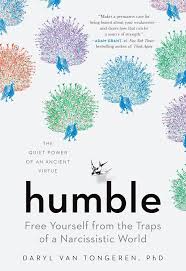
Psychology professor Dr. Daryl Van Tongeren (2022) informs us that humility is a trait that has been “misunderstood and exploited” for quite some time. Far from being ann invitation to be meek or guilty, “humility is a secure openness to the world, where we can be honest with ourselves and others about our strengths and limitations…Humility is a way of approaching ourselves, other people, and the world around us with a sense of enoughness…” (10). He continues to identify some “super villains” (I’m looking at you Lex) that humility battles. The list includes arrogance, conceit, and a tendency to view oneself as superior and others as inferior.
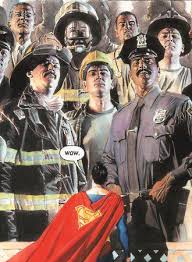
Whether thanking policemen for their assistance, making members of the Justice League feel welcome, or being utilized to honor first responders after 9/11, Superman is a beacon of humility, tirelessly working to remind everyone that we have enough to face the world…and to assist others as they do so.

It’s a tough world filled with suffering and pain. Doubt and confusion. It is also filled with opportunity. The temptation to “return your ticket” is omnipresent, so when you feel the weight is too heavy just look up in the sky.
Thanks, Superman!

Endnotes
(1) http://www.guyanaundersiege.com/Leaders/Gandhi%20by%20Tagore.htm
(2) There is no shortage of Darkseid insurgencies in Superman lore but, as far as I know, only in the 1978 movie Superman do we see Hackensack take a prominent role!
(3) https://www.gutenberg.org/files/55201/55201-h/55201-h.htm
(4) The Analects, Chapter 6, Verse 19. This numeration is from the David Hinton translation (1998), Counterpoint, Berkeley, California.
(5) Anyone else remember that tag line from our Saturday morning cartoons?
(6) This approach can also be applied to Zac Snyder’s version of Superman. This interpretation saw a Superman who understood the good but did not delight in it.
(7) The Analects, Chapter 4, Verse 6. This numeration is from the David Hinton translation (1998), Counterpoint, Berkeley, California.
(8) Chapter 6 of The Dhammapada. Ekanth Easwaran translation.
(9) This list also highlights what a rough time in U.S. history Jimmy Carter became President.
(10) Humble: Free Yourself from the Traps of a Narcissistic World. Daryl Van Tongeren, Ph.D. The Experiment, LLC. New York (2022) Pages 2-4.
 james-rourke-author.com