
As Christmas approaches the inestimable beauty and meaning of the holiday can be hidden by various disrupting factors. Be it the din of exclusivist rhetoric, the twisted moralizing of the mob, or simply the terrifying pace of life; something of Christmas seems to be obscured. Forgive my age, but it appears there are many Charlie Browns seeking a lesson with no Linus to deliver. Though I may pale in comparison to the original, I’m going to grab my blue blanket and give it a shot!
Let’s Start With the Soul…and Christopher Hitchens?

That’s right! When contemplating the universality of the Christmas message I like to start with one of the four horsemen of twenty-first century atheistic writing, Christopher Hitchens. You may think that odd, but claiming a universal message requires a wide-ass umbrella!
Before we get to Hitch, however, let’s take a quick look at the Christmas Carol O Holy Night. The line, “Long lay the world in sin and error pining/’Til he appears and the soul felt its worth…” appears in the first stanza. The “he” is Jesus. This fact could cause the listener to proudly claim O Holy Night is strictly a “Christian” song. Depending on one’s disposition, this fact could also lead to the complete dismissal of the song as well. While the first half of the line ought to be addressed let us, at this moment, focus on the second half and the concept of the soul.

The soul finally feeling its worth is a powerful concept. Melancholy and hope combine in that line as they can in our lives. I am a teacher and often, to my dismay, I witness the devastation that flows when one of my charges does not feel the worth of the soul. But what is this thing called a soul and how shall we define it? Time for some clarity courtesy of Christopher Hitchens.
Hitchens used the word “soul” on various occasions in an interview with Unitarian Minister Marilyn Sewell. Sewell, a bit surprised by his usage, asked for clarification. Hitchens responded:
It’s what you might call “the x-factor”—I don’t have a satisfactory term for it—it’s what I mean by the element of us that isn’t entirely materialistic: the numinous, the transcendent, the innocence of children… the existence of love (which is, likewise, unquantifiable but that anyone would be a fool who said it wasn’t a powerful force)… I don’t think the soul is immortal, or at least not immortal in individuals, but it may be immortal as an aspect of the human personality because when I talk about what literature nourishes, it would be silly of me or reductionist to say that it nourishes the brain (1).
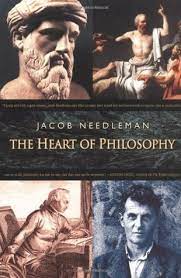
So we have an “x-factor” in the human personality that can be “nourished.” The philosopher Jacob Needleman stressed that there is a “yearning {a pining?} in the human heart that is nourished only by real philosophy and without this nourishment man dies as surely as if he were deprived of food or air.” Needleman follows this claim with the lament, “…this part of the human psyche is not known or honored in our culture…When this happens man becomes a thing” (2). Needleman uses the word “psyche” which, in the works of Aristotle (among others), is synonymous with the soul. Needleman sounded this alarm – the fear that the soul did not feel its worth – in 1982. I regret to say the situation has not improved with the passage of forty years.
Confucius and Christmas?

In O Holy Night The line, “’Til he appears…”, is written to communicate that Jesus is the one who can help the soul feel its immeasurable worth. Our souls, the life affirming x-factor in our humanity, can be ignited by numerous sources. While a Christian may find Christian stories essential to this process, other people seek other muses. Hitchens, the atheist writer, contends his soul is nourished by literature. Needleman, the Jewish philosopher, points to “real philosophy” as a source of inspiration. The outcome, the soul feeling its worth so that people don’t feel like “things”, is far more important than the catalyst of this reaction. This is not to say that any source will do…just ask Confucius.

In Confucian philosophy there is the concept of Li. According to religious scholar Huston Smith Li can be simply summarized as the way things ought to be done. There are, of course, various paths presented to us in life and they are not created equal. Many paths that appear attractive when we begin walking them become roads to ruin just as paths that seem too difficult to walk lead to long-term fulfillment; perhaps even contentment.
Confucius felt that people, if left to rely completely on their own skills and minds, would struggle to discern Li from other paths. Therefore, he provided models – maxims and anecdotes – for them to emulate. Confucius’ goal for people was that they would develop a heightened sense of love, goodness, and benevolence (Jen) so they could become chun tzu, a person whose moral development is heightened to a degree that they become both compassionate servants and inspirational role models to others (3).
Of Paths and Muppets
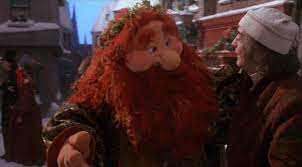
My favorite Christmas movie is, hands down and unequivocally, A Muppets Christmas Carol. Discussion over! (4) Like any good episode of The Muppet Show, Music plays a pivotal role in this retelling of Dickens’ classic tale. The song It Feels Like Christmas, sung by the Ghost of Christmas Present, emphasizes the importance of proper paths (Li).
It is the season of the heart
A special time of caring
The ways of love made clear
It is the season of the spirit
The message, if we hear it
Is make it last all year
These lines posit the idea that “The ways of love” are “made clear” during the Christmas season. Can the approach of Christmas bring with it the reality of being rushed? Yes. Do you feel extra stress from planning to travel or preparing for guests? Sure. But do you also feel a sense of anticipation of time with loved ones? I hope so. When Christmas shopping, I often pause and think of how my life is enhanced by the joy gifted by those dear to me. How important it is to not let our struggles diminish the light.
Wrapping it Up

“O Holy Night/The stars are brightly shining…”. Ah yes, the symbolic meaning that sits at the surface of Oh Holy Night. I have so many lights (stars) brightly shining that the crowds of Christmas all but disappear. The gifts and cards carry an abundance of unspoken love; transforming wrapping and shipping from a chore to a blessing. What about you this time of year? Do you feel more generous? Have you experienced an uptick in the kindness of strangers? Do you feel something inside yourself awakened, perhaps nourished, during the holidays? I hope you do. I truly do. What if, as the song suggests, we heard the message and committed ourselves to the “ways of love” all year? How would that impact our homes, communities, and places of employment?
The commitment needed to truly follow “the ways of love” might simply be too much for us to embrace. There are so many other ways. All far more ego gratifying than the way of love. The way of the arrogant victor. The way of the professional victim. The way of the hypocritical accuser or the righteous path of the narcissistic, finger-pointing activist. The way of the closed-minded dilettante who speaks as if they have an open heart.

Sadly, humanity in humans, in both the big stories of history and the small stories of our lives, sometimes appears evasive at best. The collective and individual ego of this time drowns the soul as we progress forward in time and further from one another. The “ways of love” are obscured, but never gone. The roots run long and deep. Rabindranath Tagore’s reflection on Gandhi’s effectiveness reveals a noble truth. “Perhaps he will not succeed. Perhaps he will fail as the Buddha failed, as Christ failed and as Lord Mahavira failed to wean men from their inequities, but he will be remembered as one who made his life an example for all ages to come” (5).

Does Christmas belong on this list, not as a person but a reoccurring moment in time which reminds us of our inequities and challenges us to embrace humanity? Perhaps that’s why traditions matter. Maybe it is as difficult and easy as the great philosopher Kermit the Frog sang in The Christmas Wish.
For the truth that binds us all together I would like to say a simple prayer.
That at this special time, you will find true peace of mind
And love to last throughout the coming year.
Merry Christmas and Peace be With You

Endnotes
- http://www.portlandmonthlymag.com/arts-and-entertainment/category/books-and-talks/articles/christopher-hitchens/4/.
- Needleman, The Heart of Philosophy, p.3
- Smith, The World’s Religions
- Well, the discussion isn’t really over. What a great conversation to have over eggnog and an Irish Coffee!
- https://www.siasat.com/gandhis-saintly-value-system-2200087/
 james-rourke-author.com
Happy holidays! It is always a pleasure to read your thoughts.
LikeLiked by 1 person
Thank you, Johanna. This was a fun post to write.
LikeLike