March is heading into April, building the anticipation for longer, warmer days. As we look forward, however, winter continues to reach out from behind. Here in New England the early morning chill is still below freezing and the afternoon breeze makes us reach for sweatshirts, not shorts. According to the calendar winter is in the past but it isn’t simply letting go.
Moving Forward
This reflection is perfectly attuned with the designations of April and May as Child Abuse Prevention month and Mental Health Awareness month. Child abuse, and adverse childhood experiences (ACEs), can have a lingering and destructive impact on the millions who have endured such pain. Pop culture sources; be they songs, movies, books, of shows, that explore these tragedies are easily found. Psychological disorders and stressors of life can seem to be the freezing breeze that encourages people to wrap themselves in a blanket and become stagnant rather than step into the sun, imperfect but determined.
Posts in April and May will look not only at the pain caused by these twin demons but at the difficult journey of coping, navigating, and even healing. I will endeavor to offer incites beyond encouraging platitudes (helpful as they sometimes feel) and demanding exaltations.
A Heartfelt Message
Before parting ways before the next post I want to share a thought that, while applicable to all, may be aimed at younger folks (1). Regret, dear reader, is a poignant internal force. It robs us of energy, self-worth, and discernment. These thefts can happen without your knowledge.
I was first diagnosed with depression and an anxiety disorder in my early thirties. Over the course of two decades I have become increasingly adept at navigating those difficult waters. I started taking medication again this September, having taken a ten year hiatus from their usage. I am proud of my efforts and where I stand. I bet if we spoke my pride would extend to you.
Some of you are likely struggling with mental health issues – be it the stress of life, the lingering impact of your personal ACEs (which can include abuse), a diagnosed psychological disorder, or some combination of all of these. If you are struggling, that’s ok. You’re all right. Remember, no problem has ever been transcended without acknowledgement.
If your struggle began between the ages of 15 and 25…that sucks…but also, good for you. You see, you have a head start on me. Your healing journey has begun. I was merely coping at your age. The true healing process was delayed until my 30’s. As I stated earlier I can, at 53, declare I am quite happy with my mind and my inner world. I can also declare, with unshakable certainty, the most regrettable episodes of my life occurred when I was overwhelmed and ill-equipped to handle my tumultuous inner world. It can take a long time to forgive oneself for such failures.
Given your head start I can’t help wonder how you will surpass me in the future. I hope you do. I hope each and every young person struggling with some demon that pollutes their inner world surpasses me. You see, the more satisfied, mature, and well adjusted people there are in the world the better off the world will be. You keep working and I’ll keep rooting for you.
One last thing…Keep fighting the good fight, with all thy might!
Endnotes
(1) Of course, at age 53, I’ve noticed there is an increasing number of people walking around younger than me. I can not explain this phenomenon.
Over two millennia ago Socrates emphasized that learning is a form of remembering. While this Socratic rabbit hole can bring us into questions of the nature of reality, I prefer to ground us in the idea of learning, remembering, and forgetting. We will focus on our school systems and, sadly, how they seem to have forgotten much and, by extension, are increasingly incapable of fostering the desire to learn. There is a multi-dimensional pie chart of reasons for this but, for today, I will present the twin ideas that the art of teaching is under siege and the arts themselves are woefully misunderstood as a vehicle for traversing the inner worlds of our students and rekindling the dying embers of curiosity.
A colleague once said, ten years before COVID, that the hardest part of teaching was placing ideas and concepts that you love before your students only to have them reject, dismiss, or belittle them. Sadly, I would expand this thought to now include that the hardest part of teaching is that schools themselves reject, dismiss, or belittle the art of teaching in favor of a mechanistic and contrived approach to the most personal profession.
Two Voices, One Message
“Well we busted out of class/Had to get away from those fools/We learned more from a three minute record, baby/Than we ever learned in school” (1).
“Movies are the most powerful empathy machine in all the arts. When I go to a great movie I can live somebody else’s life for a while. I can walk in somebody else’s shoes. I can see what it feels like to be a member of a different gender, a different race, a different economic class, to live in a different time, to have a different belief. This is a liberalizing influence on me. It gives me a broader mind. It helps me to join my family of men and women on this planet. It helps me to identify with them, so I’m not just stuck being myself, day after day. The great movies enlarge us, they civilize us, they make us more decent people” (2).
What insight about schools and education can be gleaned from the lyrics of a rock legend and the speech of a movie critic? One of them, Bruce Springsteen has spent a lifetime creating songs. The other, Roger Ebert, spent his adult years watching movies. Perhaps it is exactly because each of these men emersed themselves in the arts as a way to explore the human condition instead of being educators who study data sets that they, and the worlds they represent, should be taken more seriously.
Forms of Truth
“Well we busted out of class/Had to get away from those fools/We learned more from a three minute record, baby/Than we ever learned in school. ” I have a confession to make. More specifically a secret to reveal – some educators lack a sense of humor or capacity for self-reflection. I can’t help but wonder if any such teachers or administrators are reading this and bristled at the thought of being called “fools.” The question isn’t, “Why is Bruce Springsteen calling us ‘fools’?” No, question is what can we learn “from a three minute record” that we don’t learn “in schools.” I am sure some educators, as they struggle to create the proper rubric and contemplate if a summative or formative assessment should be utilized to test what learning took place, might wonder what we can possibly learn from songs and songwriters.
In his essay “A Little of that Human Touch: Knowledge and Empathy in the Music of Bruce Springsteen” by Dr. Scott Calef, professor of philosophy at Ohio Wesleyan University, presents us with three sources of truth. They are (a) scientific truth, (b) the conclusions of professional psychologists, sociologists, etc., (c) conclusions drawn via rigorous, logical, philosophic analysis (3). You can likely see how this list alone can cause issues. Many who embrace scientific truth as a source, may balk at the idea that purveyors of “soft sciences” like psychology can claim to offer “truth.” Haughtiness, arrogance, condescension, and myopia are part and parcel of the American educational system at this point – which is why educators are often accused of being “elitist” even though they see themselves as “open-minded.” I would also posit it is why James Hillman noted in 1985 that many creative people feel stymied in schools (4)- just as Springsteen claimed in his “Springsteen on Broadway” special that hating school is a requisite for joining his profession (5).
From Truth to Knowledge
Returning to Dr. Calef, we find there are also three forms of knowledge discussed by philosophers. This is knowledge of how, knowledge of that, and knowledge of what something is like.
Knowledge of how, simply put, is how to do something. How to change a tire, perform a magic trick, or make a meatball grinder. Knowledge of that is the realm of facts. The 13th Amendment did make slavery unconstitutional, on August 28, 1963 Dr. King delivered the “I Have a Dream Speech,” and force = mass X acceleration. The knowledge of what something is like, well that’s a little more nebulous (6).
Do you know what it smells like in the Sistine Chapel? To stand there and look up at that beautiful ceiling? Do you know what it is to look at a woman and be totally vulnerable? To know someone who can level you with her eyes? Robin Williams’ soliloquy in Good Will Hunting opens the door to the knowledge of what something is like. On one hand this is the realm of experience.
Knowledge of what something is like, however, can extend beyond personal experience. Psychologist Barry Farber (2007) noted that skilled, thoughtful, and empathic song writers can summarize psychological and philosophical truths in just a few lines rather than lengthy dissertations (7). Therefore, without necessarily reading a study (form of truth (b) the conclusions of professional psychologists, sociologists, etc.,) or engaging in professional philosophy (form of truth (c) conclusions drawn via rigorous, logical, philosophic analysis) great musicians – and by extension poets, writers, screen writers, and playwrights – can direct us to TWO sources of truth.
Moreover, as Dr. Calef emphasized, such individuals can, through their craft, help us identify with the characters in fictional work. Once we identify with the characters we may even start to empathize with them and, by extension, learn how to feel empathy and build compassion. We can learn what something is like without actually living it provided the creator has the skill and the listener has the ears (8). Wait, didn’t we hear this thought earlier?
Back to the Movies
“When I go to a great movie I can live somebody else’s life for a while. I can walk in somebody else’s shoes. I can see what it feels like to be a member of a different gender, a different race, a different economic class, to live in a different time, to have a different belief…The great movies enlarge us, they civilize us, they make us more decent people.”
If you asked most teachers about the level of civility and decency they encounter on a regular basis their answers would likely sadden you. The same is true of non teachers as well. We live in crass times. There is no singular solution to this problem, but one thing seems clear: the status quo will not elevate us. It also seems clear, from being inside the school system for almost three decades, the effort to cultivate civility is lauded on official school marketing and devalued in the day-to-day actions that schools take. There is a chasm, perhaps an abyss, between rhetoric and practice in schools. There is little dialogue and even less understanding surrounding the concept of knowledge of what something is like. Until that is embraced there will always be fools that students seek to escape.
Consider Ebert’s line, “Movies are the most powerful empathy machine in all the arts…” If you are a teacher reading this, what is your school’s policy on movies (9)? Do you have to prove “academic content” as if you would choose a movie that wasn’t useful to your class? When’s the last time an administrator approached you about a film you were showing and asked how the film might build empathy, enlarges one’s vision, and encourages decency? That could be too much to ask of a movie but neither a movie nor a single classroom session should be the measure of all things in a year long journey of learning.
School Culture
What if a school’s culture was bolstered by the undercurrent of building empathy and decency while delivering curriculum and other forms of knowledge? This might sound odd…and it should! After all, schools have doubled down time and again on promulgating knowledge of how and that. Anything else sounds foreign, because it has been pushed to the margins by a dominant force in education, a leadership style highlighted by educationalist Thomas J. Sergiovanni (1992) in his book Moral Leadership.
Sergiovanni presented five forms of school authority. One of them, technical-rational authority encapsulates the following view of teaching and learning. Evidence, created by logic and scientific research, is presented. Teachers are expected to comply with this verified truth. The knowledge of the research is held by a privileged elite who use research to identify best practices and seek to standardize the work of teachers. Jargon, the language of closed communities will come into existence as a litmus test of understanding. Teachers will receive “in service” or “professional development” to learn the best way to teach and the process will be monitored to ensure compliance. Teachers will become skilled technicians and execute predetermined steps (10).
This description of school may sound familiar to you. Maybe you struggled against such unseen but often suffocating forces as a student. Maybe you work within such an environment. Maybe you endure a combination of technical-rational authority supported by bureaucratic authority, a cultural force that stresses hierarchy, rules, mandates and requires teachers to comply or be punished (11).
Comply or be punished? Ouch. There are definitely teachers working in school systems who would contend that “comply or be punished” is a reality of their daily lives. Parker J. Palmer (1998) warned that schools were bogged down by a “culture of fear” (12).
The Culture of Fear
While Palmer did not exempt administration from their role in the culture of fear, “fear is nearly universal in the relations of faculty and administration…fear is a standard management tool in too many administrative bags…,” he tended to focus on fears that hinder success within the classroom. How many of these fears, despite the passage of 25 years since Palmer wrote The Courage to Teach, persist in schools? How many more might be added?
Using his thirty year teaching career as a starting point Palmer (1989) mentions the following teacher fears: fear of losing connection with a class when they respond to questions with silence, fear of looking unprepared when a great question is asked, fear of loss of control of a class when an unexpected conflict arises, fear that students are more confused than necessary during a lecture/presentation, fear of being bad teacher which is why the students are confused, and fear of losing his job (this is clearly linked to administration).
Students, however, also carry fears: the fear of failing, of not understanding, of being asked questions they don’t wish to answer, having ignorance exposed or prejudices challenges, and the inevitable fear of looking foolish in front of their peers. A combination of these fears can even cause a fear of losing identity or having identity challenged (13).
Amongst the other fears Palmer enumerates is the fear of “live encounters” (14). A live encounter is a conversation (the encounter) that is not on our own terms or are beyond our control. Teachers often initiate the “live encounter” to the discomfort of their students, but students – through their answers, comments, and questions – can also bring them about. During the “live encounter” we are challenged by the very freedom we want our students to have. Any teacher with a story that includes the line, “I didn’t expect my student to say THAT!”, knows the power and confusion of the live encounter.
CUT! We Need a Live Encounter!
Hollywood loves education themed movies that feature educators who are highly skilled at navigating the live encounter while working in a system of compliance or punishment. From Sidney Poitier in To Sir, with Love (1967) to Richard Dreyfuss in Mr. Holland’s Opus (1995). From the comedic, as in Jack Black’s School of Rock (2003) to the underappreciated films like The Emperor’s Club (2002) – for goodness sakes, a young Paul Dano and Jesse Eisenberg were in it!
For many, however, it is Dead Poets Society (1989) which most effectively detailed how restrictive educational environments assault the souls of the students and their teacher. Ironically, particularly for this essay, Roger Ebert gave the film just two out of four stars.
Despite Ebert’s assessment, Dead Poets Society does allow the viewer to contact the pain of confinement and control that eventually consumed Neil Perry (played by Robert Leonard) as well as the slow climb to confidence experienced by Todd Anderson (Ethan Hawke). Anderson’s teacher, John Keating (Robin Williams), has a powerful live encounter with his student as, together, they step into the young man’s fear of inadequacy to pull forth his inner poet. While Ebert felt Williams was a bit too over the top in the role other viewers contend the flamboyant comedian embodied the artful teacher who utilizes the power of his discipline (English) to inspire his students to experience the power of words rather than striving to simply become an objective master of them.
The Power of Art
Ebert claimed, “When I go to a great movie I can live somebody else’s life for a while. I can walk in somebody else’s shoes.” This can happen for people even if they view a Roger Ebert two thumbs up movie like Dead Poets Society. The idea that movies, and by extension art, can widen and deepen our worlds was also promulgated by the NY Times article “The Mind-Expanding Value of Arts Education” (15). Professor Brian Kisidia shared, “People use the arts to offer a critical perspective of their exploration of the human condition, and that’s what the root of education is in some ways.”
The root of education being an exploration of the human condition. Part of a painstaking process of deepening the capacity to see the “other” as human and, by extension, deserving of certain considerations. Is that what schools do? Probably not, for as all highly qualified educators in the twenty-first century know, data driven decision making is needed to prove value and create budgets. Quantifying the value of art as a vehicle for the “exploration of the human condition” is quite difficult. Perhaps impossible. That’s what makes the exploration challenging and, perhaps, a bit frightening. It also makes the exploration glorious and invigorating. Could it be exactly what we are supposed to do but have simply forgotten?
Notes
1.Springsteen, B. (1984). No Surrender. Born in the U.S.A. New York, New York: Columbia Records.
3. Calef, Scott. “A Little of that Human Touch: Knowledge and Empathy in the Music of Bruce Springsteen” from Auxier, Randall and Anderson, Dough (editors) Bruce Springsteen and Philosophy: Darkness of the Edge of Truth, (Chicago, Open Court, 2008), p. 225.
4. Hillman, James. The Soul’s Code: In Search of Character and Calling, (New York, Warner Books, 1996).
5. “Springsteen on Broadway” (Netflix, 2018).
6. Calef, Scott. “A Little of that Human Touch: Knowledge and Empathy in the Music of Bruce Springsteen” from Auxier, Randall and Anderson, Dough (editors) Bruce Springsteen and Philosophy, (Chicago, Open Court, 2008), p. 226-227.
7. Faber, Barry. Rock’n Roll Wisdom: What Psychologically Astute Lyrics Teach About Life and Love, (New York, Bloomsbury Publishing, 2007)
8. Calef, Scott. “A Little of that Human Touch: Knowledge and Empathy in the Music of Bruce Springsteen” from Auxier, Randall and Anderson, Dough (editors) Bruce Springsteen and Philosophy, (Chicago, Open Court, 2008), p. 228.
9. These questions are meant for to be personally evaluated. They should not be read as “leading questions.” I, for example, enjoy tremendous leeway at my school when it comes to films as I teach a class called P3: Philosophy, Psychology, and Pop-Culture.
10. Sergiovani, Thomas. Moral Leadership: Getting to the Heart of School Inprovement, (San Francisco, Jossey-Bass, 1992), p. 37.
11. ibid.
12. Palmer, Parker. The Courage to Teach, (San Francisco, Jossey-Bass, 1998). Palmer’s reflections on the “Culture of Fear” are found throughout chapter 2, pages 35-60.
13. ibid. Palmer speicifically introduces his list of teacher and student fears on page 37
A recent exchange with a younger colleague proved both hopeful and frustrating. He entered my room as I was explaining questioning techniques for an upcoming panel discussion my class will be hosting. I explained that adults with psychological disorders volunteered their time to discuss their journey of mental health and take questions form the class. My colleague thought this sounded wonderful as he commented (I’m paraphrasing), “It’s nice that we live at a time when mental health is being destigmatized.” I agree. Efforts are consistently being made to understand mental health and psychological disorders. I also, however felt disappointed. Shallow understanding, misleading definitions, false information, and the denial of the necessity to check on mental health are still prevalent.
Shaqtin’ the Fool
On December 12, 2023 Golden State Warriors forward Draymond Green punched opposing player Jusuf Nurkic in the head during an NBA game. Nurkic did push Green in the back, which happens routinely in a basketball game. Green’s response was not routine. Green claims he was flailing to sell a foul. While it is true that players do attempt to “sell” foul calls these attempts do not include closed fists landing upside someone’s head. Green was ejected and promptly suspended indefinitely.
This brings us to the reaction of the Inside the NBA panel, specifically that of NBA legend Shaquille O’Neal. With supreme confidence Shaq declared, “The man don’t need counseling…On the court, he don’t need nothing. Off the court, he’s a solid human being. He’s a good man…Everybody has to have a certain character on the court. My character, Ernie, is …I was mean on the court. But, off the court, I’m a different person…Listen, he does a lot of crazy things on the court that he shouldn’t, but don’t put the narrative on, ‘Oh he needs counseling.’ Nothing wrong with Draymond,…” Shaq’s co-hosts provided pushback but Shaq was unrelenting in his assessment.
O’Neal delights in dolling out nicknames; for him and other players. One of his self-ascribed monikers is “The Big Aristotle.” The smaller Aristotle, in his Nicomachean Ethics, noted, “Now each man judges well the things he knows, and of these he is a good judge. And so the man who has been educated in a subject is a good judge of that subject, and the man who has received an all-round education is a good judge in general” (https://genius.com/Aristotle-nicomachean-ethics-chap-13-annotated). Aristotle identified experience as necessary component in the education of a “judge”. This fact must be kept in mind as we look at O’Neal’s assessment of the Draymond Green situation.
As we compare the words of The Big and, I guess, The Little, Aristotle it is important to acknowledge something Shaq gets right. Shaq is an NBA legend and knows full well that he –and most players – have a “court persona.” Shaq’s comment is psychologically insightful. William James, in his book Principles of Psychology (1892) declared, “Specifics sides of a person are often displayed to one group and not another. Or, at the least, certain aspects are at least downplayed…” Shaq, like most of us, has great potential for “being mean.” He also recognized the court was the place to display this aspect of his personality and, therefore, he was “a different person” when not playing. O’Neal’s observation is grounded and bolstered by his experiential knowledge. His knowledge of counseling, however, appears to be limited and, sadly, stereotypical.
Beyond Good and Bad
“Off the court, he’s a solid human being. He’s a good man…Nothing wrong with Draymond,…” Here we see a typical misunderstanding of therapy, that something must be wrong with you if you go. This “wrongness” extends beyond behavior and becomes an assault on the quality of one’s character. “He’s a solid human being.” “He’s a good man.” No one was making a blanket assessment of Draymond Green’s core character. His humanity was not being questioned. His behavior on the basketball court was. We’ll return to that momentarily but first let’s look at this idea of having something wrong with you (the fundamental core you) if you seek therapy.
I assume if a player had a compound fracture and went to a doctor Shaq wouldn’t see this as an issue. The idea of defending the player’s standing as a “good man” wouldn’t be in play. We don’t need a hypothetical for this. Shaq’s own words are revelatory. On December 19, 2023 Shaq criticized young superstar Zion Williamson for his conditioning. Shaq contends Zion would be more dominant if he were in better shape. Charles Barkley, O’Neal’s co-host, echoed the sentiment. Both men experienced the benefits of being well conditioned and the hindrance of not being in basketball shape. Their critique of Zion was rooted entirely in the desire to see him fulfill his potential. There was no discussion if Zion was “a solid human being” or “a good man.” The conversation hinged on the simple acknowledgement that professional athletes benefit from physical conditioning.
An athlete’s performance is also maximized when their emotions and psyche are balanced. Shaq admitted to being “mean” on the court. That meanness, however, never led to two extended suspensions (which Draymond faced this season), an altercation with a teammate which contributed to a season of discontent (last season), and a suspension that may well have cost his team an NBA championship (2016). This is about something other than good or bad, which is why Shaq’s assessment of therapy and counseling needs upgrading.
Of Health and Maladaptivity
Let’s say that Draymond is, as Shaq contends, a good man. But is his behavior healthy? Moreover, is it maladaptive? The concept of maladaptivity is utilized as PART of the criteria to diagnose psychological disorders. I am not in a position to diagnose anyone, but the concept of maladaptivity can be useful when looking at behaviors. A straight forward definition of maladaptivity is engaging in behavior that impairs an individual’s ability to function adequately in everyday life. The behavior may cause misery and distress. Draymond’s behavior hurts his team because it deprives them of his talent. It hurts his wallet. It can harm people (other players) in their workplace. It can cause his teammates and coaches distress as they have to answer questions about his behavior. It can cause them to question his dependability. Golden State Warriors team captain Steph Curry had his leadership abilities questioned because of Draymond’s actions. The question, Shaq, isn’t if Draymond is a good man. The questions need to be, are his actions helpful or harmful to his team? Himself? His family? Is he reaching his full potential? If not, what can be done to facilitate this process? Healthy players are better players. This extends to their physical, emotional, and psychological worlds. Removing roadblocks to productivity and effectiveness seems obvious. The game is hard enough to win with the other team and coaches trying to stop you. No need to help them by being a your own enemy!
You’re Not Alone
Draymond, you’re not alone. I’m sure you already know that. I am also sure that you don’t need to, nor will you ever, hear it from me. No, I’m writing this for any reader who may be struggling with mental health and feels the crushing isolation that sometimes accompanies that struggle. You’re not alone. Millions of people face this struggle…including this writer. Allow me to finish this post with a quick story.
In my early 30’s, about twenty years ago, I was diagnosed with generalized anxiety disorder (GAD). This was quickly followed up with a comorbidity of depression. While difficult to face it also made some of my biographies make sense. I could look back into my 20’s and late teens and see episodes of depression and high anxiety. Sadly I could see evidence of maladaptivity and defensive coping. The shame ascribed to psychological disorders is real…but you’re not alone.
I tried medication in my early 30’s but could not find anything that truly helped. I utilized some active coping techniques and basically did my best. It wasn’t pretty. I fought the fight the best I could. The healing journey can be quite ugly…but you’re not alone.
In my early 40’s I took a medication that balanced me out. In so doing energy I used to fight the good fight was now free to truly make habits of active coping techniques. Active coping techniques are not dramatic, just helpful items in a tool box. For me this include meditation, walks, time with family, writing, deepening my spiritual conceptions, and the creation of a mid-life friend group that I routinely feel blessed to have found. You know who you are!
I stopped taking mediation after six months and was able to maintain my equilibrium for almost a decade. Never let anyone proclaim that dark days don’t end as if they have a monopoly on the truth. The sun shines through as the clouds part. Unfortunately when it comes to psychological disorders they stay with you, even when you seem to have a grip on them. Sometimes we take backward steps…butyou’re not alone in that either.
About a year ago I noticed my anxiety and depressive tendencies were resurgent. I hunkered down and used my tools to hold them at bay. My pride in being able to fight effectively was blindinghubris that, thankfully, I recognized in late August.
A colleague paid me a compliment on our first day of professional development. I tried to thank her but felt confused. Why would she say that about me? I retreated to my classroom and confronted a mountain of anger. First I was angry with her for being so stupid (she is…categorically…not stupid) that she would complement me! Then I turned my rage inward. What kind of an idiot am I to think she was a smart person?! (Again, she is, indeed, a very smart person). How foolish am I?! My anger subsiding I just started crying. I don’t even know why. I just cried. Then I realized I had a meeting to get to so I cleaned up and headed out, secure in the knowledge I happened to have a doctor’s appointment that afternoon and I should bring this episode up.
When I was in the examination room for my physical a nurse entered to take my vitals. Typical stuff, blood pressure (which was solid!) and a weight check (oh boy). When she started asking questions that were part of the psychological panel my gut reaction was to lie. Just lie, lie, lie! I had to, quite conscientiously, make myself tell the truth. I look back on that moment and laugh. I know, from personal experience, the benefits of antidepressants. I have taught psychology for some fifteen years and embrace the value of therapy and meds to assist a person on their journey. Yet, I still paused to confess I needed help. Thankfully I was honest and the antidepressents have been quite helpful! If you have ever felt the desire to deny your disorder or suspected that, somehow, your thoughts can’t be trusted because of a disorder…you’re not alone. Believe me, you are definitely not alone!
The Journey Continues
Mental health, particularly when one struggles with a disorder, has no final victory. There is no final “cure.” We learn to manage the disorder rather than let the disorder manage us. We develop active coping techniques and strive to make them everyday habits that bolster our resilience. We become skilled at navigating the white waters of distress and symptoms and enjoy the placid waters that wait just upriver. Above all else, we fight the good fight with all our might! Be well, dear reader. Take care of yourself and others.
As Christmas approaches the inestimable beauty and meaning of the holiday can be hidden by various disrupting factors. Be it the din of exclusivist rhetoric, the twisted moralizing of the mob, or simply the terrifying pace of life; something of Christmas seems to be obscured. Forgive my age, but it appears there are many Charlie Browns seeking a lesson with no Linus to deliver. Though I may pale in comparison to the original, I’m going to grab my blue blanket and give it a shot!
Let’s Start With the Soul…and Christopher Hitchens?
That’s right! When contemplating the universality of the Christmas message I like to start with one of the four horsemen of twenty-first century atheistic writing, Christopher Hitchens. You may think that odd, but claiming a universal message requires a wide-ass umbrella!
Before we get to Hitch, however, let’s take a quick look at the Christmas Carol O Holy Night. The line, “Long lay the world in sin and error pining/’Til he appears and the soul felt its worth…” appears in the first stanza. The “he” is Jesus. This fact could cause the listener to proudly claim O Holy Night is strictly a “Christian” song. Depending on one’s disposition, this fact could also lead to the complete dismissal of the song as well. While the first half of the line ought to be addressed let us, at this moment, focus on the second half and the concept of the soul.
The soul finally feeling its worth is a powerful concept. Melancholy and hope combine in that line as they can in our lives. I am a teacher and often, to my dismay, I witness the devastation that flows when one of my charges does not feel the worth of the soul. But what is this thing called a soul and how shall we define it? Time for some clarity courtesy of Christopher Hitchens.
Hitchens used the word “soul” on various occasions in an interview with Unitarian Minister Marilyn Sewell. Sewell, a bit surprised by his usage, asked for clarification. Hitchens responded:
It’s what you might call “the x-factor”—I don’t have a satisfactory term for it—it’s what I mean by the element of us that isn’t entirely materialistic: the numinous, the transcendent, the innocence of children… the existence of love (which is, likewise, unquantifiable but that anyone would be a fool who said it wasn’t a powerful force)… I don’t think the soul is immortal, or at least not immortal in individuals, but it may be immortal as an aspect of the human personality because when I talk about what literature nourishes, it would be silly of me or reductionist to say that it nourishes the brain(1).
So we have an “x-factor” in the human personality that can be “nourished.” The philosopher Jacob Needleman stressed that there is a “yearning {a pining?} in the human heart that is nourished only by real philosophy and without this nourishment man dies as surely as if he were deprived of food or air.” Needleman follows this claim with the lament, “…this part of the human psyche is not known or honored in our culture…When this happens man becomes a thing” (2). Needleman uses the word “psyche” which, in the works of Aristotle (among others), is synonymous with the soul. Needleman sounded this alarm – the fear that the soul did not feel its worth – in 1982. I regret to say the situation has not improved with the passage of forty years.
Confucius and Christmas?
In O Holy Night The line, “’Til he appears…”, is written to communicate that Jesus is the one who can help the soul feel its immeasurable worth. Our souls, the life affirming x-factor in our humanity, can be ignited by numerous sources. While a Christian may find Christian stories essential to this process, other people seek other muses. Hitchens, the atheist writer, contends his soul is nourished by literature. Needleman, the Jewish philosopher, points to “real philosophy” as a source of inspiration. The outcome, the soul feeling its worth so that people don’t feel like “things”, is far more important than the catalyst of this reaction. This is not to say that any source will do…just ask Confucius.
In Confucian philosophy there is the concept of Li. According to religious scholar Huston Smith Li can be simply summarized as the way things ought to be done. There are, of course, various paths presented to us in life and they are not created equal. Many paths that appear attractive when we begin walking them become roads to ruin just as paths that seem too difficult to walk lead to long-term fulfillment; perhaps even contentment.
Confucius felt that people, if left to rely completely on their own skills and minds, would struggle to discern Li from other paths. Therefore, he provided models – maxims and anecdotes – for them to emulate. Confucius’ goal for people was that they would develop a heightened sense of love, goodness, and benevolence (Jen) so they could become chun tzu, a person whose moral development is heightened to a degree that they become both compassionate servants and inspirational role models to others (3).
Of Paths and Muppets
My favorite Christmas movie is, hands down and unequivocally, A Muppets Christmas Carol. Discussion over! (4) Like any good episode of The Muppet Show, Music plays a pivotal role in this retelling of Dickens’ classic tale. The song It Feels Like Christmas, sung by the Ghost of Christmas Present, emphasizes the importance of proper paths(Li).
It is the season of the heart
A special time of caring
The ways of love made clear
It is the season of the spirit
The message, if we hear it
Is make it last all year
These lines posit the idea that “The ways of love” are “made clear” during the Christmas season. Can the approach of Christmas bring with it the reality of being rushed? Yes. Do you feel extra stress from planning to travel or preparing for guests? Sure. But do you also feel a sense of anticipation of time with loved ones? I hope so. When Christmas shopping, I often pause and think of how my life is enhanced by the joy gifted by those dear to me. How important it is to not let our struggles diminish the light.
Wrapping it Up
“O Holy Night/The stars are brightly shining…”. Ah yes, the symbolic meaning that sits at the surface of Oh Holy Night. I have so many lights (stars) brightly shining that the crowds of Christmas all but disappear. The gifts and cards carry an abundance of unspoken love; transforming wrapping and shipping from a chore to a blessing. What about you this time of year? Do you feel more generous? Have you experienced an uptick in the kindness of strangers? Do you feel something inside yourself awakened, perhaps nourished, during the holidays? I hope you do. I truly do. What if, as the song suggests, we heard the message and committed ourselves to the “ways of love” all year? How would that impact our homes, communities, and places of employment?
The commitment needed to truly follow “the ways of love” might simply be too much for us to embrace. There are so many other ways. All far more ego gratifying than the way of love. The way of the arrogant victor. The way of the professional victim. The way of the hypocritical accuser or the righteous path of the narcissistic, finger-pointing activist. The way of the closed-minded dilettante who speaks as if they have an open heart.
Sadly, humanity in humans, in both the big stories of history and the small stories of our lives, sometimes appears evasive at best. The collective and individual ego of this time drowns the soul as we progress forward in time and further from one another. The “ways of love” are obscured, but never gone. The roots run long and deep. Rabindranath Tagore’s reflection on Gandhi’s effectiveness reveals a noble truth. “Perhaps he will not succeed. Perhaps he will fail as the Buddha failed, as Christ failed and as Lord Mahavira failed to wean men from their inequities, but he will be remembered as one who made his life an example for all ages to come” (5).
Does Christmas belong on this list, not as a person but a reoccurring moment in time which reminds us of our inequities and challenges us to embrace humanity? Perhaps that’s why traditions matter. Maybe it is as difficult and easy as the great philosopher Kermit the Frog sang in The Christmas Wish.
For the truth that binds us all together I would like to say a simple prayer.
That at this special time, you will find true peace of mind
One of the great joys of my professional life was the creation some years ago of a course called P3: Philosophy, Psychology, and Pop Culture. In 50-60 minute blocks of time, four days a week, I challenge my P3ers to contemplate philosophical theories and psychological principles, utilizing pop culture as a vehicle to understanding. In a recent unit we evaluated the idea of “The Happy Life.” As is often the case, the original concept concealed the richer premise of “The Meaningful Life” and “The Contented Life.” It also allowed me to utilize the sacred ground of Middle Earth to present an always relevant philosophy with the class.
Simple Smiles From the Shire
Gregory Bassham, former Chair of the Philosophy Department at King’s College, wrote the essay, “Tolkien’s Six Keys to Happiness.” He argued that six important lessons regarding the “happy life” are embedded in J.R.R. Tolkien’s work. We will focus on one of them; the ability to delight in the simple things.
Bassham illuminates the fact that the down-to-earth and folksy hobbits share some unexpected traits with the ethereal and sophisticated elves. Both hobbits and elves take joy in telling tales, singing songs, creating beauty, preparing and sharing meals, and communing with nature. There is an echo of Socrates in this concept (though Bassham does not utilize the philosophy of blessed St. Socrates in his essay).
Socrates conceptualized a tripartite soul within all people. The three arenas are desiring (the greedy and lusting aspect of people), spirited (glory seeking) and wisdom loving (learning with the intent of embodying the art of living). To assist in understanding this vision the students are forced to endure the playing of Harry Belafonte’s “Sing for the Song.” The lyrical tale of a singer succumbing to the various temptations of fame is quite effective. Dispersed over the length of the song we hear the allure of women, money, and cocaine to the fictional singer. The money loving piece of the soul is fully engaged at these points. At other times it is the show and the flashbulbs (victory-loving) that drive the singer. Wisdom quietly lurks in the lyrics as well, ever present but straining to be heard.
The wisdom comes into play in the chorus “Sing for the song boys /Just like you did when you stood on that corner and didn’t even feel the cold/Sing for the song boys/ Just like you did before all of the cocaine and flash bulbs and bright painted ladies that haunted your soul.” Ah, to get back to the beginning of the journey when the precious present and the joy of singing was enough. Of course we can’t go back in time but can we prevent our souls from being “haunted” by the tornado of temptation that strengthens the power of greed and glory over artistic creation? Can we move forward and continue to treasure the simple things?
Looking Back to Understand the Present
In 1835 Alexis de Tocqueville’s book Democracy in America was published. Tocqueville was sent to the United States in 1831 to study the prison system. He used the time to study the political, economic, and social landscape of the burgeoning young nation. One observation made by the philosopher was “…that a sort of cloud habitually covered their (Americans) features; they appeared to me grave and almost sad even in their pleasures.” Where is this sadness coming from in the early 1830’s? Tocqueville surmised it is because Americans are “tormented by a vague fear of not having chosen the shortest route” to possessing the “goods of the world.” Moreover, even when Americans gain goods they do not hold them for long for “…he soon allows them (the goods) to escape from his hands so as to run after new enjoyments.” Possessing a good brings little joy because “he imagines a thousand others that death will prevent him from enjoying if he doesn’t hasten.”
So, a look through a foreigner’s eye at the United States of the 1830’s reveals a fearful and anxious citizenry. This anxiety is caused by a combination of desire for material goods, impatience in the quest for them, an addiction to hasty gratification, and a belief that there are better things that you need to possess now in order to be satisfied. Thankfully we now stand nearly 200 years from the publication of Democracy in America. Time has passed and we have overcome our cultural addiction to impatience, materialism, yearning for the imaginary better life, and the dissatisfaction caused by this combination of soul haunting forces.
Wait a second…I think I may be wrong. Could it be that we have not overcome the gravitational pull of these attributes but have strengthened them. There is no doubt that if Tocqueville saw the United States today he would be mystified by the technology. Once that shock wore off, however, he would be familiar with the national ethos. Would he be disappointed? Should we be?
Speed Kills
Speed kills. In sports I love this phrase. Teams that are quicker and more explosive tend to have an irreversible advantage over slower opponents. It seems that speed can also kill the soul. For a society speed kills is a dire warning. I fear that, intuitively, some reading this might agree but they might feel like cultural pariahs or institutional heretics. The culture of speed has deep roots in the United States. There could well be little you can do to curtail this. Well, at least in the big story.
In the small story of your life, however, how can you bring the gift of a decelerated pace to the spheres you occupy? Could you organize a dinner with friends and allow conversation to flow until your group is the only one left in the restaurant? When’s the last time the busy lives of your inner circle was interrupted by a card game or some other gathering? When’s the last time you enjoyed a walk in the woods or along the shoreline? To my teaching colleagues, do you rush through lessons for fear of not covering the curriculum, forgoing the richness of the content? Speed kills. It kills enrichment. It kills depth. It kills enjoyment. It kills commitment to friendships. It kills the art of living.
Are any of these activities going to derail our culture of speed? No. Can they loosen the chains of that culture and allow us to step off the express train? Absolutely. Perhaps in doing so we will be thankful for friends who help slow us down. We can express gratitude to our children for the joy they bring. Maybe students realize that slowing down increases meaning – a lesson far more important than knowing the date of the Monroe Doctrine.
Looking back at the shared traits of hobbits and elves we see telling tales, singing songs, creating beauty, preparing and sharing meals, and communing with nature as cornerstones of a contented life. Also present is a slower pace. Creation takes time. Telling tales takes a certain pace. A walk in nature or preparing a meal with joy instead of frantic anxiety takes time…and a mindset; one that rejects the culture of speed and embraces the moments we have. I hope you enjoyed your Thanksgiving, a traditional American holiday, by rejecting the insidious tradition of the American addiction to speed.
The holiday season is truly upon us! May you find the mind to take it slow amidst the bustle. Deep roots take time to grow. Some things just can’t be rushed.
A new school year has begun and I have found the insight of educationalist Parker J. Palmer echoing within for almost three weeks. I’ve never met Professor Palmer but I suspect, since he is a teacher, he would appreciate the fact his lessons resonate long after his “class” has ended (in this case his book has not been read in years). Palmer posits six paradoxes essential to a positive and challenging classroom environment. All six have not been swinging from the branches in my mind like hyperactive monkeys, but one of them – “The space should honor the ‘little’ stories of the individual and the “big” stories of discipline and tradition” (1) – has been exuberant.
Palmer challenges teachers to maintain a delicate balance. The little stories, which include personal experiences, challenges, fears, and interests, must be allowed space alongside the big stories of our disciplines. The big stories must also be told for they have the power frame our experiences and assist in building a deeper understanding of our minds and our lives. When the balance is lost we encounter two dangers. Overemphasis on big stories can create baffling abstractions or telling tales so grand that there is no place for individual lives. The over promotion of small stories creates a bloated self-importance where one’s point of reference rests entirely in themselves. Schools should never be so didactic that they negate one’s sense of self nor so pandering that self becomes lost in narcissistic self-aggrandizement.
This balancing act exists well beyond the classroom as stories big and small are constantly competing for attention. Inviting that tension into your class may just help students prepare for life. After all, the most meaningful lessons gaze beyond the walls of a school and even the age of the students.
A Ubiquitous Paradox
The tension of the big story/small story paradox is such an integral aspect of the human condition that it has appeared in films and television for over 70 years. The iconic final scene of Casablanca (1942) illustrates the conflict this paradox can create, as well as illuminating the importance of choosing a point of emphasis. Rick Blane must choose between Ilsa, the woman he loves, or helping her husband, Victor Lazlo, escape Casablanca. In the end Rick concludes Victor must escape because he is an important part of the Nazi resistance. Rick also argues that Ilsa must go with him because she is “part of his work, the thing that keeps him going.” This decision is made despite the fact Ilsa and Rick had discussed staying together when Victor left. Rick chooses the big story (the Nazi resistance and Victor’s role) over his small story (his love for Ilsa).
Jump ahead to 2023 and we see the same tension at play in the Disney Plus series Ahsoka. At this writing the series has not concluded but the character Sabine is currently the antithesis of Rick Blane. Sabine Wren, despite counsel from the Jedi Ahsoka Tano, cannot bring herself to destroy a map that will enable the tyrannical Morgan Elsbeth to find Grand Admiral Thrawn. Thrawn, a master tactician, could reestablish the fallen Galactic Empire. Sabine chooses to hand the map over because it also can lead her to Ezra Bridger, a dear friend who she seeks to free him from self-imposed exile. Ezra chose exile to remove the threat of Thrawn from the galaxy. Ezra chose the big story (protecting the galaxy from Thrawn) over the small story (his freedom and personal ties). In surrendering the map Sabine appears to have chosen the small story (her friend) over the big story (the galaxy’s safety). Time will tell how this decision impacts a galaxy far, far, away.
The Power and Fragility of Small Stories
In the previous section the importance of the big story was clearly emphasized. Time to give the small story its due…and to issue a warning about the big story. In Mr. Holland’s Opus (1995), Glenn Holland takes a job as a high school music teacher so he can spend more time with his wife and work on his symphony. I don’t know how many teachers are reading these words but let’s just revisit the previous sentence. Mr. Holland thought becoming a teacher would grant him MORE time to work on his symphony. Done laughing? In a shocking bit of realism Mr. Holland’s vision does not come to fruition! He does not find gobs of free time in being a teacher. Who knew?
As the movie progresses the lack of progress on his symphony and other stressors causes a rift between Holland and his wife, Iris, and his son, Cole (2). Eventually the chasm is bridged and relationships are repaired but Holland loses his job when the school’s art program falls is liquidated due to budgetary concerns. Holland is left staring into the abyss of a teaching career that amounted to nothing. Or so he thinks.
His wife, however, has been plotting. She organizes a surprise farewell event in the school auditorium. Mr. Holland enters the space to find an array of former students sitting on the stage prepared to display the skills he helped develop and play his symphony while he conducts the orchestra. It’s a touching tribute to a “favorite” teacher and, for our purposes, a great example of the importance of the small story. Everyone on the stage has answered a call, and dedicated time to rehearsing in secret, in an attempt to honor a beloved teacher. Lives have been touched and life-long devotions to music were stoked in the small story of the classroom. That sounds wonderful, mainly because it is. But there is a grave warning regarding our paradox that plays out in Mr. Holland’s Opus.
Throughout the film Holland diminishes the importance of the small story (his family and teaching) as his eyes are fixated on his failure to successfully step into the big story (becoming a renowned conductor of his own symphony orchestra). Do you ever play that game? Is there an unfulfilled dream or goal that becomes a club used to bludgeon the joy you should feel for the wonder of your small story? Have you ever used a big story to belittle a student’s attempt to share a small story in class? Damage is done in both scenarios, and it can be difficult to repair. The small stories matter, do not cheapen them.
Finding a Balance in the Paradox
The tension between big stories and small stories plays out in numerous unexpected ways, including two psychologists’ visions of heroism. In a 2008 Ted Talk psychologist Philip Zimbardo discussed a healthy and useful way to promote heroism. He posits that fantasy characters and historic giants are the incorrect way to envision heroism. Fantasy characters often have super human powers or are assisted by magic. Heroic historical figures are too big to emulate and their commitment is all encompassing, often to the detriment of other aspects of life. Zimbardo prefers “the banality of heroism”; ordinary people who, in specific circumstances, perform extraordinary deeds. Such people can be utilized to stir the “heroic imagination” and help young people develop the capacity to be “a hero in waiting.” For Zimbardo, the small stories can create huge heroes.
In the other corner we find Jungian analyst James Hillman. In his book The Soul’s Code (1997) Hillman argues that historic figures are exceptionally useful because of their grandeur! No one knew Martin Luther King Jr. at five would become THE Dr. Martin Luther King Jr. How did that happen? What internal drives and needs brought him to that level? How can the study of greatness or virtue awaken our “heroic imagination” (3)? Is it too much to ask of academia? Hillman is unrelenting that the study of grand lives and archetypal stories can be a guide to personal flourishing.
I lean towards Hillman in this debate, but maintain a healthy appreciation for Zimbardo’s insights. As a teacher of history, philosophy, and psychology it is likely easier for me to delve into these issues with my students than a math teacher. Having acknowledged that fact here’s an example of how the paradox can allow big stories to be shared and small stories to blossom.
I utilize the movie Lincoln (2012) in my classes. One scene in particular allows for stepping into our paradox. As the film approaches the climatic vote for the 13th Amendment (the abolition of slavery) there are two votes needed for victory. Lincoln beseeches his inner circle to dedicate the next “night, day, and a night” to procure the votes. During his monologue Lincoln proclaims, “…the fate of human dignity is in our hands!” He emphasizes that “now” is the time to act. “See what is before you. See the here and now. That’s the hardest thing. The only thing that accounts.”
The fate of human dignity is in our hands. Wow. There’s a monstrous thought dripping with responsibility. When extracting the value from the scene I inform the students that I, after 28 years of teaching and 52 years of life, am comfortable predicting I will never hold the fate of human dignity in my hands as Lincoln did. I won’t. That’s not my life. It doesn’t have to be. All of us, in the small stories of our lives, will at some point hold the dignity of one other person in our hands. In that moment…in the precious and expansive now…we need to be ready. Our habit energy will rise and who we are will shine through. Perhaps we will be exactly what a suffering friend needs.
Notes
(1) Palmer’s thoughts can be found on page 76 of his book The Courage to Teach.
(2) The rift between Mr. Holland and Cole is intensified by the fact Cole is deaf. Holland feels an important aspect of his life, music, can never be shared with his son. This increases his bitterness.
(3) Hillman does not use the phrase “heroic imagination.” It is here due to Zimbardo’s usage.
Christmas carols have emerged from eleven months of hibernation, filling the air with a mountain of merriment…and, perhaps, a touch of annoyance (I’m looking at you 12 Days of Christmas!) One song which brings mixed reviews is The Little Drummer Boy. The criticisms of the song tend to flux between attempts at humor (playing drums for a newborn is a terrible gift!) and discomfort with the repetitive nature of “pa-rum pum pum pum.” Heck, I’m thinking someone just read “pa-rum pum pum pum and started twitching. Both critiques have some merit and I would never dismiss the subjective nature of music. To be candid, however, I am a bit biased on this particular topic as The Little Drummer boy was one of my favorite Christmas carols growing up. It was also a favorite stop motion Christmas special produced by Rankin/Bass Productions. I have grown fonder of the song as I’ve aged, and not just because of Bob Seger’s rendition!
Am I Good Enough?
The first stanza sets the scene, complete with the “finest gifts” being brought to “lay before the King.” Tension arises in the second stanza as the little drummer boy confesses to being “a poor boy too” and having no gifts “that’s fit to give” to the baby before him. Pain and embarrassment coalesce in those lines as the little drummer boy feels inadequate when looking at the other gifts that have been offered. Comparison can often be a terrible weapon we wield against ourselves. The boy seems momentarily paralyzed by the fact he has nothing of material worth to offer. How tragic that material lack can foster a belief in lacking personal self-worth. Beyond the song, does this moment cause some discomfort to the listener because of personal identification? Have you ever felt saddened or small because of the gifts you could and could not offer loved ones? Joy and self-incrimination can not exist simultaneously.
Yes You Are.
The pain of having no gift leads the little drummer boy to ask the plaintive question, “Shall I play for you…on my drum?” I hear fear in that question for what if the answer is no? What if that which I truly have, my talents which, in this case, rise from the drummer boy’s artistic soul, aren’t welcome here? Then what? Mary, thankfully, nods approvingly. Nature acknowledges the magic of the moment as “The Ox and Lamb kept time.” Can you remember an occasion when time slowed and all seemed to be right in your world? Is one gracious, open hearted response like Mary’s all it takes to make that happen?
Buoyed by Mary’s acceptance the little drummer boy played his drum and played it his best, causing the child to smile. Yes, little drummer boy, you and your gifts were most welcome in the manger. The selfless sharing of your talents, your core being, bringing joy in ways the “finest gifts” could not.
A Final Note (See what I did there? Very clever!)
The gifts we carry in our arms often pale in comparison to those carried in our hearts. The friends and family who warm our hearts by simply entering our homes. The smiles and stories we share deepen ties and enliven spirits. So this holiday season share the music of your soul and enjoy the wonder it brings those around you. Pa-rum pum pum pum.
Obi-Wan Kenobi can now be watched in its entirety on Disney+. While it is wonderful to witness Ewan McGregor effortlessly slip back into Obi-Wan’s robes the show also allows for reflection on the impermanence of trauma and the power of resilience. I fear the phrase “impermanence of trauma” may have struck some readers as either cold or unrealistic. I often fear we live at a time when trauma is commonly believed to be an unconquerable force. Therefore, we fail to encourage psychological sturdiness and resilience. Noam Shpancer, professor of psychology at Otterbein University, reminds us, “There is brokenness to every life. Yet making trauma someone’s defining feature reduces them to their injury….a trauma centered narrative itself may make moving on from trauma difficult” (1)
Facing Failure
Obi-Wan’s trauma is linked to his failures. And, yes, failure is real. One piece of bumper sticker wisdom I loath is the idea that failures aren’t real, they are just opportunities in disguise. While this thought is uplifting it creates a bypass, a way to avoid addressing the psychological, emotional, and spiritual pain of a failure by rushing to find the opportunity. Conversely, one must avoid relentlessly wallowing in the darkness of a failure for this creates stagnation, not strength. Before we delve into Obi-Wan’s fictional tale let’s pause for a real life example of facing failure.
In the 1984 NBA Finals Magic Johnson failed in the clutch. He made a bad pass in the final minute of game four that was stolen by Robert Parish. He also missed two crucial free-throws in overtime. The Lakers lost game four. They also lost game two for a variety of reasons, not least among them was Magic dribbling out the clock in regulation, preventing the Lakers from taking a shot to win at the end of regulation. Celtic fans took to taunting Magic by calling him “Tragic Johnson” the remainder of the series.
The Celtics won the 1984 championship and Magic, by his own admission, felt responsible. He failed to make plays in clutch situations. He failed to make a good pass. He failed to make free throws. He also, to the Celtics dismay, recognized that failing at a task (making free throws in the clutch) does not make an individual a failure at their core. You can fail and not be a failure. Such an important lesson. Magic could never win the 1984 finals again, he failed to do that and the opportunity to win a championship that year was indeed gone. He could, however, come back with a vengeance and create the opportunity to win the championship in 1985…which he did (2). He stood in his failure and took what action he could to transcend it.
I fear that when we diminish the reality of failure we also diminish the reality of resilience. I write that with a sense of dread for I am a teacher and schools seek to teach students resilience while attempting, on a regular basis, to erase failure. Dear American educational system, you can’t have the light without the darkness.
Obi-Wan’s Failure and Trauma
As Obi-Wan Kenobi opens our protagonist is burdened by the weight of his failures and trauma. Professor Shpancer warns that there is danger to “…assigning the trauma label to any upsetting, angering, challenging, or disappointing experience. Stretching the trauma label to cover generic life challenges…amounts to a form of emotional grade inflation, diluting the meaning of the term” (3). Magic Johnson, for example, failed to make plays in the 1984 NBA Finals. That, according to Shpancer, is not trauma. A powerful and public failure to be sure, but not trauma. Obi-Wan, on the other hand, can rightfully be viewed as traumatized.
Let’s look at his ledger. He engaged in a brutal lightsaber duel against Darth Maul alongside his mentor Qui-Gon Jinn. Maul was defeated but Qui-Gon was killed while Obi-Wan was momentarily sidelined behind a laser shield. If only Obi-Wan was faster perhaps Qui-Gon would have survived. As Qui-Gon dies he secures a promise from Obi-Wan to train young Anakin Skywalker. This, as all Star Wars fans know, does not end well. Anakin rejected his teacher, turning to the dark side and becoming Darth Vader. When Order 66 was issued Vader storms a Jedi temple and massacres younglings just learning the ways of the Force. Obi-Wan tracks down his former apprentice and defeats him in combat. In the course of the fight he dismembers a young man whom he had great affection for, leaving Vader for dead as flames engulfed his body. This was no victory as the old republic, which Obi-Wan swore to protect, was falling into ruin as Revenge of the Sith ends with the Empire ascending.
To recap, Obi-Wan watched his mentor die, had a beloved padawan succumb to the dark side and “killed” him even as the galaxy fell into chaos because the republic he swore to protect was crumbling. Damn. I’m having a good day. How about you?
The Power (Force?) of Erik Erikson’s Theory
“There is brokenness to every life.” No one, as Dr. Shpancer points out, is free of struggle and pain in life. The renowned psychologist Erik Erikson (1902-1994), in his theory of psychosocial development, illuminated how strengths and weaknesses became ingrained as part of an individual’s character. He also warned that strengths would also be tested by life. “The strength acquired at any stage is tested by the necessity to transcend it in such a way that the individual can take chances in the next stage [of life/development] with what was most vulnerably precious in the previous one” (4). In short, you will develop strengths and life will provide gut punches to test its sustainability. Erikson cautions us that, in adulthood, a symptom of dread and fear overwhelming an individual would be that person falling into a state of isolation – which is where we find Obi-Wan at the onset of the series. The isolation is not only from others, but from himself. This self isolation is on display in both his hermit lifestyle (social isolation) and his disconnect from the Force (isolation from self).
His personal disconnect also manifests in his mission as a silent guardian watching over Luke Skywalker. While he does perform this duty it is with a passionless, robotic disconnect. He performs this duty (watching over Luke) but does not even keep himself “fit” enough (Force attuned) to be of profound service if a serious threat should arise. This disconnect is also revealed in his ineffective but desperate attempts to connect to Qui-Gon’s Force ghost.
Erikson taught that, if one fell into isolating habits between the ages of 18-40, another debilitating trait could develop. As life keeps rolling on, the isolated 40 year old may develop a sense of stagnation between the ages of 40-65, thus losing interest in growth and service to others. Obi-Wan does not appear to be walking a terribly healthy or heroic path when we are reacquainted with him.
Habits of the Mind
Stephen C. Hayes, clinical psychologist and professor at the University of Nevada, stresses that healing means to become whole again and that the process can take time (5). Time, however, does not heal wounds alone. Time merely grants us the time to heal. According to Hayes part of the healing process includes embracing a sense of purpose. That’s a strike against Obi-Wan. He is fulfilling a duty by watching over Luke but the sense of purpose is lacking. Pain, Hayes teaches, without purpose becomes a meaningless struggle.
The capacity to reach out to others is also imperative in Hayes’ teachings about healing. The mind can utilize “needless defenses” to help avoid pain. This, unfortunately, has the side effect of hindering healing. By isolating himself Obi-Wan is not only nurturing destructive habits that lead to stagnation, he is also failing to utilize one of his greatest strengths.
Obi-Wan’s Greatest Strength
Obi-Wan Kenobi has always been, if nothing else, a man of great compassion. His care is balanced between individuals around him and the vast, intergalactic struggles which are part of his life. While a master of the Force and a skilled warrior, Obi-Wan’s compassion is what keeps him going from adventure to adventure without succumbing to the immense pressure of his various missions.
Compassion, according to Dr. Robert Brooks and Dr. Sam Goldstein, enhances resilience by fortifying human connections while also nurturing the belief that we can make a positive difference (6). Obi-Wan is not only a Jedi Master, but a master of compassion…or at least he was before the Republic collapsed. His beliefs have been shaken to their core. He is driven by a sense of duty but it is not connected to his overarching sense of compassion, hence he becomes a disconnected husk of his former self, incapable of connecting with the people around him or through the Force. In fact, he has effectively cut himself off from the Force almost completely. His ability to access the power now a memory like that of an aging athlete who recalls what he or she could once do but…those days are done. If not for the abduction of young Princess Leia we do not know when, or if, he would have been freed from his atrophy.
His quest to rescue Princess Leia, however, reignited the dying embers of compassion. He struggles to use the Force to save her as she falls from a building, but at least some vestige of the connection remains. His capacity to care slowly extends to others he encounters until, eventually, he reconnects with the Force itself. His capacity to reengage with the Force, however, does not impress Darth Vader. Vader, as he feels victory in their final confrontation is within his grasp, gloats, “Your strength has returned, but the weakness remains.”
Weakness is one of the many conditions of living. Darth Vader always failed to grasp this truth. If the force can have a dark side why wouldn’t weaknesses accompany our strengths? Everything has a shadow. The shadow gains strength through repression, not acceptance. Obi-Wan, when buried by Vader, taps into his emotions (Trust your feelings, Luke). His compassion for Leia and Luke ignite an exponential growth in his connection to the Force. Vader is defeated by the resurgent Jedi. Shpancer would not be surprised as he writes, “…acknowledging and building our strengths improves our ability to deal with our areas of weakness” (7). Weakness exists but it need not overwhelm us, Darth.
Whole Again
As Obi-Wan Kenobi draws to a close Obi-Wan engages in two interactions that resonate his return to wholeness. For clarity’s sake when I say “wholeness” I am reflecting the words of Dr. Brooks, “A life that is not balanced or authentic is ripe for discontent, shallow relationships, and stress…(8). It is important to note, Dr. Brooks is not saying life won’t have hardships. He is not pollyannaish. What he is pointing out is that an authentic person will experience challenges with equilibrium and loyal allies.
Obi-Wan’s authenticity is expressed in a confession to Owen Lars, who had asserted Luke needed to be a child. The mature Jedi validates the wisdom of the farmer. Obi-Wan’s fractured mind led to an obsession with duty that blinded him to Owen’s insight. Humility, and the strength it provides, has returned to Obi-Wan.
Obi-Wan’s dismissal of self-sabotaging mindsets also allows him to reconnect with Qui-Gon Jinn’s Force ghost. As the show ends the two walk into the future at a leisurely pace.
It is important to note that, according to Erik Erikson, if adults between the ages of 40-65 don’t succumb to stagnation they develop a sense of generativity. When teaching Erikson to my students I tell them generativity is the ability to feel generous across the generations. To feel a sense of responsibility to both the generation ahead and behind us. To plow what road we can to make the next generations path just a little easier while honoring the past generation by implementing their best lessons and helping them rest easy as life comes to an end. Care and compassion are inextricably linked to generativity and, evidently, to the Force as well.
Endnotes
(1) Dr. Shpancer’s thoughts can be found in the May/June 2022 issue of Psychology Today. Page 32
(2) As a lifelong Celtic fan giving credit to Magic Johnson for fighting back after the 1984 finals was painful. Don’t get me started on the beathing Kareem gave the Celtics in 1985. Ouch.
(3) May/June 2022 issue of Psychology Today. Page 32.
(4) Erikson, Childhood and Society, Page 263.
(5) May/June 2022 issue of Psychology Today. Page 38
(6) This power of compassion is highlighted on page 16 of The Power of Resilience (2004) written by Dr. Robert Brooks and Dr. Sam Goldstein.
(7) May/June 2022 issue of Psychology Today. Page 32.
“You need people like me so you can point your fucking fingers and say ‘That’s the bad guy.’ …So say goodnight to the bad guy! …last time you gonna see a bad guy like this…” Thus spoke Al Pacino’s ever defiant and self-assured Tony Montana in Scarface. Audiences have been captivated by Tony since he first hit the screen in 1983. He repulsed and enthralled throughout the film. What a challenging magic trick.
Many stories hinge on the writer’s ability to produce sinister spellbinding characters. What is Dark Knight without Heath Ledger’s Joker? Is Inglorious Bastards memorable without the predatory Hans Landa brought to disturbing life by Christopher Waltz? In only 24 minutes of screen time Anthony Hopkin’s Hannibal Lecter casts an inescapable shadow in Silence of the Lambs. Denzel Washington’s Alonzo Harris overwhelms the landscape in Training Day. Even animated films can provide such characters lest we forget Scar terrorizing the pride land in The Lion King. A story with a bland “bad guy” often becomes a bland movie. Tony was right, we need the bad guy.
My new book Stone Souls will be released soon. In the pie chart of motivators, it is my attempt to create a mesmerizing bad guy. To produce a character that impacts the reader the way so many rogues have fascinated me. Perhaps Kurt “Stone” Adams will be your Joker or Tony, demanding your attention even when you wish he didn’t. Sharing thoughts you wish you could reject outright but, somehow, feeling pulled into his ferocious orbit. We shall see.
There were many influences that led to the creation of Kurt Adams, some were mentioned above. Allow me to share one from the study of history. In 1869 Sergey Nechayev released a short pamphlet, The Revolutionary Catechism, also called Catechism of a Revolutionary, which succinctly detailed what it meant to be a true revolutionary (1). Kurt Adams strives to be such a revolutionary. He views the maintenance of the unfolding revolutionary process essential to his life as he continues to…liberate…the Common States of America from the corrupting influence of foreign ideas, like those found in the United States. Here are three lines from The Catechism (2) that illuminate the brutal dedication of the revolutionary, a glimpse into a heart of uncompromising darkness.
“Tyrannical toward himself, he must be tyrannical toward others. All the gentle and enervating sentiments of kinship, love, friendship, gratitude, and even honor, must be suppressed in him and give place to the cold and single-minded passion for revolution. For him, there exists only one pleasure, one consolation, one reward, one satisfaction – the success of the revolution.”
“When a comrade is in danger and the question arises whether he should be saved or not saved, the decision must not be arrived at on the basis of sentiment, but solely in the interests of the revolutionary cause. Therefore, it is necessary to weigh carefully the usefulness of the comrade against the expenditure of revolutionary forces necessary to save him, and the decision must be made accordingly.”
“To weld the people into one single unconquerable and all-destructive force – this is our aim, our conspiracy, and our task.”
From these revolutionary thoughts and fictitious fanatics arose Kurt “Stone” Adams. He is coming…do you dare say you are ready?
(1)There is debate among historians regarding whether Nechayev wrote the pamphlet alone or in collaboration with Mikhail Bakunin.
(2) Quotations from The Catechism can be found at https://www.marxists.org/subject/anarchism/nechayev/catechism.htm
As I watched Spider-Man: No Way Home I was struck by the feeling that Peter Parker/Spider-Man, the Marvel Comics Icon introduced in 1962, is the perfect hero for our current troubled times. Wondering Why? Read on, true believer! (Well, read on if you’re comfortable with the knowledge that spoilers – lots and lots of spoilers – lie ahead).
Spider-Man: Born of Tragedy
Covid-19 and the new Omicron variant. Inflation. “Flash Mob” robberies. School shootings and violence. A seemingly insurmountable rise in crude and crass behaviors. Free floating anxiety seems as prevalent as oxygen. It is understandable that some people feel forlorn and disillusioned. What else could go wrong? Let’s look at Peter Parker’s life as the opening of No Way Home propels him into his own cauldron of chaos.
He is facing serious (but short lived) legal problems. While many support him, he is facing social resentment for “murdering” Mysterio at the climax of Spider-Man: Far From Home. His secret identity now revealed, his friends find their lives assaulted – intense social and media scrutiny and rejection from colleges – because of their association with Peter. Peter, being true to himself, is pained by guilt over the hardship he has brought upon MJ and Ned. A rash decision and the inability to contain his loquaciousness bring super-villains from across the multiverse to New York, placing another burden on his young shoulders. That’s quite a load, even for someone with super strength, but there’s more.
The defining moment of Peter’s transformation into Spider-Man has always been the death of his beloved Uncle Ben. In the lead up to his death Ben utters the famous line, “With great power comes great responsibility.” Peter blames himself for Ben’s death as he did not stop the man responsible when he had the chance. Despair, anger, and a desire for revenge could consume him. Ultimately he emerges as someone who forever seeks to wield his power responsibly. The flames of this furnace melt away much of Peter’s innocence, and though he is well known as a wise cracking hero it is important to note the pain that molded his commitment.
In the MCU Peter never faced this pain. There are those who feel he did because of his connection to, and the loss of, Tony Stark. That tragedy does not fill this horrific bill. Tony was a superhero who chose a very risky path in life. Uncle Ben did not. Tony became a beloved mentor but he wasn’t there to keep the family afloat with his working-class salary. Six-year-old Peter. Nine- year-old Peter. Twelve-year-old Peter. He didn’t have much, but he had Uncle Ben. Ben was his rock as he struggled with the challenges of growing up poor, unpopular, and bullied because his greatest asset – his intelligence – made him a target of bullies. Tony was loved by Peter. Of that there is no doubt. He wasn’t, however, embedded in Peter’s soul like Ben and when something is torn from your soul it creates a terrible and unique suffering. The MCU Peter never faced that pain, well, at least not until No Way Home.
The Loss of Aunt May
When the MCU introduced Peter his Uncle Ben was already out of the picture. Aunt May was the central adult in Peter’s life. Befitting the heart of a true caregiver, her compassion extends beyond Peter as she works with the poor and views the newly arrived foes as people to be helped, not harmed. She convinces Peter that the villains who have made their way to his universe deserve to be “fixed” (freed from the ailments that drive them to villainy) rather than sent back to their universes where they are fated to die, consumed by the violent path they walk. The plan goes awry as Peter senses that the Green Goblin persona has emerged from Norman Osborn. The Goblin convinces Electro to reject the path of peace and a brutal battle erupts. Badly beaten and at the Goblin’s mercy Peter pleads with May to run, but the Goblin has other plans. His glider and a pumpkin bomb mortally wound May as he departs, leaving rubble, both physical and emotional, in his wake. Despite his power and prowess Peter couldn’t save his Aunt. Heartbroken, Peter flees the scene and isolates himself on a rooftop, wrapped in cloaks of despair and rage. It’s not a darkness he can overcome alone. Can anyone?
MJ and Nedcome to Peter with two unexpected allies, Peter Parker’s from other universes, who assist in the process of helping find his footing. The three Peter’s (Tom Holland, Andrew Garfield, and Tobey Maguire) quickly forge a deep bond – they do have many shared experiences after all – and work together to end the threat of the multiverse rogues. Before that happens, however, we are privy to a lesson in resilience, which may well be the greatest attribute the Peters possess.
Dr. Kelly McGonigal, a stress management researcher and speaker, illuminates the fact that part of our stress response is the release of oxytocin, a hormone and neurotransmitter that helps create a biologically driven desire to reach out to others when in pain. Our bodies knows what we need when pained, but our will allows us to resist this urge – hence Peter (Holland) isolates himself. MJ, Ned, and the two Peters seek him out and offer support and council. In so doing they tap into and build upon Peter’s already existing well of resiliency.
Resiliency is the ability to bounce back from adversity. It is built in the furnace of suffering as people face the emotional toll that the tragedy of life heaps upon them. Psychological hardiness does not come to us through birth but through living. The experience of the Peters can illuminate the important and transformative keys of resilience.
I Always Wanted Brothers
Peter (Holland) is pulled (coaxed) from his isolation in no small measure by the other two Peter Parkers. They share stories of lost love – Maguire’s Uncle Ben and Garfield’s Gwen Stacy. The three step into their shared pain together, finding coming ground in both the suffering, but also in the compassion shared and the wisdom gained (With great power…). Stephanie R. deluse, Ph.D’s writing on stress management comes to life in this scene. Dr. deluse emphasises that sometimes we need to shut down sometimes, particularly when an exceptionally painful trauma has occurred. Space and time to process is necessary. The flip side of this coin is the necessity to not allow the down time to become the only coping mechanism. As she states, “Wallowing isn’t the goal but regrouping.” The key to regrouping – in both her article and the No Way Home – is social support. She calls social support (making and keeping good friends) “one of the most important resources for coping.” The various Peters share their pain and offer one another hope as MJ and Ned allow the unprecedented conversation to unfold. In the end they find themselves in the lab, united in their vision of saving the villians and utilizing their scientific acumen to that end. As they prepare for the final battle Andrew Garfield (who I found to be a revelation in this movie) blurts out, “I always wanted brothers!” He found them and the marvelous support they can give. I sincerely hope you have found yours as well.
Watch the Self Talk
A roadblock to resiliency is negative self talk and cognitive traps that reduce our energy and efficacy. As our trio of heroes prepare for battle they engage in some brotherly banter about past foes (what else would three Spider-Men do?), Holland and Maguire reveal they have both fought aliens. Holland shares he did so both on earth and in space. Garfield then grumbles, “I’m lame” as he recounts his list does not include aliens but a “Russian guy in a rhino suit.” Maguire puts the break on the conversation, asking that they rewind for a moment. “You are not lame,” he assures Garfield. Saying it twice before stating “You’re amazing.” Garfield thanks him and they move on. How many times, unfortunately, do our inner voices conspire to cripple us. We all need friends…or brothers…to remind us that our worst voices are rarely correct, even if they are the loudest.
We Suck at This!
Well…that seems like an odd heading following a reminder to avoid negative self talk! There is a line between negative self talk (I suck) and an honest, hyperbolically honest perhaps, assessment of a situation. You can’t improve unless you assess the problem. When the battle begins the Spider-Men are out of synch with each other. They gather on a scaffolding and Maguire exclaims, “We suck at this!” He doesn’t mean fighting super villains, all three have proven to be pretty good at that! No, the problem is teamwork. Of the three only Holland has worked as a member of a team. The other two have always been solo acts. Holland offers some advice on coordinating their efforts and the trio swing back into the fray. A pause as they swing is necessary.
Dr. deluse mentions the importance of role diversity, the idea that we play many roles in life. With no ego or agenda the two older Spider-Men were willing to listen to the advice of their younger partner because when it comes to fighting as a team he had the most experience. How many times do stressful situations become worse because we don’t fulfill the role we need a given moment? Sometimes the youngest brother is correct and the right thing to do is to simply follow his lead ( I hope my younger brother doesn’t read this!).
An Eye on the Future
As the film ends Peter has made a momentus sacrifice, setting his personal life aside for the good of his universe. No one remembers who he is, effectively cutting Peter off from the social supports that are so important. He does seem, however, determined to find his place, and his joy, in this familiar yet unfamiliar setting. I can’t help but wonder is his lawyer Matt Murdock (Daredevil) will play a role in this process. One of my favorite scenes from Daredevil is the rooftop conversation with Frank Castle. In the heated debate Matt stressed the right all people have to try again when they have fallen. To seek redemption for past errors. The genesis of Peter’s dilemma was brought about by his rash decision to enlist Dr. Strange’s aid early in the film and then interrupting the mystic as he cast his spell. Peter is paying a price for his mistake. I think he will find his way. Resiliency is his super power after all. Wouldn’t it be wonderful if it were everyone’s?
Note: All references to Dr. deluse can be found in the chapter “Coping With Stress…The Super Hero Way” found in the book The Psychology of Superheroes: An Unauthorized Exploration


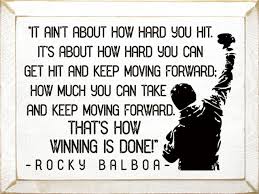






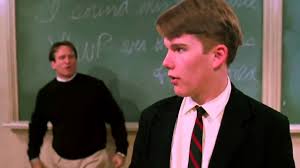









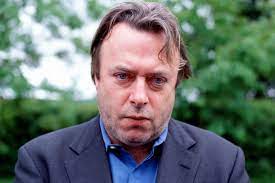

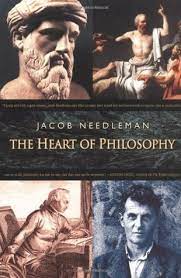











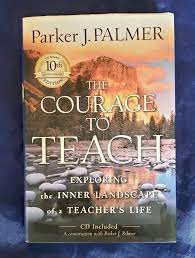
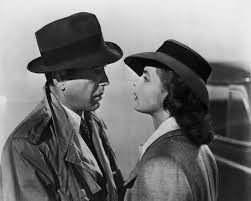

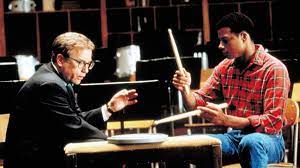

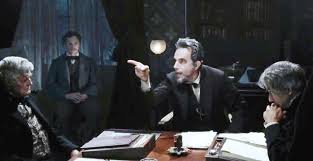


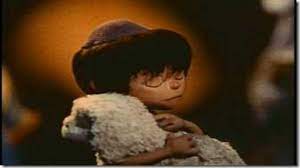









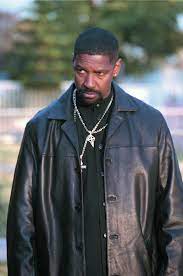









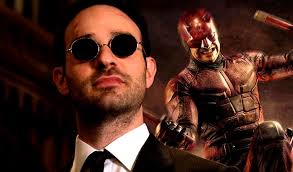

 james-rourke-author.com