I am in the thirtieth year of my high school teaching career. Thirty. Years. The most common response is “How did you do that?” quickly followed by some semblance of, “Good for you.” My reply, depending on my mood, ranges from “Thank you” to “Yup, it has been quite the journey” to “Is it? Is it actually good for me?” That last one tends to put people on their heels until I tell them it is, in fact, good for me. Teacher’s retirement is pretty solid! That alone, however, does not suffice. Dragging myself through the grueling days of teaching with only a retirement plan as my primary motivator would leave me a psychological, spiritual, physical, and emotional husk. Depleted and defeated. That would never suffice.

Let me tell you a secret, when the door closes and it is just me and the students in The Room…there are many days when I love teaching. When ideas are being examined, knowledge is being expanded, understanding is fortified, the proverbial “light bulb” is lighting up in the students’ eyes, laughter is mixing with learning, and a sense of community is growing organically, well, there’s a certain magic to that. It is a magic still available in year thirty. And that is very good for me. Honesty, however, demands it’s due. Such a disposition is not easy to maintain. Like the Uruk-hai storming Helm’s Deep or the Big, Bad Wolf trying to blow my house down there are always forces aligned against teachers. These antagonistic forces drain energy and weaken resolve. Still, I do love The Room. How is that possible?
Find the Balance!

“Lesson not just karate only. Lesson whole life. Whole life have a balance. Everything be better.” Thus spoke Mr. Miyagi in the original Karate Kid. This idea that a balanced approach to life is a necessity to helping “Everything be better” has a long and venerable history. While Miyagi is not an Epicurean he would endorse Epicurus’ teachings on the balance of short term pain (sanding the floor and painting the fence) to enjoy a greater pleasure (building muscle memory for defense).
Educational Philosopher Parker J. Palmer grants balance a central place in his Pedagogy of Paradox. Palmer contends that there are six paradoxes that exist in the classroom, which also create twelve distinctive poles at the opposite end of each paradox. The six paradoxes he identifies would be familiar to most teachers, even if you never read Palmer’s work.The capacity of any teacher to balance the necessity of each pole and traverse from one end to the other can generate greater energy and enjoyment in The Room for teacher and student alike.

The purpose of this post is not an evaluation of Palmer’s pedagogy. I will highlight one paradox to illuminate the importance of balancing contradictory forces within The Room. If the examination leaves you wanting to know more I encourage you to pick up a copy of Palmer’s The Courage to Teach.
Hospitality and Challenge
Palmer writes, “The space (The Room) should be hospitable and charged.” By being hospitable we create an environment that is welcoming and intellectually encouraging, where being incorrect is just part of the process of stumbling towards clarity. How an environment becomes hospitable is dictated by the personality of the teacher. One size does not fit all. Early in my career there was a math teacher who was everyone’s cranky uncle. He snarled and growled at the students. He also, however, knew they would see the kindness beneath his gruff exterior. And they always did. His fellow math teacher was the nutty professor! Kids were never sure what bizarre antic or incisive quip he would make…but they couldn’t wait! They even learned some math while going on the wild ride. Building rapport with your students is about authenticity, not best practices.
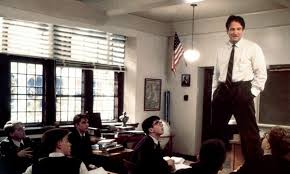
Charged is Palmer’s phrase for challenge, an essential aspect of teaching. Nothing improves without some form of resistance. Unfortunately, not every student seeks to rise to challenges. Some shrink before the specter of expectations, helplessness being the primary lesson conferred by school and life. For some simple and honest critique feels like a threat to the sensitive teenage ego (1). The hospitable environment, therefore, acts as an ever present safety net for students who envision putting pen to paper is as precarious as walking the high wire.
The Dangers of Losing Balance

Looking at the hospitable and charged poles certain dangers should be quite clear. When too hospitable a teacher runs the risk of creating an environment where students claim any advantage they can as the teacher errs on the side of friendliness. Let’s be clear, kindness is wonderful but woe to the teacher who becomes a victim to the prison of nice and kind where the students hold the keys. Taking control of a classroom where the students have been granted too much free reign is taxing and difficult.

On the charged side of the paradox is the unrelenting teacher who runs his or her young charges into the ground. I am not talking about a challenging teacher who the students respect. Students often, sometimes begrudgingly, recognize and respond to a teacher who is tough but fair. That teacher exists on this spectrum. My personal favorite “tough but fair” teacher was Dr. Wright at S.C.S.U. That gentleman told me that I “…might not be stupid” and Istill consider it one of the greatest compliments of my life. The runner up in that category is Mr. Williams from St. Bernard High School, who cajoled a math challenged writer through pre-calculus, even when I scored more points in a basketball game than on a test.
No, the far pole is not for Dr. Wright or Mr. Williams. It is the stomping ground of the classroom tyrant who rules with an unrelenting iron fist. Most people can name a teacher they “hated” as a student. I wonder how often such a teacher is because they existed on the far end of this paradox. Sometimes teachers think they are teaching “life lessons” when they are only encouraging students to hate their subject. As the great philosopher Roger Waters wrote in his treatise The Wall, “Hey! Teachers! Leave them kids alone!

A Few Words About Them Kids
Most teachers will confess that they enjoy teaching…what a novel idea! They will often also say it’s not the kids but other “stuff” that weighs them down and wears them out. I’ve heard such proclamations for years and, to be honest, almost believe it is true. Almost.

But let’s be serious. You (fellow teachers) spend a vast majority of your time with your students and I’m supposed to believe they somehow don’t add to your sense of fatigue? C’mon! I am a high school teacher who currently has 120 students enrolled in five classes. That’s 120 separate realities entering my room on a regular basis. A partial list of what is carried in their metaphoric backpacks includes; maturity levels, parental expectations, psychological disorders, capacity for emotional regulation, moral and ethical convictions, interest in my topic (ugh, history), fierce though unexamined convictions, curiosity levels, commitment to school, and widely variant home environments. The list can be expanded to include fatigue brought on by practices or rehearsals, familial duties like caring for siblings, jobs, struggling with social demands, video game and social media addiction, family illness, the willingness to…well, you get the point. The students carry so much into The Room. Navigating all of these factors can be exhausting on a good day! Do feel free to double the exhaustion if you are an introvert.
Let’s plant ourselves squarely in real world experience for a moment. I am writing this paragraph on a Wednesday night. It so happens that I teach all five of my classes on Wednesday. I had no reportable discipline issues today and everything went well (I did say “Put away your phone” 72 times but, hey, that didn’t disrupt my rhythm at all). Anyway, I’m tired. Not because of my afternoon meeting, but because I spent the day trying to match, guide, and even raise the energy level of 120 teenagers. I’m tired because I woke up at 5:30. I’m tired because my son is sick and I woke up the night before to check on him. Most things in life have a pie-chart of causes, including my fatigue. It behooves us to examine our pie-charts so we approach our lives in a productive manner.

Here’s my final point on this; I am convinced that energy is wasted maintaining unnecessary attachments, propping up untenable convictions, or dedicating too much thought and time to a sliver of the pie-chart and failing to confront the biggest piece. Maintaining the idea that “it’s not the kids” who add to our fatigue wastes energy. The kids can wear me out! Not because they’re “bad kids”…simply because there are so many of them! Moreover, I have to constantly be tuned in and mentally engaged so I can keep making, lord only knows how many decisions during the day. So yeah, the kids wear me out. I don’t waste what energy I have pretending they don’t. The kicker of course is this, they wear me out because I care. If you’re still reading I bet you do too.
A Little P.D.
There are a plethora of factors that can drain a teacher’s energy and resolve. The list includes but is not limited to, teachers’ time not being respected, student cruelty being normalized, lack of administrative support on issues of discipline, the art of teaching being marginalized in favor of techno-rationality, becoming a cell phone monitor, wandering students disrupting your class, school obligations infringing on time with family, mountains of paperwork and grading, the waves of email you receive, conflicts with parents,a lack of resources, and toxic positivity (2).

Delving into teacher burnout would make this post interminable. These are all issues that teachers face in the United States and, if you look at the endnotes, across the Atlantic Ocean. There is no doubt that the environment of your specific school and the antiquated structure of the educational system burdens teachers. I’ve been irritated, annoyed, and angered by these realities. I’ve tilted at windmills. In the end, however, I can either endure these pressures or succumb to them. I’m still here and still enjoying The Room so I guess I have some level of endurance. While it would be an act of negligence to ignore the legion of educational issues that dissolve teacher resiliency I am going to stay true to the purpose of this post which remains focused on The Room.
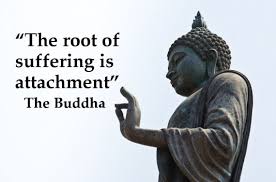
I believe the primary reason I still love The Room and why I can navigate most days (definitely not all. Definitely. Not. All.) without undue psychic or spiritual disturbance. It all comes down to a little P.D. Not professional development. That hasn’t done much for me over the years. I mean, you pick up a tid-bit here and a pebble there but, in the end, that p.d. is what it is; an almost barren buffet with too many beets and not enough sweets. No, I’m talking about something I call Passionate Detachment. Simply put I try to identify what I can detach myself from so I can remain passionate about what is essential.
In The Room and in the Batter’s Box (What the…)
Here’s an example of this passionate detachment ideal: my students’ grades don’t mean much to me. Now don’t be hasty, I would like to see them grow and succeed. Grades, however, are an outcome. Stick with me now. Hitting a baseball requires a constellation of events coalescing at a precise moment to assure success. Moreover a batter can not control what pitch is coming. The batter controls what they can throughout their time at bat. The same approach applies to the classroom.

I am passionate about being ready for class and preparing my lessons. I am passionate about being receptive to questions and offering assistance. I am passionate about bringing a particular energy to my classes and working to build group and individual rapport. Please note, these are all aspects of teaching completely under my control. Go back to the section “Accepting What Ails You.” Reread the list of “realities” that the students carry into The Room. There are far more kids with problems than there are problem kids. So many obstacles prevent or, at the least, hinder, student engagement in class. Worse, the sad fact remains that I can’t remove many (if any) hardships from the students’ lives.
That can be a bitter pill. Focusing on or attaching myself to those hardships will have a deleterious impact. Losing sleep worrying about your students diminishes your energy and, therefore, will make you less capable of being helpful. Everything has a shadow and untethered compassion can be ruinous. Jungian analyst Carol Pearson teaches that the shadow of a caregiver includes martyrdom, co-dependence, and guilt-tripping. You would be hard pressed to prove such traits help you in The Room or in your life. Those traits combined with exhaustion definitely won’t help the students.

Awareness of challenges and striving to help the student navigate them, now that’s something to be passionate about. By detaching from the outcome – their grades – and wishful thinking – changing their circumstances – we are free to engage passionately in what we can control, our own efforts. In the long run this often leads to some positive results. We don’t often change lives, but we may just change someone’s trajectory or the lenses they utilize when looking at a problem.
Hey! Teacher! Leave Yourself Alone!
Even with that in mind we sometimes make little to no difference for some students. This does not make one a “bad teacher.” Take a look at the previous sentence. If one attaches themselves to the idea they are a “bad teacher” then what are they truly attaching themselves to? Is it some desired outcome or an impossible image that can never be truly attained. Does this “failure” feed a cruel inner voice that punishes you for your sins? I do wonder if teachers need to be reminded that teaching and learning are two distinct activities. You have a duty to perform one. The students are responsible for the other.

Teachers can be notoriously hard on themselves. Take it from someone who spent far too long battling a vicious inner critic, cut yourself some slack. You’re likely doing far greater work than you or others give you credit for. Also consider the patience you utilize when working with students. Imagine spending a day granting yourself that much grace.
The Rooms Outside The Room
I work at a school that has “Top Cat” awards, a program which allows students to show appreciation to teachers. These certificates hang proudly on the walls of many classrooms. I can guarantee that some of my co-workers have received Top Cats from students who would never even consider bestowing one upon me. I’m not for everyone. The reverse is also true, for you’re not everyone either. I believe one of the great fallacies of teachers are told (especially when you have 120 students) is that you can effectively inspire or reach every kid. You can’t.
Again, I am coming at this from the High School perspective. “Not reaching” a student can occur simply because of what I teach. I’ve had conversations with proverbial math/science kids who just aren’t that interested in history. They are polite and complete assignments but their futures are paved elsewhere. Some kids are introverts and not prone to expanding their circles. Some kids have great relationships with a number of adults and aren’t looking for/craving new ones. Consider this, how many people do you know who artfully forge and sustain 120 new and functional relationships every year? Thought so.
Speaking of Relationships
Thankfully, I am not the only teacher at my school. It is a safe bet that someone – be it a teacher, coach, counselor, social worker, or school psychologist – will reach that kid. It doesn’t have to be me. It can be one of the we. You see, we are all part of the same environment. I would like to say all schools function as teams but I don’t believe that is true. In fact I would argue that the facade or fabrication of a cohesive and supportive school community of professionals is a drain on many teachers. Therefore, our profession has a tendency to isolate.

I hope no one reading this feels that isolation, but I suspect someone does. Believe me when I say you are not alone. Others have been through what you’re facing. Others might be walking the path unseen beside you. The outdated structure of schools can prevent us from experiencing this reality yet I do believe in mysterious, synchronistic chords. Every school has people with a team mentality. You have teammates who will support you. Light a beacon and aid will come. Teachers are helpful folks, and not just to the students. There are unknown co-workers willing to lend a hand. I hope that is a reassuring thought. There is, of course, one more group we need to acknowledge.

Remember, passionate detachment requires detaching from what is superfluous so I can remain passionate about what is essential. Any belief that you can make it through teaching alone is false. Don’t attach yourself to that anchor. There may be nothing more essential than finding your supportive work circle that can keep you going when the educational world is wearing you out. Lord knows I am blessed by mine…and you all know who you are. How did I get to thirty years? Look at the people walking with me. They are the best answer I can offer. Thanks for walking with me.
Endnotes
- Erik Erikson’s developmental theory drives this point home.
- Two articles as well as personal experience were utilized in compiling this list. The articles are:
https://journals.sagepub.com/doi/full/10.3233/WOR-220234
 james-rourke-author.com