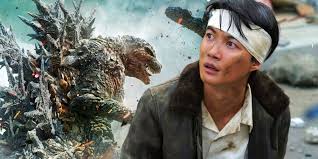
Godzilla Minus One was an unexpected critical and commercial hit when it was released in late 2023. Minus One is a unique Godzilla film as the massive, radioactive dinosaur is decidedly not the star of the movie (1). Set between 1945 – 1947, Godzilla rises from the ocean as an unexpected and destructive threat to Japan, a nation striving to recover from World War II. His appearance forces Kōichi Shikishima to face his survivor’s guilt and his fear that he is beyond redemption. This fear is reinforced by his times and surroundings.
Kōichi’s Struggle
Kōichi, despite being a kamikaze pilot, survived the war. He survived by claiming his plane had a mechanical problem and landed on the small island of Odo for repairs. A smaller, pre-radiated Godzilla attacks the island outpost. Kōichi races to his plane and has the opportunity to fire his guns. Overwhelmed by fear and anxiety, he freezes. He fails to shoot and is subsequently knocked unconscious as Godzilla kills almost everyone present. Mechanic Sōsaku Tachibana is the only other survivor. Sōsaku, who has already concluded there were no mechanical issues with the plane, calls Kōichi a coward for his failure to act. With the weight of his double dereliction of duty planted in his soul Kōichi returns to Tokyo, his war ravaged home.

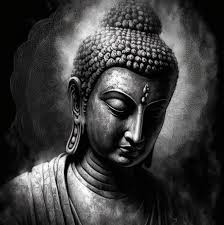
Here we can pause to examine an unexpected overlap between ancient, Eastern wisdom and a piece of colloquial parental advice often shared in the United States. In chapter one, verse one of The Dhammapada (a Buddhist text) we read, “Our life is shaped by our mind; we become what we think. Suffering follows an evil thought as the wheels of a cart follow the oxen that draw it” (2). Kōichi’s mind is already plagued by “evil thoughts” because of the events on Odo. This burden is only intensified upon returning home.
His neighbor, Sumiko, calls him a coward when she sees him. She goes on to blame the destruction of Tokyo and the disgrace of Japan on men like Kōichi. On a personal level, she blames him for the death of her children. He also learns that his parents, the very people who told him to “come back alive”, were killed in the air raids. Isolated, Kōichi wanders the rumble with his failure and shame.
Sticks, Stones, and Minds
At this point of the story Kōichi is physically fine. His inner world, however, is in complete turmoil. The American phrase, “sticks and stones may break my bones but names will never hurt me” comes to mind here as a piece of well-meaning, but misused advice. Sadly this nugget is often used with children to help them move beyond the insults of life while failing to teach them to traverse their inner landscape. How many Americans adopted the proverbial “stiff upper lip” to the detriment of their minds? Leaving children behind, it is obvious that Kōichi is indeed hurt by the words of others. The remedy is not the building of a fortress that maintains the delusion of being emotionally impervious. Evaluating why these words hurt him is where healing can begin.

“Our life is shaped by our mind.” Thus spoke Buddha. There are a number of reasons words can hurt us. When insults from others find agreement in our minds we are sure to suffer. Neither Sumiko nor Sōsaku planted the thought of cowardice or failure in Kōichi’s mind. He owned such thoughts without their assistance. Their words reinforced what he already believed. If anything it validated his shame.
Sadly, the words of his parents – “Come back alive” – have little meaning or comforting power for Kōichi. He is living the words of chapter one, verse four of The Dhammapada, “…those who dwell on {negative} thoughts will never be free from hatred” (3). For Kōichi the form of hatred he faces is self-hatred, a beast as destructive to our minds and lives as Godzilla is to our cities.
Moving Forward?
Kōichi is truly a disturbed individual as we get to know him. He does, however, grant us glimpses of how one might process and transcend their psychological/emotional pain. The first step is to find compassion. Not long after being disparaged by Sumiko, Kōichi meets a young woman, Noriko, who is caring for an orphaned baby (Akiko). Kōichi takes the duo in even as Sumiko reminds him that it is a “Bit late to play the hero.” Thanks, neighbor.
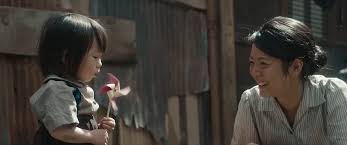
At this point we start to see the impact of Kōichi’s compassionate decision. He, Noriko, and Akiko become a family. While Kōichi struggles to feel the hope and even joy that Noriko embraces, his compassionate decision to assist them does pay dividends.
Kōichi seeks to provide for the family unit he helped create. He finds work as a minesweeper after the war, heading into the waters surrounding Japan to perform the dangerous task of clearing old naval mines.

Noriko is under no delusions regarding the inherent dangers of this work. Much like Kōichi’s parents, she is worried about his well-being, telling him, “I forbid you to die” as she accepts his employment. Kōichi is confronted by the fact his compassion has looped back to him as he hears, for the second time, that his life has value to another. This idea, however, is not one that brings comfort to Kōichi.
Shadows and Ghosts
In a revealing scene we glimpse the depths of Kōichi’s discontent. His friends and co-workers – Kenji Noda (nicknamed “Doc”), Shirō Mizushima (“Kid”), and Seiji Akitsu (the Captain of the mine sweeping vessel) – are over for dinner. The trio assumes Noriko is his wife and Akiko his child. When the story of how the “family” came to be is shared Doc declares it a “beautiful story.” Kōichi rejects that idea, going so far as reminding Akiko that he is not her father. His friends are taken aback by his icy demeanor and encourage him to embrace what fate has brought him. These words also find deaf ears.

In a subsequent scene Noriko demands, “What is it that torments you so badly?” The use of torments here is wonderful. She does not see Kōichi as bothered, upset, or sad. Rather he is tormented by something. She credits him with “saving” her but laments his inability to share “any part of his life” with her. She assures him that, if he is burdened, she would like him to share it with her…to allow her to be of some assistance.

As he shares his pain (which included showing pictures he scavenged of the deceased on Odo Island and articulating a death wish) he rages and cries on the floor. He believes he does not deserve the blessing of Noriko and Akiko. Noriko holds him, stating he is haunted by ghosts of his own creation. Through her tears, she encourages him to feel alive.
The Problem of Salvation
In his book A Brief History of Thought Professor Luc Ferry, PhD posits, “…anguish prevents us from leading good lives: it stops us not only from being happy, but also from being free….we can neither think or act freely when we are paralysed by the anxiety provoked – even unconsciously – by fear of the irreversible” (4). One of the most important components of philosophy is developing the skills and capacity to address this fear.

Kōichi faces two irreversible situations that cause him great anxiety. The first is the profound self-loathing he feels for his decisions as a kamikaze pilot. The second, his actions on the Island of Odo. These decisions are an immutable part of his biography – they are irreversible. The meaning – that he is a coward unworthy of happiness and, perhaps, life – is not a permanent truth. Kōichi feeling that way does not make it true.
The scene where Kōichi finally shares his pain with Noriko is a scenario found in many stories and songs. The great philosopher Bruce Springsteen shares these lines in his song Living Proof:
You shot through my anger and rage
To show me my prison was just an open, open cage
There were no keys, no guards
Oh, just one frightened man and some old shadows for bars (5)

Much like the protagonist in Living Proof, Kōichi is in an open caged prison of his own making. The fact that Springsteen describes “one frightened man” echoes both the anxiety and fear described by Professor Ferry and Kōichi, who (logically) admits to being terrified of Godzilla. An important element of the healing process is also present in the words presented by the Jersey Shore Sage.
The Power of Getting Personal

In Living Proof Springsteen credits the protagonist’s wife with working through his “anger and rage” and showing him the way out of his prison. Therapist Jonathan Decker teaches that a key ingredient in any enduring relationship is the capacity to be open to guidance (6). Springsteen’s character is able to free himself from his “shadow” prison because his wife “showed” him that his prison was self-made. By being “open to guidance” the relationship became a source of healing.
People, sometimes to our detriment, are complex creatures. We don’t live by simple math equations. It would be wonderful if we could just say having people who (A) support your efforts + (B) are concerned about your well being = (C) instant improvement in your disposition and a fuller life (7). Kōichi has both a supportive family unit and friends, but his inner world does not allow him to enjoy them. He definitely is not open to his friends’ guidance at the dinner scene! A wonderful, sometimes miraculous, aspect of friendship is the capacity to stick with you even when you are acting as your own worst enemy.

Facing the Enemy
Kōichi, of course, has a physical enemy as well…Godzilla. His fear of the creature is surpassed by rage when Noriko is seemingly killed by the rampaging beast. Joining a resistance movement that has an audacious plan to stop Godzilla he prepares to fly into the face of his fears.
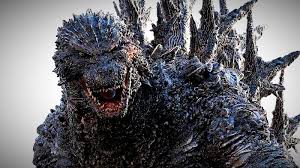
The decision to face Godzilla opens three windows through which we can see examples of how to face inner demons as well as giant, radioactive monsters.
Window 1: Non-Attachment – “You have a right to perform your prescribed duties, but you are not entitled to the fruits of your actions. Never consider yourself to be the cause of the results of your activities, nor be attached to inaction” (8). The sacred Hindu text The Bhagavad Gita stresses the value of non-attachment. It might seem counter intuitive to “have a right to perform your prescribed duties” and not be “entitled to the fruits of your actions” but the embracing of such a mindset can increase humility, increase comfort with the unknown, and reduce anxiety.

Kōichi is determined to protect his home from Godzilla, yearning to defeat the creature that has caused him so much pain. There are a massive number of moving parts and tactical facets that constitute the plan to defeat Godzilla. Kōichi, by the tenants of non-attachment, should do his duty to the utmost of his ability but not claim the victory (fruit of his labors) as his alone. He could well feel the catharsis of facing his fear but should not claim the victory as his alone. That might sound obvious and Kōichi, in fact, gives us no inclination that he does not recognize the contributions of Doc, Kid, the Captain, and so many others involved in the plan. But, he has attached himself deeply to previous actions he took and has therefore claimed the mantle of coward and the title unworthy. However, how many factors were involved in the decisions that have led Kōichi to his self-loathing?

I ask you, dear reader, do you have an easier time seeing yourself as the villain or weakling in certain situations as opposed to the hero? What if you could “perform your prescribed duties” without expecting a certain outcome? Even when you failed to “perform your prescribed duties” what if instead of diminishing your value you rededicated yourself to performing your “duties” better the next time around? I hope these questions prove pointless but I fear many people are better at insulting themselves than giving themselves the occasional compliment.

Non-attachment can also increase our comfort with the unknown. As the climactic confrontation draws near, Kōichi asks Doc, “Can you promise that will kill Godzilla?” The question is a cry for certainty, which in turn would be comforting. There is, of course, no certainty when facing Godzilla or many of our struggles for that matter. Doc does not answer with a rousing speech but the simple statement, “We must do what we can.” Focus on the “prescribed duties”, perform them thoughtfully and with vigor, and allow events to unfold. As Captain states later in the film, “Doing nothing won’t cause a miracle.”
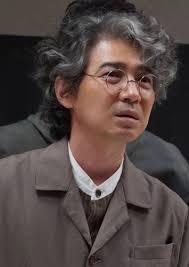
Window 2: The World Beyond My Pain – Pain has a tendency to reduce our vision. Whether it is physical, emotional, psychological, or spiritual people in pain often find themselves becoming, I would surmise unintentionally at times, the center of their universe. Kōichi rejects the idea of family from a place of pain. He has friends but tends to reject their council, especially when it is a call to embrace anything beyond his pain. Kōichi articulates, during an intense conversation with Captain, that “My war isn’t over yet.” While confronting Godzilla is a dramatic moment for him I would posit that joining the effort to kill Godzilla and being surrounded by others who survived the war, who may be also fighting their own personal wars, is also helpful to Kōichi. It is why everything from support groups to VFW’s to your trusted fellowships are so important. Connection helps people raise their eyes above their pain.
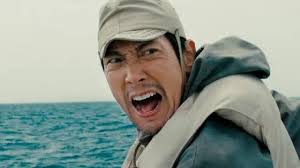
Window 3: Accepting Strengths – When struggling we often neglect to acknowledge our strengths and, incredibly, even our successes! Kōichi is a master of this unfortunate trait. He admits that he is “Terrified of the thing (Godzilla).” Well..you should be! It’s Godzilla! Yet, when Godzilla first reappears Kōichi is able to fire the machine gun on his minesweeper at him. He even detonates a mine in Godzilla’s mouth that gives the behemoth a moment of pause (You hurt ‘em, Rock!). He stood up! He fought. Does Kōichi ever give himself credit for this moment? Nah.
On an emotional/relational level we see the same action. When Noriko credits Kōichi with having “saved me” while lamenting that he won’t let her into his life. This interaction does lead to Kōichi’s breakdown which, in turn, leads him to sharing one powerful thought, “I’d like to try to live again.”
“…Try to Live Again”
Throughout much of the film Kōichi endures his pain. Perhaps you have done this at times as well. Enduring is not living. To sit in a well of despair and uttering the thought “I’d like to try to live again” represents an important step all must take on the healing journey. Avoidance of pain. Reduction of pain. While understandable desires are poor substitutes for living, even living with pain.

Kōichi survives the final battle with Godzilla and is poised to live again, even with Noriko’s death casting a shadow upon him. Even this shadow was lifted as he and the audience learned Noriko survived Godzilla’s rampage. While I believe having Kōichi learn to live with Noriko’s death would have been a poignant ending, I also think he’s been through enough. This story ends with Kōichi now capable of embracing his “family.” It serves as an excellent reminder that our closest relationships are worth fighting for and, in so many quiet and meaningful moments, worth living for.
Endnotes
(1) The long history of Godzilla movies have rarely invested much time in developing the human characters. The human drama in Minus One was unexpected and wonderful to witness.
(2) Chapter 1 of The Dhammapada
(3) Ibid.
(4) Ferry, L. A Brief History of Thought (2010). Harper Collins, New York, New York. Page 10.
(5) Living Proof can be found on the album Lucky Town (1992).
(6) Jonathan Decker shares his insight and humor on his youtube channel “Cinema Therapy.”
(7) I am currently in my 30th year of teaching. It sometimes feels to me that teachers are being gaslighted into embracing such simplistic thinking with students. This thought saddens me and contributes to feelings of burnout some teachers experience.
(8) The Bhagavad Gita, Chapter 2, Verse 47.
 james-rourke-author.com