A new school year has begun and I have found the insight of educationalist Parker J. Palmer echoing within for almost three weeks. I’ve never met Professor Palmer but I suspect, since he is a teacher, he would appreciate the fact his lessons resonate long after his “class” has ended (in this case his book has not been read in years). Palmer posits six paradoxes essential to a positive and challenging classroom environment. All six have not been swinging from the branches in my mind like hyperactive monkeys, but one of them – “The space should honor the ‘little’ stories of the individual and the “big” stories of discipline and tradition” (1) – has been exuberant.
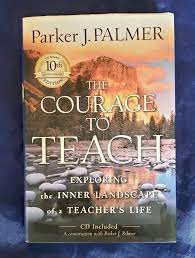
Palmer challenges teachers to maintain a delicate balance. The little stories, which include personal experiences, challenges, fears, and interests, must be allowed space alongside the big stories of our disciplines. The big stories must also be told for they have the power frame our experiences and assist in building a deeper understanding of our minds and our lives. When the balance is lost we encounter two dangers. Overemphasis on big stories can create baffling abstractions or telling tales so grand that there is no place for individual lives. The over promotion of small stories creates a bloated self-importance where one’s point of reference rests entirely in themselves. Schools should never be so didactic that they negate one’s sense of self nor so pandering that self becomes lost in narcissistic self-aggrandizement.
This balancing act exists well beyond the classroom as stories big and small are constantly competing for attention. Inviting that tension into your class may just help students prepare for life. After all, the most meaningful lessons gaze beyond the walls of a school and even the age of the students.
A Ubiquitous Paradox
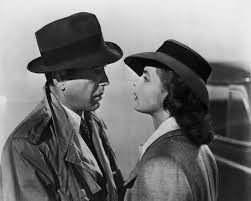
The tension of the big story/small story paradox is such an integral aspect of the human condition that it has appeared in films and television for over 70 years. The iconic final scene of Casablanca (1942) illustrates the conflict this paradox can create, as well as illuminating the importance of choosing a point of emphasis. Rick Blane must choose between Ilsa, the woman he loves, or helping her husband, Victor Lazlo, escape Casablanca. In the end Rick concludes Victor must escape because he is an important part of the Nazi resistance. Rick also argues that Ilsa must go with him because she is “part of his work, the thing that keeps him going.” This decision is made despite the fact Ilsa and Rick had discussed staying together when Victor left. Rick chooses the big story (the Nazi resistance and Victor’s role) over his small story (his love for Ilsa).

Jump ahead to 2023 and we see the same tension at play in the Disney Plus series Ahsoka. At this writing the series has not concluded but the character Sabine is currently the antithesis of Rick Blane. Sabine Wren, despite counsel from the Jedi Ahsoka Tano, cannot bring herself to destroy a map that will enable the tyrannical Morgan Elsbeth to find Grand Admiral Thrawn. Thrawn, a master tactician, could reestablish the fallen Galactic Empire. Sabine chooses to hand the map over because it also can lead her to Ezra Bridger, a dear friend who she seeks to free him from self-imposed exile. Ezra chose exile to remove the threat of Thrawn from the galaxy. Ezra chose the big story (protecting the galaxy from Thrawn) over the small story (his freedom and personal ties). In surrendering the map Sabine appears to have chosen the small story (her friend) over the big story (the galaxy’s safety). Time will tell how this decision impacts a galaxy far, far, away.
The Power and Fragility of Small Stories
In the previous section the importance of the big story was clearly emphasized. Time to give the small story its due…and to issue a warning about the big story. In Mr. Holland’s Opus (1995), Glenn Holland takes a job as a high school music teacher so he can spend more time with his wife and work on his symphony. I don’t know how many teachers are reading these words but let’s just revisit the previous sentence. Mr. Holland thought becoming a teacher would grant him MORE time to work on his symphony. Done laughing? In a shocking bit of realism Mr. Holland’s vision does not come to fruition! He does not find gobs of free time in being a teacher. Who knew?
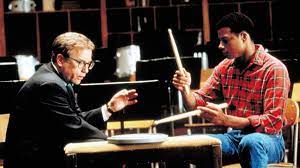
As the movie progresses the lack of progress on his symphony and other stressors causes a rift between Holland and his wife, Iris, and his son, Cole (2). Eventually the chasm is bridged and relationships are repaired but Holland loses his job when the school’s art program falls is liquidated due to budgetary concerns. Holland is left staring into the abyss of a teaching career that amounted to nothing. Or so he thinks.
His wife, however, has been plotting. She organizes a surprise farewell event in the school auditorium. Mr. Holland enters the space to find an array of former students sitting on the stage prepared to display the skills he helped develop and play his symphony while he conducts the orchestra. It’s a touching tribute to a “favorite” teacher and, for our purposes, a great example of the importance of the small story. Everyone on the stage has answered a call, and dedicated time to rehearsing in secret, in an attempt to honor a beloved teacher. Lives have been touched and life-long devotions to music were stoked in the small story of the classroom. That sounds wonderful, mainly because it is. But there is a grave warning regarding our paradox that plays out in Mr. Holland’s Opus.

Throughout the film Holland diminishes the importance of the small story (his family and teaching) as his eyes are fixated on his failure to successfully step into the big story (becoming a renowned conductor of his own symphony orchestra). Do you ever play that game? Is there an unfulfilled dream or goal that becomes a club used to bludgeon the joy you should feel for the wonder of your small story? Have you ever used a big story to belittle a student’s attempt to share a small story in class? Damage is done in both scenarios, and it can be difficult to repair. The small stories matter, do not cheapen them.
Finding a Balance in the Paradox
The tension between big stories and small stories plays out in numerous unexpected ways, including two psychologists’ visions of heroism. In a 2008 Ted Talk psychologist Philip Zimbardo discussed a healthy and useful way to promote heroism. He posits that fantasy characters and historic giants are the incorrect way to envision heroism. Fantasy characters often have super human powers or are assisted by magic. Heroic historical figures are too big to emulate and their commitment is all encompassing, often to the detriment of other aspects of life. Zimbardo prefers “the banality of heroism”; ordinary people who, in specific circumstances, perform extraordinary deeds. Such people can be utilized to stir the “heroic imagination” and help young people develop the capacity to be “a hero in waiting.” For Zimbardo, the small stories can create huge heroes.
In the other corner we find Jungian analyst James Hillman. In his book The Soul’s Code (1997) Hillman argues that historic figures are exceptionally useful because of their grandeur! No one knew Martin Luther King Jr. at five would become THE Dr. Martin Luther King Jr. How did that happen? What internal drives and needs brought him to that level? How can the study of greatness or virtue awaken our “heroic imagination” (3)? Is it too much to ask of academia? Hillman is unrelenting that the study of grand lives and archetypal stories can be a guide to personal flourishing.
I lean towards Hillman in this debate, but maintain a healthy appreciation for Zimbardo’s insights. As a teacher of history, philosophy, and psychology it is likely easier for me to delve into these issues with my students than a math teacher. Having acknowledged that fact here’s an example of how the paradox can allow big stories to be shared and small stories to blossom.
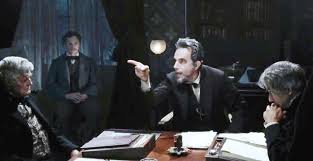
I utilize the movie Lincoln (2012) in my classes. One scene in particular allows for stepping into our paradox. As the film approaches the climatic vote for the 13th Amendment (the abolition of slavery) there are two votes needed for victory. Lincoln beseeches his inner circle to dedicate the next “night, day, and a night” to procure the votes. During his monologue Lincoln proclaims, “…the fate of human dignity is in our hands!” He emphasizes that “now” is the time to act. “See what is before you. See the here and now. That’s the hardest thing. The only thing that accounts.”
The fate of human dignity is in our hands. Wow. There’s a monstrous thought dripping with responsibility. When extracting the value from the scene I inform the students that I, after 28 years of teaching and 52 years of life, am comfortable predicting I will never hold the fate of human dignity in my hands as Lincoln did. I won’t. That’s not my life. It doesn’t have to be. All of us, in the small stories of our lives, will at some point hold the dignity of one other person in our hands. In that moment…in the precious and expansive now…we need to be ready. Our habit energy will rise and who we are will shine through. Perhaps we will be exactly what a suffering friend needs.
Notes
(1) Palmer’s thoughts can be found on page 76 of his book The Courage to Teach.
(2) The rift between Mr. Holland and Cole is intensified by the fact Cole is deaf. Holland feels an important aspect of his life, music, can never be shared with his son. This increases his bitterness.
(3) Hillman does not use the phrase “heroic imagination.” It is here due to Zimbardo’s usage.
 james-rourke-author.com